Post-Conflict Reforestation in Colombia
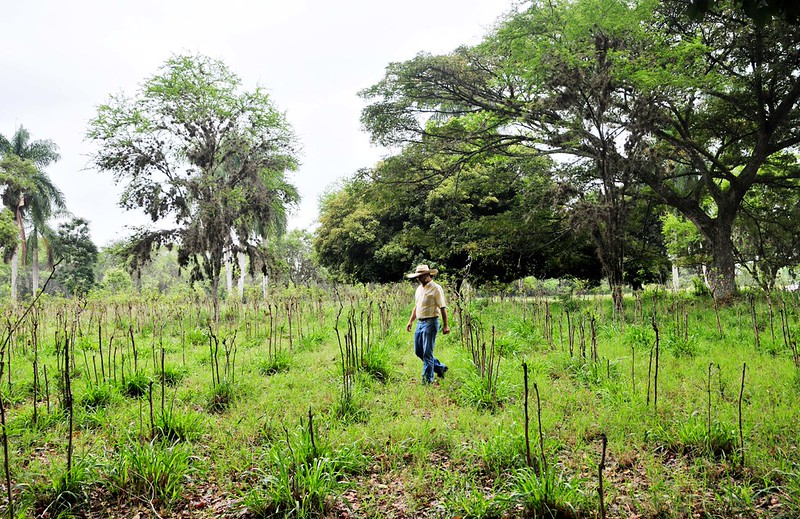 Deep in the Colombian Amazon, where only recently thick tree canopies concealed guerrilla movements, a different kind of revolution is taking root. The 2016 peace agreement between the Colombian government and the Revolutionary Armed Forces of Colombia (FARC) brought a formal end to a decades-long conflict that killed 450,000 people and displaced millions. Yet peace brought an unexpected environmental crisis. In 2017, almost 225,000 hectares were destroyed, accounting for 2.6% of global deforestation for that year, as armed groups and land grabbers moved into areas once exclusively controlled by FARC. These groups cleared forests at an unprecedented pace for cattle ranching and illegal money-making operations.
Furthermore, when displaced communities returned after the peace agreement, many found land scarred by conflict and depleted by unsustainable cultivation. As a response, many have been driven to clear more forest in order to sustain their families through cattle ranching. Cattle ranching remains the single biggest cause of deforestation.
However, former guerrillas currently work alongside conflict victims to plant trees and rebuild their communities. Post-conflict reforestation and agroforestry schemes can simultaneously restore the environment, foster reconciliation and tackle rural poverty, particularly for those returning from displacement. The advancement of this tripartite process is vital for ensuring lasting peace.
From Combatants to Conservationists
At the Communitarian Multiactive Cooperative of the Common (Comuccom), near Puerto Guzmán, 24 former FARC combatants are working toward an ambitious goal: planting 1 million trees across the Colombian Amazon. Duberney López Martínez, who joined FARC at just 13, now leads the effort at 33. He tends to the 250,000 trees ready for planting in their nursery, each one a small act of reparation after decades of conflict.
Beyond post-conflict reforestation, Comuccom leads the Network of Amazonic Communitarian Nurseries, connecting 12 organizations across Colombia’s “Arc of Deforestation.” They regenerate soils exhausted by cattle grazing and coca cultivation, cleanse water sources contaminated by mercury from illegal gold mining and reconstruct ecological corridors for jaguars and endangered bird species. This contributes to food security and socio-economic stability through the creation of new jobs.
Women Leading the Eco-Peace Movement
In Caquetá, women ex-combatants are pioneering their own approach through ASMUPROPAZ (Association of Women Producers of Peace Essences). Founded in 2017, the organization embodies what they call the “Eco-Peace Nexus,” the recognition that healing the land and healing communities are interconnected endeavors that must happen together.
ASMUPROPAZ offers literacy programs, vocational training and technical agricultural skills while implementing sustainable farming, post-conflict reforestation efforts and the production of natural plant-based products. These initiatives create economic independence while addressing deforestation and environmental degradation that threaten the region’s future.
Carolina Aldana, one of ASMUPROPAZ’s youngest members, captures their vision: “Our work shows how caring for the environment can bring people together and create lasting peace. By protecting the land we all depend on, we’re also building a future where former combatants and the community can thrive side by side.”
Addressing the Root Cause
Having acknowledged that unequal land distribution and rural poverty have fueled five decades of war, the Colombian government under new President Gustavo Petro is now prioritizing rural reform. From 2017 to 2024, nearly 3 million hectares were formalized for rural inhabitants who had farmed without legal recognition, while nearly 130,000 hectares were distributed to new beneficiaries. The effects of this turnaround came swiftly. By 2023, Colombia achieved a 36% reduction in deforestation, the lowest level in 23 years.
“Rural reform is clearly moving to the center of efforts to build a more peaceful and prosperous Colombia,” declared Carlos Ruiz Massieu, United Nations (U.N.) special representative overseeing peace verification. The government’s commitment represents recognition that lasting peace requires addressing the structural economic causes of the country’s conflict.
Research confirms the multiplied benefits. Surveys of 429 farmer households practicing cacao agroforestry in Caquetá and 500 in César found that silvopastoral systems and the reintroduction of native species increased spaces for dialogue and decreased conflicts over natural resources. Furthermore, they have delivered socio-economic stability through job creation and strengthened social cohesion through collaborative land management.
Progress So Far
On a wider scale, reintegration statistics tell an encouraging story. Of the nearly 14,000 former combatants who entered the reintegration process, 85% remain engaged. More remarkably, 10,900 now participate in productive projects that provide income and purpose, while 39% of those laying down their weapons have now received university degrees.
Perhaps the most profound transformation occurs through “Restorative Mingas,” communal task forces pioneered by the Special Jurisdiction for Peace and the United Nations Development Programme (UNDP). These gatherings bring together conflict victims and former FARC combatants to address specific needs within the community and rebuild community infrastructure together. This demonstrates that reconciliation can be supported by development initiatives that empower communities and unite people around shared goals.
Kristina Lyons, an anthropologist at the University of Pennsylvania who has spent two decades in the region, summarizes: “The ecological restoration of the Amazon has deep significance for healing relations between humans ruptured by the conflict.”
Replicable Lessons for Other Nations
For other post-conflict countries, Colombia offers hard-won lessons. Through grassroots participation and innovative approaches that prioritize dignity, champion women’s leadership and weave together environmental restoration with poverty alleviation, the country demonstrates how former adversaries can forge a shared, sustainable future.
Challenges remain, however. Illicit economies are still in operation and violence continues in some regions, particularly by groups such as the EMC that rejected peace talks and have filled the vacuum of violence left by departing FARC combatants. Continuing dialogue between local communities and the Bogotá government calls for an improved land registration system and government follow-through in its regulation of illegal activities. Yet Colombia shows that trees planted with intention can become instruments of peace and pathways out of poverty.
– Caroline Sheehan
Caroline is based in Edinburgh, Scotland and focuses on Good News for The Borgen Project.
Photo: Flickr
