Empowering Lesotho’s Girls: The Fight Against Period Poverty
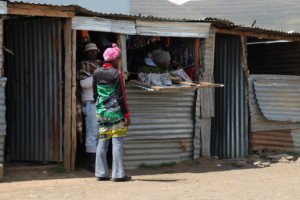 In the heart of Lesotho’s Likhoele region, a dire concern grips the community council. Their daughters are missing school, not due to a lack of interest or ability, but because of period poverty in Lesotho. Mathabo Ralengau, a mother in the community council, voices how periods are uncomfortable and humiliating, as even if you do not bleed in public, “you would think people next to you could smell something bad from you.” The potential humiliation faced by girls who attend school while on their periods, unable to afford sanitary products to hide their bleeding, is too profound to bear, placing them at risk of dropping out and being forced into child marriages. Period poverty in Lesotho is rife, due to economic and educational factors.
Economic Factors
Lesotho is one of the poorest countries in the world, with just under 50% of the population living below the national poverty line. While Lesotho has made progress in reducing poverty for those in urban areas — down from 41.5% to 28.5% — they have struggled to make any impactful change in rural areas, as poverty remains at over 60%. As a result, families living in poverty struggle to make ends meet, leaving little to no resources for menstrual hygiene products.
Educational Factors
Periods have long been considered taboo in Lesotho, preventing schools from implementing education on menstruation and consequently generating feelings of shame for their girls facing period poverty. In Lesotho, the average girl misses 50 days of school every year, as they lack access to sanitary products and education about menstruation. Consequently, their education suffers, and with it their chances of escaping poverty; in 2017, 61.3% of households led by individuals lacking primary education were considered poor, while only 24% of households led by individuals with a secondary education were poor.
Menstrual hygiene is essential in reaching the U.N.’s Sustainable Development Goals. Without a solution to period poverty, girls and women are excluded from society, as they cannot work or remain in school. Fortunately, the Lesotho government and charitable organizations are working to reach those facing period poverty.
The Vodacom Dignity Campaign
Since 2019, The Vodacom Dignity Campaign (VDC), a vital initiative under the Vodacom Lesotho Foundation (VLF), has been committed to ending period poverty and tackling the stigma around menstruation. Through implementing education on periods, raising awareness of the obstacles to accessing sanitary products, and providing period-friendly sanitary facilities and products, the VDC has already made huge progress. By Menstrual Hygiene Day on May 28, 2022, the VDC had already distributed “ecologically sustainable, reusable, washable, modern, eco-friendly sanitary pads” to 2,500 schoolgirls.
World Vision Lesotho
On February 1, 2022, World Vision Lesotho (WVL) and the VLF pledged to provide reusable sanitary pads to the most vulnerable and isolated girls from Leribe, Thaba-Tseka and Mokhotlong, aiming to reach 600 girls by the end of 2023. While celebrating Menstrual Hygiene Day on May 28, 2022, the WVL promoted its goal of “making menstruation a normal fact of life by 2030.” Her Majesty Queen Masenate Mohato Seeiso attended the celebration as the World Vision child protection champion in Lesotho.
Her Majesty addressed the people, calling for an end to the discrimination of women due to their menstruation, saying, “It is high time that we should have the conversation with the boys… We have to do away with the stigma around menstruation.” While promising to urge the government to end period poverty in Lesotho, Her Majesty also highlighted the disparity in providing free condoms but not free sanitary pads: “This is an emergency, this is urgent, and a natural biological process [but] those ones [condoms] are not emergency.”
Motion on the Provision of Free Sanitary Towels in Schools
In 2019 Mr. Kose Makoa, a Member of Parliament representing the Alliance of Democrats in the National Assembly, proposed the motion of free sanitary pads in schools, suggesting they should be included in the national budget. He recognized the taboo surrounding menstruation was “impacting negatively to their [schoolgirls] normal schooling as they miss classes or end up dropping out of school.”
The motion received support and was passed, urging the government to provide free sanitary products to schools, ending period poverty in Lesotho for good. Although the government responded by occasionally providing free sanitary products to schools and ditching the 15% tax on sanitary products to make them more affordable, they are still too expensive for many families in poverty, and more help is needed, such as implementing the motion of free sanitary pads in schools full-time.
As these organizations and initiatives work toward destigmatizing menstruation and providing free sanitary pads, there is hope that girls in Lesotho will have the opportunity to stay in school and ultimately break free from the cycle of poverty.
– Alice Isola
Photo: Flickr
