Mushroom Farming Combats Global Poverty
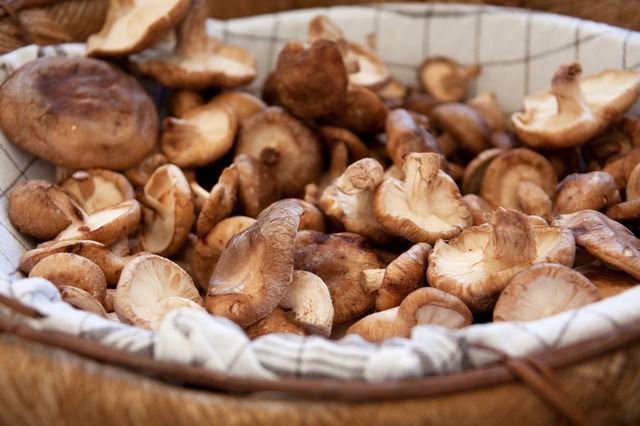 In the United States, mushrooms pop up on pizzas, in salads and as a side to any number of popular dishes. Most people do not give much thought to where the fungus on their fork came from. However, mushrooms are not an afterthought to many around the globe. Indeed, mushroom farming combats poverty globally, providing both a source of nutrition and income.
How Mushrooms are Farmed
Unlike most crops, mushrooms are not grown in a field. Instead, these edible fungi thrive in dark, warm places. Thus, many people farming mushrooms on a small scale do so in their homes or in an outbuilding.
Mushrooms thrive off decaying vegetation and other agricultural waste, and they can be raised in stacked beds, making them fairly low maintenance, especially compared to fruits or vegetables. They can also grow three times as quickly as some other crops, so they provide a steadier source of food or income.
Successfully cultivating mushrooms can yield a return of up to four times the initial investment. Additionally, mushrooms are a source of “potassium, calcium, magnesium and iron” as well as fiber and protein. This makes them an adaptable and potent tool in fighting malnutrition.
Successes in East Asia
Mushrooms provide an alternative income source for many women in Bangladesh. One such woman is Kajal. At a young age, both her legs were paralyzed. After she married, Kajal discovered Access Bangladesh, an initiative designed to teach disabled people practical skills they could use to earn money.
One such skill was mushroom cultivation, which provides Kajal and her family around 3,000 taka ($35) monthly. For a country with a GDP per capita of around $1,200, this additional income can be a deciding factor in a family’s subsistence. With funding from Canada, the Bangladesh Skills for Employment and Productivity Project and Access Bangladesh have helped nearly 600 people learn mushroom cultivation, around 300 of whom are women.
In Nepal, mushrooms possess the power to play a critical role in alleviating poverty. However, many communities lack the key resources needed to successfully cultivate mushrooms. These resources include sufficient upfront investment, current technologies and high-quality mushroom spawn.
To address these barriers, PHASE Worldwide, an NGO operating in Nepal, provides high-quality mushroom spawn and teaches cultivation methods to impoverished communities. In addition to their work with mushrooms, PHASE has trained more than 1,000 farmers in vegetable cultivation.
A Growing Market in Africa
As in East Asia, mushrooms are helping farmers in Africa combat poverty and create sustainable agriculture. In Rwanda, Laurent Demuynck, a former New York brewery operator, started Kigali Farms in 2010. His goal was to create a commercial mushroom enterprise in Rwanda. African mushroom farmers commonly ran into trouble with low yield and high costs, something Demuynck wanted to solve. Kigali Farms started growing oyster mushrooms, and in 2016, USAID’s Feed the Future Initiative partnered with Kigali to establish button mushroom production as well. Today, Kigali Farms is exporting mushrooms to Kenya and Uganda, as well as selling them locally.
One input needed for mushroom cultivation is straw, which Demuynck purchased from local wheat farmers, mainly women. This proved a boon for the wheat farmers since the straw left over after the harvest had previously held little value. USAID assisted in the effort and established three collection centers for farmers to store their straw before selling it to Kigali.
How Mushrooms Made One Girl Famous
In Tibet, matsutake mushrooms—one of the most valuable mushrooms in the world—grow at elevations of 13,000 feet or more. Faced with increasing bills, Geru Drolma went searching for matsutakes and live-streamed the search. That video received a large number of views in a short period of time and requests for matsutakes and cordyceps, another type of fungus, poured in.
This led Drolma and other villagers in her remote Tibetan community to set up a cooperative. They made more than $500,000 harvesting fungi in their first year. Drolma’s initial mushroom video also led her to concentrate on filming and posting snippets of Tibetan life. She has garnered 1.9 million followers since then.
Mushrooming Success
People like Laurent Demuynck and Geru Drolma all started with an idea that grew into something that impacted those around them. Additionally, initiatives in Bangladesh and Nepal also helped kickstart similar ideas. Thanks to ideas with backing, East Asian and African mushroom farming combats poverty at an extremely successful rate.
– Jonathan Helton
Photo: Pixabay
