Congressional Thoughts on the Middle East and North Africa
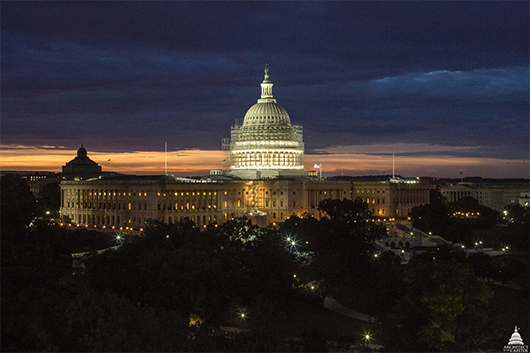
On July 22, the Subcommittee on the Middle East & North Africa (MENA) met for a hearing on promoting U.S. commerce in the region. Congressional members of the subcommittee called upon two witnesses from the State Department, Mr. Scott Nathan, special representative for Commercial & Business Affairs, and Ms. Elizabeth Richard, deputy assistant secretary for the Bureau of Near East Affairs, to give testimony and answer questions.
The hearing largely consisted of a few Congress members inquiring about the state of the MENA economies and the State Department officials responding in optimistic anecdotes. Interestingly, throughout the hearing, certain assertions were made and accepted without dispute.
First, the economic state of affairs in the MENA region is far from ideal. As Congresswoman Ros-Lehtinen observed, the MENA region accounts for 5.5% of the world’s total population, yet economic output falls short of expectations, just contributing 4% of the world’s GDP.
Second, poverty facilitates the fostering of terrorism. This assertion was repeated by all Congress members who gave initial statements. For example, Congressman Darrell Issa said “Everyday ISIS is in the frontlines of discussion. When in fact, the areas that have fomented so much opportunity for extremism does not get looked at properly.” He followed up by listing one of the areas that does not get looked at properly as “the opportunity in an entrepreneurial, economic way to go from a lack of prosperity to prosperity.”
Third, U.S. businesses have a role to play in strengthening the economies of these countries. Congresswoman Ros-Lehtinen went as far as to say, “Increasing trade with the region will strengthen business, the missing piece of the Arab Spring in the region.”
In all, the Congress members argued that the poor state of the economies of the MENA region allowed terrorism to grow and that a crucial part of the U.S. strategy for thwarting terrorism should be to encourage U.S. business investment in the region.
Analysis of global poverty reveals the Middle East and North Africa, home to roughly 350 million people, are not in a particularly dire economic situation relative to other regions. Of the 350 million, only around 2% live in extreme poverty, on less than $1.25 a day, according to the World Bank in 2010. In contrast, in China that figure is 12%, in India, 33%, and in Sub-Saharan Africa, 48%.
Granted, since the Arab Spring in 2011, holistic data on the economies in the region have been hard to attain. Congressman Gerry Connolly’s line of questioning touched upon that reality and the State Department acknowledged it.
Nevertheless, certain realities are known for certain. Poverty has increased since the Arab Spring in certain parts of the region, notably Syria and Iraq. Since 2011, 4 million Syrians have fled Syria as the civil war rages, of which 2.3 million went to MENA countries. Where there is conflict and turmoil, inevitably the straining of resources and poverty follows.
But even with the worsening of the economic situation in certain areas of the MENA region, areas such as China, India and Sub-Saharan Africa still struggle with much greater extreme poverty.
Yet these regions do not face the specter of terrorism like the MENA region does. Leading to the obvious conclusion, terrorism is a multi-causal phenomenon that cannot be simply attributed to a lack of economic opportunity. But as the Congress members asserted, lack of economic opportunity intuitively does allow for terrorism’s growth as people in poverty have little to lose and less to hope for.
And although reducing poverty in the region will be far from a magic bullet against terrorism, it should not only be pursued for normative reasons but for geopolitical considerations as well.
Maybe the Congress members are right in the importance they place on the role of U.S commerce in the region in hampering terrorism. There is only one way to know, and millions to be helped out of extreme poverty.
– Connor Bohannan
Sources: Congressional Research Service, House of Committee Foreign Affairs, World Bank 1, World Bank 2, UN Refugee Agency
Photo: Flickr
