The Resurgence of the #MeToo Movement in Egypt
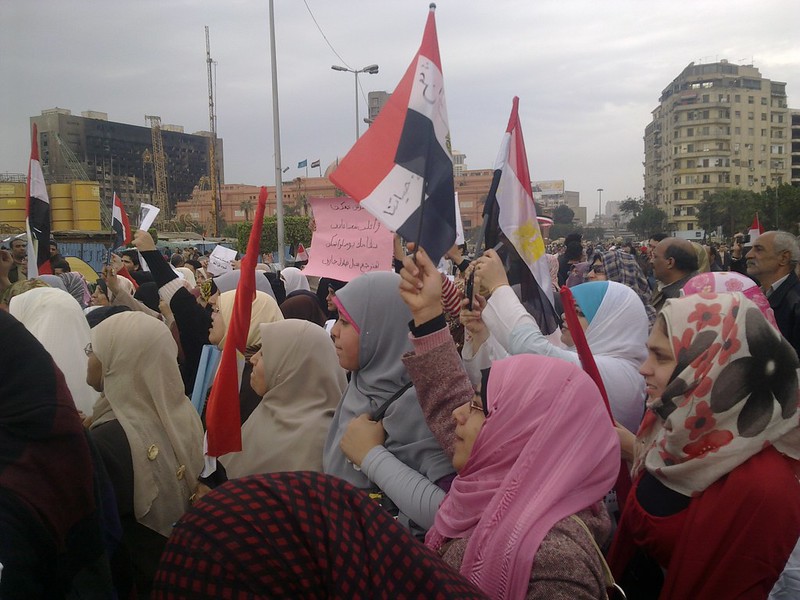 Egypt has consistently struggled with sexual assault, an issue that goes hand-in-hand with poverty. A United Nations study showed that 99% of all Egyptian women have experienced some form of sexual assault. Additionally, another study in 2017 declared Cairo the most dangerous city in the world for women. Learn about the history and reasoning behind the #MeToo movement in Egypt.
Egypt’s History of Sexual Violence
The #MeToo movement in Egypt may be contemporary, but Egypt’s sexual assault problem has been around for many years. In an attempt to replace the president of Egypt with a more democratic figure, people took to the streets in early 2011 in what is known as the Arab Spring. Although the protests succeeded in orchestrating the resignation of Egyptian president Hosni Mubarak, any dreams of a democratic ruler failed to come true, and women faced worsening sexual violence.
Under Mubarak’s rule, sexual assault was covered up by the president’s own police force. After these aggressive authorities were removed, Egypt’s sexual assault issue was thrust into the world spotlight when stories emerged of several women being sexually assaulted in a public square in Cairo. The perpetrators faced no consequences, and the women were blamed for their own assaults. This paved the way for future sexual assaults to go unpunished in Egypt.
The Allegation that Reignited the Movement
Despite protests and performative legislative changes, the sexual assault of lower-class citizens in Egypt continues to occur at alarming rates. Ahmed Bassam Zaki, a 22-year-old former student at the American International School and the American University in Cairo, was accused of sexual assault by over 100 women in June 2020. The schools Zaki attended are regarded as some of Egypt’s most elite universities for wealthy families, which is what makes his case so unique. For the first time, an upper-class male was held responsible for sexual violence.
Zaki has been officially accused of blackmail and rape, with one of his victims being just 14 years old. Combined with several other stories of sexual assault that emerged in the last decade, this story contributed to the resurgence of the #MeToo movement in Egypt. The country’s campaign is supported by an Instagram account called Assault Police, where Egyptian women have shared their stories of assault. Zaki’s story clearly demonstrates that, regardless of age or social standing, sexual harassment is a rampant issue throughout Egypt. Although this concept applies to countries worldwide, the Egyptian government’s choice to ignore this problem has earned Cairo its reputation as an unsafe space.
Change Is on the Horizon
The Egyptian government has prioritized its presently unstable economy over many of its other problems, including sexual violence. Although Egyptian women have protested this issue in the past, their protests have failed to gain traction due to the dangers they face in public places. Furthermore, the default response to a woman’s sexual assault story in Egypt is to place the blame on her for dressing or behaving a certain way. Both of these considerations have essentially barred women from coming forward to share their stories, until now.
Women have embraced the opportunity to finally share their stories, and the prosecution of wealthy men like Zaki is a powerful step in the right direction. In response to Egypt’s #MeToo movement and the Assault Police Instagram page, current president Abdel Fattah el-Sissi has enacted a law that increases protections for sexual assault victims. Although the country still has much work to do, the #MeToo movement in Egypt has made one thing clear: the country’s women refuse to be silenced any longer.
– Natalie Tarbox
Photo: Flickr
