• Link to X
  • Link to Facebook
  • Link to Instagram
  • Link to TikTok
  • Link to Youtube
  • About
    • About Us
      • President
      • Board of Directors
      • Board of Advisors
      • Financials
      • Our Methodology
      • Success Tracker
      • Contact
  • Act Now
    • 30 Ways to Help
      • Email Congress
      • Call Congress
      • Volunteer
      • Courses & Certificates
      • Be a Donor
    • Internships
      • In-Office Internships
      • Remote Internships
    • Legislation
      • Politics 101
  • The Blog
  • The Podcast
  • Magazine
  • Donate
  • Click to open the search input field Click to open the search input field Search
  • Menu Menu
Blog - Latest News
Global Poverty

WHO: Maternal Mortality Realities Worldwide
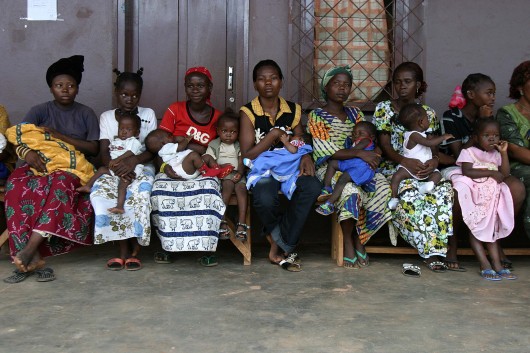
Maternity_health_Africa
According to a report by the World Health Organization (WHO), maternal mortality is a prominent issue in many developing countries, especially in sub-Saharan Africa and South Asia.

Deaths from childbirth disproportionately impact the poor as well as women living in rural areas. According to the WHO, “99 percent of all maternal deaths occur in developing countries.”

In addition, more than 50 percent of deaths during childbirth occur in sub-Saharan Africa.

The WHO also asserts that many complications that arise during pregnancy are treatable. The organization states that complications that present before birth may worsen during pregnancy and consequently become fatal.

Common complications accounting for deaths during pregnancy include severe bleeding (mostly after childbirth), infection, high blood pressure while pregnant, problems with the delivery and unsafe abortion.

According to the U.N., girls aged 15-19 are especially likely to experience fatal births.

The WHO explains that only 51 percent of women can afford skilled care by “a midwife, a doctor, or a trained nurse”. Therefore, millions of women face risks from unmonitored pregnancies. The WHO goes on to say that women need access to skilled care, not only during pregnancy, but also during childbirth and afterward.

A report from the U.N. shows that significant progress has been made in addressing the issue of maternal mortality. The organization states that Equatorial Guinea has achieved its Millennium Development Goals, reducing death during childbirth by 81 percent. Additionally, Eritrea reduced maternal mortality by 77 percent; Ethiopia saw a 69 percent decline and Rwanda reduced maternal mortality by 76 percent.

Moreover, U.N. Secretary Ban Ki-moon has launched a program named the Global Strategy for Women’s, Children’s and Adolescents’ Health, 2016-2030. The strategy “seeks to end all preventable death of women, children and adolescents and create an environment in which these groups not only survive, but thrive and see their environments, health and wellbeing transformed”.

– Mayra Vega

Sources: World Health Organization, United Nations 1, United Nations 2, Central Intelligence Agency
Photo: Flickr

March 31, 2016
Share this entry
  • Share on Facebook
  • Share on X
  • Share on WhatsApp
  • Share on Pinterest
  • Share on LinkedIn
  • Share on Tumblr
  • Share on Vk
  • Share on Reddit
  • Share by Mail
https://borgenproject.org/wp-content/uploads/borgen-project-logo.svg 0 0 Borgen Project https://borgenproject.org/wp-content/uploads/borgen-project-logo.svg Borgen Project2016-03-31 01:30:042024-05-25 00:32:23WHO: Maternal Mortality Realities Worldwide

Get Smarter

  • Global Poverty 101
  • Global Poverty… The Good News
  • Global Poverty & U.S. Jobs
  • Global Poverty and National Security
  • Innovative Solutions to Poverty
  • Global Poverty & Aid FAQ’s
Search Search

Take Action

  • Call Congress
  • Email Congress
  • Donate
  • 30 Ways to Help
  • Volunteer Ops
  • Internships
  • Courses & Certificates
  • The Podcast
Borgen Project

“The Borgen Project is an incredible nonprofit organization that is addressing poverty and hunger and working towards ending them.”

-The Huffington Post

Inside The Borgen Project

  • Contact
  • About
  • Financials
  • President
  • Board of Directors
  • Board of Advisors

International Links

  • UK Email Parliament
  • UK Donate
  • Canada Email Parliament

Get Smarter

  • Global Poverty 101
  • Global Poverty… The Good News
  • Global Poverty & U.S. Jobs
  • Global Poverty and National Security
  • Innovative Solutions to Poverty
  • Global Poverty & Aid FAQ’s

Ways to Help

  • Call Congress
  • Email Congress
  • Donate
  • 30 Ways to Help
  • Volunteer Ops
  • Internships
  • Courses & Certificates
  • The Podcast
Link to: The World Bank Funds The Philippine Anti-Poverty Program Link to: The World Bank Funds The Philippine Anti-Poverty Program The World Bank Funds The Philippine Anti-Poverty Program Link to: Differences Between Senators and Congressmen Link to: Differences Between Senators and Congressmen Differences Between Senators and Congressmen
Scroll to top Scroll to top Scroll to top