5 Ways M-TIBA Kenya Transforms Health Care
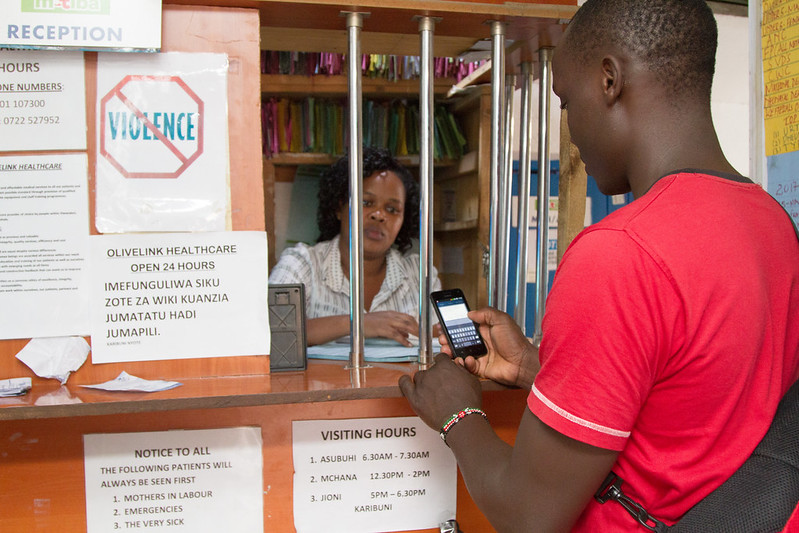 In Kenya, high out-of-pocket costs and limited insurance coverage continue to make health care unaffordable for millions. But a mobile platform called M-TIBA is changing that by helping users save, manage and spend health funds directly from their phones. Through partnerships with government programs, nongovernmental organizations (NGOs) and local providers, M-TIBA Kenya has become a model for digital health financing in lower-income settings.
5 Ways M-TIBA Kenya Transforms Health Care
- Mobile Health Wallet for Everyday Use. The development of M-TIBA happened through a partnership between Safaricom, CarePay and the PharmAccess Foundation. It functions as a mobile health wallet, allowing users to save funds specifically for medical expenses. Accessible through even basic mobile phones, the platform helps individuals make payments at nearly 5,000 health care providers, hospitals and pharmacies across Kenya. Users can receive funds from relatives, employers or NGOs and use them to pay for consultations, tests, prescriptions or treatment. The wallet ensures transparency and prevents misuse by restricting the funds for health care only.
- Widening Reach Through Public Programs. The Kenyan government and the National Health Insurance Fund have integrated M-TIBA into local health initiatives. In Kisumu County, a pilot program helped more than 270,000 households enroll in community-based health coverage, providing access to maternal care, immunizations and chronic disease management. By digitizing enrollment and payment systems, the platform improves efficiency and reduces paperwork for both patients and clinics. These programs often include subsidies deposited directly into M-TIBA wallets, removing financial barriers to care.
- Community Support from NGOs. Organizations like Amref Health Africa have played a critical role in making M-TIBA accessible to underserved populations. Amref supports the initiative by training community health workers to teach families how to use the platform. They also run awareness campaigns to promote health savings and encourage regular medical visits. In areas where digital literacy is low, NGOs have helped distribute phones to trained volunteers, who assist residents with registration, deposits and navigation of health services.
- Faster Claims and Transparent Spending. In 2024 and early 2025, M‑TIBA introduced AI-driven processes for claims review and approvals. As of April 2024, the system began auto-processing 40% of claims, cutting approval times to less than 12 hours. By September 2024, approval times dropped by 95% due to automation and real-time analytics. As of February 2025, industry leaders gathered at the Digital Pulse CEO Roundtable in Nairobi acknowledged that AI integration shortened payment cycles by up to 95% and reduced health care costs by as much as 15%.
- Building Toward Universal Health Coverage. With more than 4.8 million users, M-TIBA has become a key part of Kenya’s progress toward universal health care. While challenges remain—especially in remote areas lacking mobile coverage or financial access—the platform continues to expand.
Looking Ahead
M-TIBA Kenya demonstrates how mobile technology, when supported by government and nonprofit partners, can bridge gaps in health access. Furthermore, it can empower individuals to manage their own care. The continued rollout of AI, combined with strong public‑private‑community partnerships, positions M‑TIBA as a key player in Kenya’s push for universal health coverage. The scaling of digital health wallets offers a replicable model for other lower‑income countries seeking to close care gaps and empower individuals to manage their health funds effectively.
– Hayden Chedid
Hayden is based in Parker, CO, USA and focuses on Technology and Global Health for The Borgen Project.
Photo: Flickr
