Kenya’s Domestic Vaccine Financing
 Despite the fact that 41% of Kenya’s children still live in monetary poverty and 52% live in multi-dimensional poverty, the country remains one of the strongest economies in Africa.
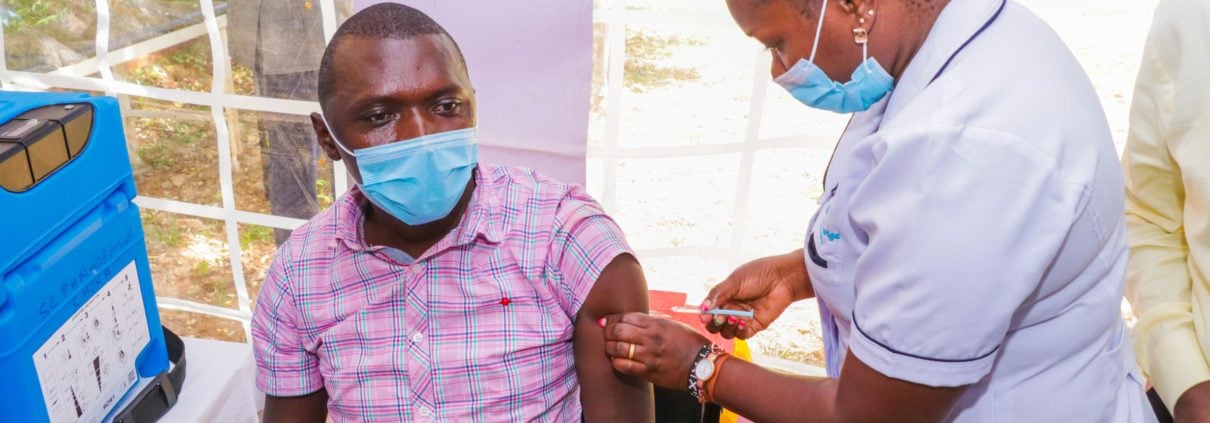
Providing access to vaccination programs in Kenya is essential, especially for rural communities where access to these vaccines is often scarce. These programs ensure less spreading and prevalence of vaccine-preventable diseases like measles, polio, tuberculosis and hepatitis B. Immunization efforts help create herd immunity and protect elderly patients and children who cannot be vaccinated from illness.
Kenya’s Transition to Domestic Vaccine Financing
As international donor funding for global health becomes more expensive, Kenya’s transition toward domestic vaccine financing is advancing. With the country’s economy growing, health officials see Kenya as a leader in shifting away from reliance on outside aid toward self-sustained health budgets. Since 2001, Gavi has provided Kenya with vaccines and other supplies worth more than $940 million. The country entered the accelerated phase of its transition with Gavi, the Vaccine Alliance, in 2022 after its gross national income per capita exceeded the alliance’s eligibility threshold for three consecutive years. Although Kenya depends on manufacturers at the moment, it is expected to become fully self-financing by 2029 or 2030.
Vaccine manufacturers have agreed to lower prices over time, easing the path for governments to eventually include vaccine procurement into their own national health budgets. At its June 2025 replenishment summit, Gavi secured up to $200 million in cost savings for its programs from manufacturers. They unlocked $4.5 billion in complementary financing from development finance institutions, both intended to stretch available resources further as donor contributions tighten.
Global health funding has become increasingly fragile. Gavi’s 2025 replenishment summit secured just more than $9 billion for 2026 to 2030, falling short of its $11.9 billion target, after the United States announced it would not contribute further to the alliance. The shortfall has forced donor-dependent countries to confront the sustainability of their immunization programs sooner than expected.
A Track Record to Build On
Kenya was also one of the original pilot countries for the malaria vaccine, giving it a track record of successful program delivery to build on. The country has received more than $940 million in vaccines and supplies from Gavi since 2001, covering immunizations including pneumococcal, rotavirus and malaria vaccines, and introduced the typhoid conjugate vaccine into its routine immunization schedule in 2025. Under a new funding arrangement approved as part of Gavi’s 2026-2030 strategy, Kenya will now receive vaccine funds directly, giving the Kenya Medical Supplies Authority greater control over procurement and planning.
Cabinet Secretary for Health Aden Duale emphasized how important the process of safeguarding existing gains could strengthen domestic vaccine financing. Continued collaboration with partners will ease this process and facilitate full independence. Kenya’s Ministry of Health has emphasized that a carefully managed transition is essential to protect existing immunization gains while progressively building domestic financing capacity. The ministry’s next National Immunization Strategy, covering 2025 to 2030, is expected to translate evidence into action from ongoing reviews into stronger service delivery and expand access to vaccines.
Kenya’s Shift on Vaccine Availability
Kenya is working on establishing itself and transitioning from reliance on its partnership with Gavi. Local organizations like health nongovernmental organizations network (HENNET) and Global Health Advocacy Incubator (GHAI) are helping to elevate immunization financing on the nation’s agenda. The country is also working on paying off its Gavi co-financing obligation for the 2025-2026 year with 62% already paid off. This is a promising step toward full independence.
In addition, a Parliamentary Caucus on Immunization is giving vaccine financing an institutionalized home with leadership from Kenya. The shift from easy provision in national stores to enable availability and easy access in remote villages is a focus of the country’s health system. Now, vaccines are being delivered to 65 remote facilities in these villages.
Thanks to all these efforts, Laikipia County has established a dedicated 500,000 Kenyan shilling (about $3,875) budget line for immunization, a small but revolutionary step toward financial ownership at the county level. This provides a plan for all 47 counties, showcasing that local leadership can create resilience.
A Model for Other Nations
Kenya’s domestic vaccine financing transition offers lessons for other developing nations seeking to build durable, self-reliant health systems. As Gavi shifts more control and responsibility to national governments under its new strategy, Kenya’s experience navigating financing gaps, extended timelines and expanded local authority positions the country as an early test case for what local ownership of immunization programs looks like in practice. As the country continues to work to provide local assistance in vaccines to its citizens with the government paying for vaccines and immunization program costs, mothers who walk for hours find what they came looking for. This is what a partnership between civil society, the government and funders looks like. This is what a system that meets a mother where she arrives for the sake of a healthy Kenyan child looks like. This offers a possible model for other nations as global donor priorities continue to shift.
– Joy Kohol
Joy is based in Muncie, IN, USA and focuses on Good News and Global Health for The Borgen Project.
Photo: Pexels
