How the Ghana Chocolate Industry Is Growing
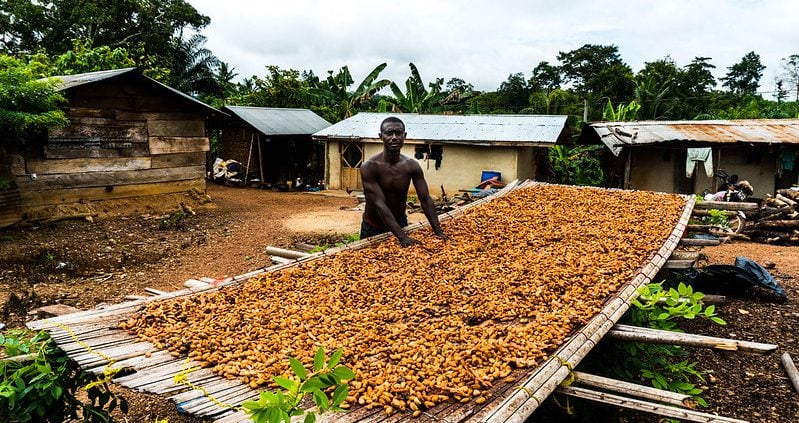 Ghana is the world’s second-largest cocoa producer and one of the largest suppliers of cocoa beans to the global chocolate industry. Cocoa supports the livelihoods of hundreds of thousands of farming families across the country. However, many cocoa farmers remain economically vulnerable, creating an opportunity for Ghana to capture more value from the crop it produces.
From Cocoa Beans to Chocolate
The Ghana chocolate industry is expanding as the country invests in domestic cocoa processing and chocolate manufacturing. By turning more cocoa beans into cocoa powder, butter, liquor and chocolate products within Ghana, the country can create economic opportunities beyond farming while retaining more value from its agricultural exports.
The International Labour Organization (ILO) found that Ghana earned $2.71 billion from cocoa exports in 2017, with approximately 80% of those exports consisting of raw beans. The organization also found that increasing domestic processing could create thousands of formal jobs.
Cocoa and Poverty Reduction
The expansion of the Ghana chocolate industry matters as cocoa farming has historically played a role in reducing poverty. According to the World Bank, the poverty rate among cocoa farmers fell from approximately 60% in 1991 to 24% in 2005 as cocoa production expanded.
Despite this progress, poverty remains a significant concern in Ghana. The World Bank reports that more than 20% of the population continues to experience poverty, with poverty rates exceeding 50% in some northern regions.
Cocoa farmers face additional financial challenges. The International Cocoa Initiative reports that Ghanaian cocoa farmers earn approximately $0.40 to $0.45 per person per day from cocoa, with cocoa accounting for about two-thirds of farmers’ household income. Small farms, low yields and high input costs can make it difficult for farming families to build financial security.
Expanding the Ghana chocolate industry cannot eliminate rural poverty by itself. However, increasing the amount of cocoa processed domestically could create additional employment and economic activity while strengthening demand for cocoa produced by Ghanaian farmers.
COCOBOD Invests in Farmers
The Ghana Cocoa Board, or COCOBOD, oversees cocoa production, marketing, quality control and industry development. Its programs also aim to improve farm productivity and farmer livelihoods.
COCOBOD reported in 2024 that it had rehabilitated 74,813 cocoa farms covering more than 67,000 hectares. Those farms belonged to 56,105 farmers. Another 44,480 rehabilitated farms, owned by 28,510 farmers, had begun producing cocoa.
COCOBOD also reported that 792,954 cocoa farmers and their households and dependents had been registered in its farmer database. The system allows the organization to better track farmers and improve the distribution of resources.
These programs address poverty at the farm level by supporting the productivity of an industry on which rural households depend. Higher productivity can give farmers the opportunity to generate more income from existing farmland.
Processing Creates Jobs
Domestic processing adds another economic layer to Ghana’s cocoa sector. The ILO studied two cocoa processing companies in Ghana to estimate the employment effects of expanding the industry.
The study found that cocoa processing creates formal jobs in manufacturing, but that the industry remains relatively capital intensive. The ILO estimated that processing 40% of Ghana’s cocoa before export could create approximately 4,000 permanent jobs directly in cocoa processing.
The jobs would include positions requiring different levels of skills depending on the technology used at processing facilities. The ILO also found that processing jobs tend to offer higher-quality employment, including longer-term positions and social security benefits.
The Ghana chocolate industry can create additional opportunities beyond processing plants. Manufacturing chocolate products requires packaging, transportation, marketing and other inputs, connecting cocoa production to a broader domestic supply chain.
Partnerships Strengthen Farmer Livelihoods
International organizations have also developed programs focused on the financial security of Ghanaian cocoa farmers. The World Cocoa Foundation, for example, has supported initiatives involving financial services and income diversification.
One World Cocoa Foundation-supported project in Ghana created 41 village savings and loan associations across 24 communities. The groups included 1,132 members, 84% of whom were women. Participants collectively saved $176,122, while $90,979 was distributed through loans.
These savings groups give farmers and their families access to financial tools that can help cover farm expenses and household needs. The program illustrates how economic support can complement efforts to increase agricultural productivity.
Building More Value at Home
Ghana’s cocoa sector demonstrates how agricultural production can contribute to poverty reduction while creating opportunities for further economic growth. Cocoa farming helped reduce poverty among cocoa-producing households during earlier periods of expansion, while new investments in processing could create additional employment and economic activity.
The Ghana chocolate industry still faces challenges, including low farm productivity, high production costs and fluctuations in global cocoa markets. Domestic processing alone will not guarantee higher incomes for farmers.
However, the ILO’s employment projections and COCOBOD’s investments in tens of thousands of farms show measurable opportunities within the sector. By expanding processing alongside programs that improve farmer productivity and financial resilience, Ghana can retain more economic value from its cocoa and create opportunities for the communities that produce it.
– Camille Utter
Camille is based in Seattle, WA, USA and focuses on Business and Technology for The Borgen Project.
Photo: Flickr
