Investment in Africa: How the UK Aims To Reduce Migration
 The U.K. has recently seen a rise in politicians attempting to decrease migration into the country, especially via small boats, which are often unsafe for passengers and can lead to fatalities. A part of these efforts involves investment in Africa, with the intention of creating job opportunities. This initiative is currently focused on Ethiopia.
The British foreign ministry stated that almost a third of people traversing the English Channel on “small boats over the past two years” had departed from the Horn of Africa, which Ethiopia is a part of.
UK Foreign Minister’s Visit to Ethiopia
During a visit to Ethiopia, the U.K. Foreign Secretary met with Safaricom, a company supported by British International Investment. Safaricom provides technological connectivity and mobile money services across East Africa and has helped improve health, employment and education in Kenya. One of its subsidiaries, focused on Ethiopia, supported the country’s “digital transformation” in 2022.
During the visit, the secretary signed a Joint Development Agreement with Gridworks to proceed with two projects, which will cost more than $400 million. The Foreign Secretary also pledged financial support toward aid efforts in Africa, totaling $23.91 million. The aim is to improve access to health care, clean water and food, as well as to tackle women’s and children’s malnutrition.
Gridworks, which is also a British International Investment-backed organization, aims to increase investment in Africa from companies and businesses by providing electrical access. In Africa, “around 600 million people have no access to electricity.” This is a major barrier to economic growth because businesses must use diesel generators to supplement the lack of electricity in the area.
Safaricom and Its Impacts
Safaricom provides technological connectivity in Kenya, providing “2G, 3G, 4G and 5G in aggregate covering [more than] 99% of Kenya’s population.” It currently enables 32 million people to access and use mobile banking. This has lowered financial exclusion in the area to 16% of the adult population.
The organization is also committed to gender equality and sustainable climate practices; it wishes to have “50:50 senior management gender parity by 2025” and achieve net-zero carbon emissions by 2050. Safaricom has two foundations: the M-PESA Foundation and the Safaricom Foundation.
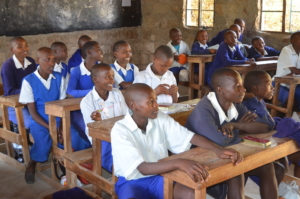
The former is responsible for the Citizens of the Future project, which has contributed hugely to education in Kenya. The project has helped more than 2.5 million students and teachers across more than 2,500 schools. The Citizens of the Future project has also helped renovate schools, improve ICT and provide scholarships.
Furthermore, it involves local communities in its work so they can understand changes made within the school. One beneficiary of the Citizens of the Future project, Mrs. Rebecca Asiko, Acting Head of Institution at Ekwanda Primary School, told Safaricom, “The state-of-the-art ICT hub means we can now teach our learners digital skills and the modern kitchen will ensure that we provide clean meals to the children, who need good nutrition to grow and concentrate in class.”
The Safaricom Foundation invests in health, education and economic empowerment. Its health focus is on “Maternal, Newborn, Adolescent and Child Health (RMNCAH) services.” It helps provide screenings for cardiovascular diseases, cancers, respiratory diseases and diabetes to “enable early detection, treatment and management.”
Its educational goals are similar to those of the M-PESA Foundation: improving teacher capacity and vocational and technical education. Through “enterprise development,” it aims to improve livelihoods and empower Kenyans economically. Improving education is also likely to increase investment in Africa, as a more educated workforce attracts more businesses to the region.
It also opens up more opportunities for employment for the population, which further improves the local economy as residents begin to have disposable income that they can then spend at local businesses.
Gridworks and Its Impacts
The Joint Development Agreement will allow Gridworks to create two transmission projects. These projects aim to meet Ethiopia’s industrial energy demand and, if successful, would help fuel its economy by attracting more investment from businesses in Africa. It would also improve its relations with neighboring countries and promote interconnectedness.
Gridworks has also succeeded with projects like the Moyi Power initiative in the Democratic Republic of Congo, which brought renewable energy to three previously isolated cities. Within five years, the project is expected to provide electricity to 37,000 households and businesses.
Conclusion
While these projects aim to attract investment to Africa and strengthen local economies, foreign aid still matters. Foreign investment not only makes these projects possible but also supports humanitarian work across the region.
UNICEF, which has assisted Ethiopia for more than 70 years, has played a major role in shaping the country’s economy. Its work focuses on children’s survival, health, social policy, protection, education, development and nutrition.
The U.K. Foreign Secretary recognizes the need for continued aid and has pledged to keep supporting organizations such as UNICEF while also investing in economic-focused projects.
– Ryan Cowen
Ryan is based in Brighton, UK and focuses on Good News and Politics for The Borgen Project.
Photo: Flickr
