India’s Forest Rights Act: A Tribal Village’s Success Story
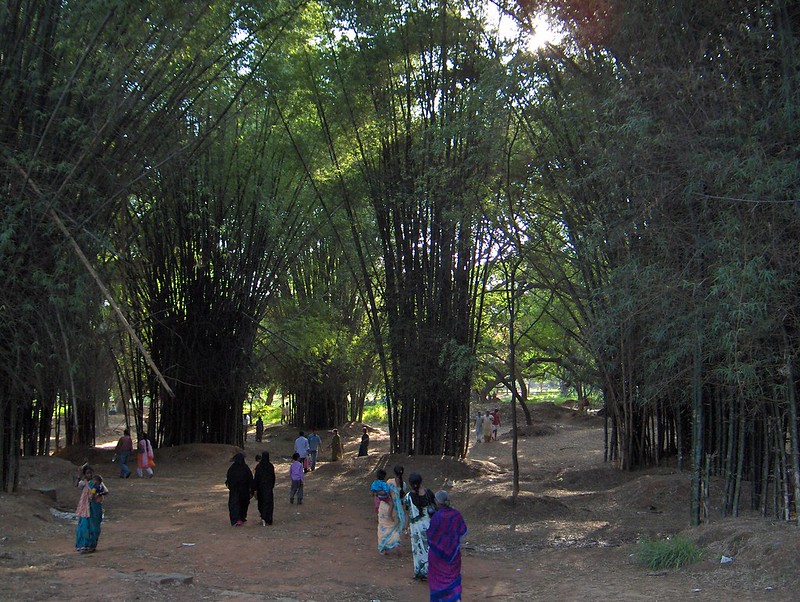 India’s economic growth has lifted millions out of poverty, yet rural and indigenous communities continue to face deep-rooted inequalities. The 2006 Forest Rights Act aimed to address historical injustices by granting land rights to tribal communities, though its impact has been uneven. Pachgaon, a small village in Maharashtra, stands out as a success story. By securing legal rights to their forest land, villagers transformed their economy through a community-run bamboo business—showing how legal recognition and collective action can drive sustainable, inclusive development.
Poverty in India
India, with a population of 1.4 billion, remains a nation of contrasts. About 66% of its people live in rural areas and despite economic growth, 13% still survive on less than $1.90 a day. However, progress is evident—80% of adults now have bank accounts and 92% of children complete primary school, reflecting improved access to financial services and education. Yet, gender disparities persist, with women making up only 20% of the formal workforce, highlighting the ongoing need for more inclusive economic participation.
India’s significant reduction in extreme poverty over the past decade reflects both effective policy interventions and sustained economic growth. The dramatic decline from 16.2% to 2.3% in the national poverty rate—particularly the strong improvements in rural areas—highlights the country’s success in lifting millions out of the harshest conditions. Moreover, the narrowing gap between rural and urban poverty rates suggests a more balanced development approach, helping bridge long-standing regional disparities. While challenges remain, the progress so far offers a strong foundation for further inclusive and equitable growth.
India’s Forest Rights Act
The Forest Rights Act, passed in 2006, is a landmark piece of legislation in India that recognizes the rights of indigenous communities to claim ownership of federally-owned forest land they have traditionally inhabited and depended on. It aims to correct historical injustices by granting legal land titles to forest dwellers who have lived in and protected these areas for generations.
The Residents of Pachgaon
One community that continues to benefit from the law is the residents of Pachgaon in the Indian state of Maharashtra. Pachgaon’s transformation from a struggling village to a thriving forest-based enterprise is an example of how India’s Forest Rights Act can be successfully implemented. After generations of dispossession under colonial and state control, the local Gond adivasi community used the law to reclaim ownership of 1,006 hectares of forest land in 2012. While many indigenous communities remained unaware of their rights or faced bureaucratic resistance, Pachgaon’s residents—supported by local activists like Vijay Dethe—persistently pursued their claim. Once they secured legal forest rights, the village launched a community-run bamboo business under a gram sabha model, rejecting hierarchy in favor of collective decision-making.
The Outcome
Pachgaon’s bamboo enterprise has become a cornerstone of the village’s economic revival, generating a profit of 34 million rupees (approximately $400,000) over the past decade—equivalent to around $41,000 per year. This community-run business, established after villagers secured legal rights to 2,500 acres of forest, not only provides steady employment but has also stemmed the tide of migration to urban centers like Gujarat and Karnataka.
Managed democratically by a gram sabha, the profits are reinvested into the community—supporting education, infrastructure and the purchase of additional land for expansion. Even during monsoon seasons, when bamboo harvesting halts, the funds serve to maintain employment through local development projects, ensuring the preservation of economic stability and cultural roots.
The profits have not only provided stable incomes and reduced migration but also funded local development projects, including infrastructure, education and land purchases for business expansion. Pachgaon’s success highlights the transformative power of legal recognition, local leadership and shared ownership in restoring both livelihoods and dignity to tribal communities.
Looking Ahead
While India still faces challenges in achieving equity and full participation for all, examples like Pachgaon demonstrate how legal empowerment and grassroots action can lead to sustainable, locally driven development. As the country continues to grow, scaling such successes could be key to ensuring that progress reaches even its most marginalized citizens.
– Phoebe Guildford
Phoebe is based in Cardiff, Wales and focuses on Good News for The Borgen Project.
Photo: Flickr
