Hunger in Taiwan
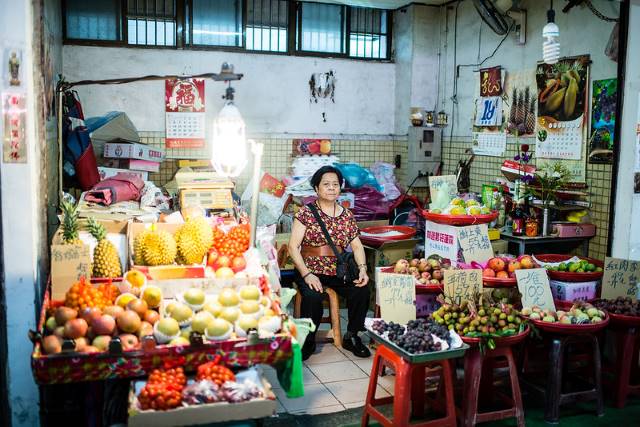 Taiwan is an independent island nation off the coast of mainland China. Taiwan has struggled with its status since 1949, when Chiang Kai-shek’s troops were defeated in the civil war in China by the Communists and Chiang fled to the island with his supporters. Chiang’s dictatorship reigned until his death, followed by a transition to democracy that began in the 1980s and led to its first elections in 1996. Although Chiang claimed to represent the whole of China, in 1971 the U.N. recognized Beijing as the seat of China’s government. Today, only 12 countries recognize Taiwan. Taiwan has not formally declared its independence from China, although it behaves as an independent democracy.
Taiwan’s estimated 2024 population was almost 23.6 million, over 80% urbanized. It is a high-income economy, one of East Asia’s economic “Tigers.” Despite the political ambiguity, Taiwan manages to maintain economic ties to mainland China. Indeed, China has been a “major investor” there for the past two decades.
Hunger, Food Sufficiency and Dependence on Imports
The annual global hunger and nutrition indices do not provide comparative hunger and nutrition data for Taiwan. Often referred to as the Taiwan Province of China, statistics for Taiwan are likely incorporated into references to mainland China.
However, there are some internal measures related to hunger. In October 2024, Taiwan’s Ministry of Agriculture reported that the country’s 2023 food self-sufficiency rate had dropped to just over 30%, reportedly the lowest in 18 years.
Several factors have an impact on Taiwan’s food self-sufficiency, not the least of which is the “westernization” of the Taiwanese diet. As the economy and incomes have improved, the demand for a more diversified daily diet has grown. This has led to greater reliance on imports as unpredictable weather and limited arable land constrain domestic production. Taiwan imported $18.9 billion of agricultural and related products in 2023, as compared to exports of $5.4 billion. Imports included beef, soybeans, dairy, fresh fruits, processed vegetables and a variety of bulk commodities. The largest supplier is the U.S. (21%), with mainland China the third largest at 7%.
To address logistical disruptions such as occurred during the COVID-19 pandemic, as well as climate challenges, in June 2024 Taiwan and the U.S. signed a Memorandum of Cooperation on food security and established a bilateral mechanism to facilitate the exchange of information and discussion of strategies to improve trade practices and increase the country’s food security.
Planning for Import Disruption
One aspect of Taiwan’s complicated relationship with China is China’s daily military activities that include “practice” blockades and attacks on Taiwan’s ports. Consequently, in October 2024, Taiwan detailed a “wartime” food plan, monitoring monthly inventories of critical food supplies such as rice to assure sufficient stored supplies (higher than the legally required three-month supply) in the event of a Chinese blockade. Rice would be rationed if that became necessary. Additionally, the country might have to increase the land designated to grow rice and other products. A significant amount of arable land was taken over for factories with the transition to industrialization in the 1960s.
Tackling Hunger in Taiwan and Beyond
The Taiwan People’s Food Bank Association was established in 2011 to address hunger and reduce food waste. By 2013, their network included over 50 social welfare organizations and NGOs. They joined the Global Foodbanking Network in 2016 and initiated a program to deliver meals to rural children in schools in 2017. By 2020, they had distributed over a million meals. In the last few years, attention has expanded to education and environmental sustainability. Furthermore, they have incorporated a digital platform and communicate through social media and community events. Beneficiaries are the most vulnerable populations, including collaboration with indigenous communities.
Taiwan AID (Taiwan Alliance in International Development), initiated in 2013, is an NGO focused on international development and relief. Its many humanitarian projects include a nutrition program in Cambodia, a community kitchen and Happy Farm Project in rural Swaziland (2015). Over 4,500 rural children in Swaziland have been supported, and the farm project focused on local food production. A children’s malnutrition improvement project was implemented in Vietnam (2012-2014). Recent activities will include the 2025 Asian Girls in Action Project for girls ages 15-19. Additionally, there is the 2025 NGO Fellowship Program for NGO professionals from South Asia, Southeast Asia and the Pacific Islands. The program includes a workshop, site visits and a field placement.
In January 2024, the Nutrition and Healthy Diet Promotion Act was published. This legislation provides for research, including nutrition surveys, standards and recommendations, and social assistance subsidy plans that require the incorporation of nutritional issues. Guidance is to be provided on the research and development of healthy foods incorporating local agricultural products. Nutrition and healthy diets education is to be included in on-the-job training or continuing education for relevant personnel; spreading false nutrition news is prohibited.
A Multifaceted Approach
The approach to hunger and food insecurity in Taiwan has both domestic and global aspects, private and governmental. It is less about food distribution and funding than it is about planning, policy, education and development.
– Staff Reports
Photo: Flickr
