Household Microplans in Kerala Addressing Extreme Poverty
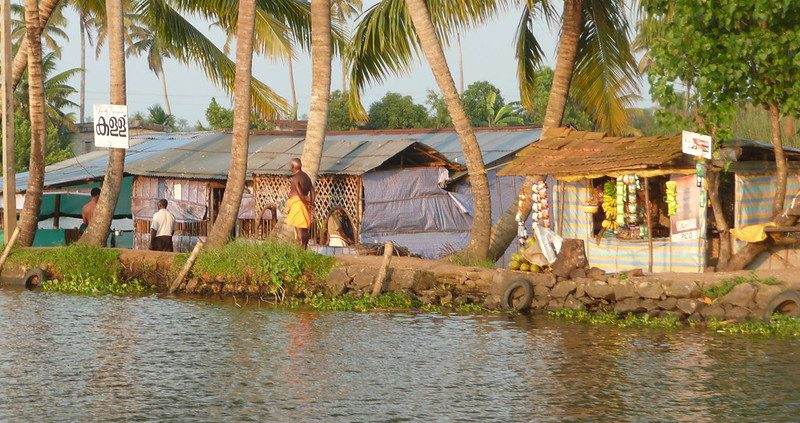 In November 2025, Kerala declared itself free from extreme poverty, becoming the first Indian state to make such a claim. Officials said the program had reached the most marginalized families through coordination among local bodies, government departments and volunteers.
A Local Approach to Extreme Poverty
Kerala, a state in southern India, has taken a household-level approach to reducing extreme poverty. Instead of relying only on broad welfare programs, the state created individual plans for families facing severe hardship. These plans, known as household microplans, focus on the specific needs of each family, including food, health care, income and housing.
This approach is important because poverty does not affect every household in the same way. Some families may need regular food support. Others may need medical care, identity documents, housing assistance or help finding stable work. Kerala’s model shows that anti-poverty programs can be more effective when they address the real problems each family faces.
Kerala’s Extreme Poverty Eradication Project
Kerala launched the Extreme Poverty Eradication Project in 2021. According to Kerala’s Local Self Government Department (LSGD), the project aimed to identify people experiencing extreme poverty who were outside existing support systems. The department states that the project used local governments, Kudumbashree networks, Accredited Social Health Activist (ASHA) workers, anganwadi workers, residential associations and civil society groups to find families facing the most severe deprivation. ASHA workers are community health workers who connect households with basic health services. Anganwadi workers support early childhood care, nutrition and welfare services at the local level. Their involvement helped the project reach vulnerable families who may not have been visible through official records alone.
The LSGD reported that more than 1.4 million people participated in the identification process. Through this effort, Kerala identified 103,099 people from 64,006 families across 1,032 local institutions. These families were identified based on four main areas of distress: food, health, income and housing.
What Are Household Microplans?
A household microplan is a personalized support plan created for one family. Instead of giving every family the same type of assistance, Kerala looked at what each household specifically needed. For example, one family might need a ration card to access food benefits. Another might need health insurance, disability documents or social security pensions. This is why household microplans in Kerala have drawn attention as a possible model for other regions working to reduce poverty.
According to Kerala’s LSGD, each family’s situation was studied before special microplans were created. The department also reported that documents and emergency services, including Aadhaar cards, ration cards, disability cards, health insurance and social security pensions, were made available to 21,263 families through the project.
Kerala carried out the project in three phases. According to the LSGD, the first phase focused on food and health care. The second phase focused on sustainable livelihoods and income. The third phase focused on safe and permanent housing.
This structure allowed the state to respond first to urgent needs, such as hunger and health problems, before moving toward longer-term goals like income security and housing. Kerala also used related campaigns to help families access land, housing, documents, educational support and travel benefits, according to the LSGD.
One of the strongest parts of Kerala’s model was local monitoring. According to the LSGD, household needs were recorded in a digital management information system. This allowed local governments and departments to track whether families were receiving the support promised to them.
Kudumbashree, Kerala’s women-led poverty eradication network, also worked as a community monitor and service provider, according to the department. This helped make the project more accountable and reduced the chance that families would be forgotten after being identified.
Kerala’s Poverty-Free Declaration
In November 2025, Kerala declared itself free from extreme poverty. The Times of India reported that Kerala’s Local Self-Government Minister M.B. Rajesh said the state had identified 64,006 extremely poor families through indicators such as food security, health, livelihood and housing. He also said each family received a microplan to help connect it with welfare schemes and essential services.
The LSGD also stated that the project was carried out through coordination among local bodies, government departments, missions, voluntary organizations and public participation.
Kerala’s declaration has also faced criticism. Some economists and activists argue that the state has reduced severe destitution rather than fully eliminated extreme poverty. In The Times of India, economist K.P. Kannan argued that Kerala’s list of around 64,000 households differs from other official poverty-related categories, including households covered under the Antyodaya Anna Yojana food security scheme. Antyodaya Anna Yojana is an Indian government scheme that provides highly subsidized food grains to the poorest households, making it an important measure of severe food insecurity and poverty. However, long-term monitoring remains necessary.
Why This Matters for Global Poverty
Household microplans in Kerala offer an important lesson for global poverty reduction. Many countries have welfare programs, but the poorest families may still be left out. Some households lack documents. Others live in remote areas, face disability or illness, or do not know how to access public services.
Household microplans in Kerala show that governments can improve poverty reduction by combining broad welfare programs with local, household-level planning. Community participation helped identify families who were hard to reach. Personalized plans helped match each family with the right kind of support. Digital tracking and local monitoring then helped ensure that support was delivered.
Even though Kerala’s claim to have eliminated extreme poverty remains debated, its method offers a practical model for other regions. By focusing on individual households, Kerala has shown how anti-poverty programs can become more targeted, accountable and human-centered.
– Nina Novillo Astrada
Nina is based in London, UK and focuses on Good News for The Borgen Project.
Photo: Flickr
