How the Nonprofit Honduras Hope Improves Lives in Honduras
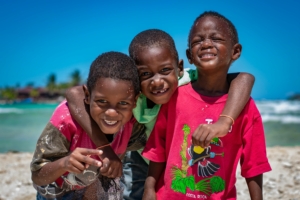 Honduras, bordering Guatemala, El Salvador and Nicaragua in Central America, is one of the lowest-income nations in the Western Hemisphere. According to the World Food Programme (WFP), approximately 63% of Hondurans live in poverty or roughly two-thirds of the 10.6 million residents. In the country, 20% of children under the age of 5 face chronic malnutrition, including micronutrient deficiencies, which lead to stunting and other developmental delays.
Economic instability and inflation, as well as political corruption and droughts exacerbated by inconsistent rainfall, worsened poverty in 2024, with climate instability intensifying issues related to food production and water access. Among those impacted, women, children, Indigenous and Afro-descendant populations appear to have been challenged the hardest. Environmental damage to the agricultural sector has placed particular pressure on rural communities and the marginalized populations that inhabit them.
About Honduras Hope
The organization, founded in 2001 by Reverend Bill Briggs, the coordinator, focuses on improving the lives of rural and indigenous populations in the San José and Plan Grande communities within the Department of Yoro. The nonprofit has a unique approach in which the board of directors works directly with “Patronatos,” or community councils, rather than arriving with a prescriptive aid solution.
As a 100% volunteer, nonprofit organization based in Franconia, NH, Honduras Hope improves lives through several trips to Honduras each year, working closely with local leaders to fundraise and kickstart initiatives. Such work acts as a complement to the organization’s own investments, which are fundraised through grassroots efforts, such as the concessions stand it ran on behalf of the Common Man food and restaurant chain at the Sandwich Fair in Sandwich, NH, in October 2025. The Borgen Project had the opportunity to speak with several board members at this event.
Briggs told The Borgen Project, “This is the third organization I’ve founded over the last 35 years,” all within Honduras. While all of his efforts have targeted the effects of poverty, Honduras Hope improves lives most effectively in the student population. The organization fights for children’s right to education. Briggs explained, “At the center of our organization and structure is the idea of hope – it’s in the name ‘Honduras Hope,’ after all.” This hope surrounds the work it does to propel disadvantaged students toward a path out of poverty.
How Does Honduras Hope Bring Hope to Students?
Briggs said that a central tenet of the speeches he regularly gives students is the phrase “si se puede,” or “yes you can.” The story of Dr. Cecile Lobo encapsulates how exactly Honduras Hope improves lives for students, empowering them with the idea that they can achieve their dreams by facilitating their education. With financial support from Honduras Hope, Lobo became the first Indigenous Tolupan doctor in Honduras.
Similarly, the organization established the San José boarding house for those unable to travel to school from rural mountain communities. After converting the home, which once belonged to a professional Honduran soccer player, Briggs explained that the nonprofit provided funding for school supplies and uniforms. It completed the project with the assistance of a residential supervisor to oversee the students and offer tutoring.
Girls’ Empowerment and Community Transformation
Kathy Swanson is a member of the Honduras Hope board of directors, serves on the Education Committee and leads both the Girls’ Empowerment Program and the Women’s Cooperative. She explained to The Borgen Project that at first, it was not expected of girls to attend secondary school or university or even to seek professional training. Cultural norms in the community resisted such action. Girls and women were instead expected to work within their communities.
However, Swanson’s belief that “girls have a right to dream, too” has been a guiding principle for Honduras Hope from the beginning. Since its work in Honduras, these community values have changed. Swanson recalled a transformative moment during her initial phase with Honduras Hope. During a meeting in which the committee faced significant resistance to sending young and adolescent girls to school, an older woman in the community stood up. The entire room fell silent as she explained that her hands, stained white down to the wrists, looked that way because they had spent nearly every day of her long life in starch. “She did not want her granddaughters to be cornered into that same life,” Swanson concluded.
This anecdote clearly moved Swanson and it also moved the community. They then paved the way for girls to seek their right to a different life. A 2023 newsletter detailed how Honduras Hope provided financial support to 34 students from Plan Grande to attend high school, with seven seniors on track to graduate. Furthermore, it reported that an average of 18 university students received scholarships each year to forge their path out of poverty. Additionally, 16 teenagers from San José and four mountain communities resided in the boarding house to attend high school in Yoro.
What Has Honduras Hope Done?
The organization funded two primary projects to completion. The first was the implementation of a new electrical program, which delivered electricity to Plan Grande near the end of 2023. Briggs noted that the program “was very tough to complete, politically,” given the widespread corruption in the nation. “At the end of the five-year project,” he said, “we are proud to say we covered the entire cost of installation.”
The second was the San José Water Project, a major milestone for the San José community, which previously had no means of accessing fresh water without long, arduous boat trips. It began nine months ago and was completed at the beginning of October 2025, a $60,000 initiative that now delivers water directly to the community. Briggs explained that navigating infrastructure across the 1.5 miles from the River Machigua to San José was very labor-intensive. However, the community rallied to complete it with financial support from Honduras Hope.
Additionally, Honduras Hope improves lives by implementing several other initiatives. For example, according to its 2023 newsletter, the Plan Grande nutrition program provided 69 preschoolers with nutritious, hot meals each week. For those unable to make the journey to the Community Center, the nonprofit purchased 200 broiler chicks for families to raise at home. Such work has been essential for those who otherwise don’t have the resources to eat.
– Shea Dickson
Shea is based in Newton, MA, USA and focuses on Good News, Politics for The Borgen Project.
Photo: Pexels
