The State of Homelessness in the Philippines
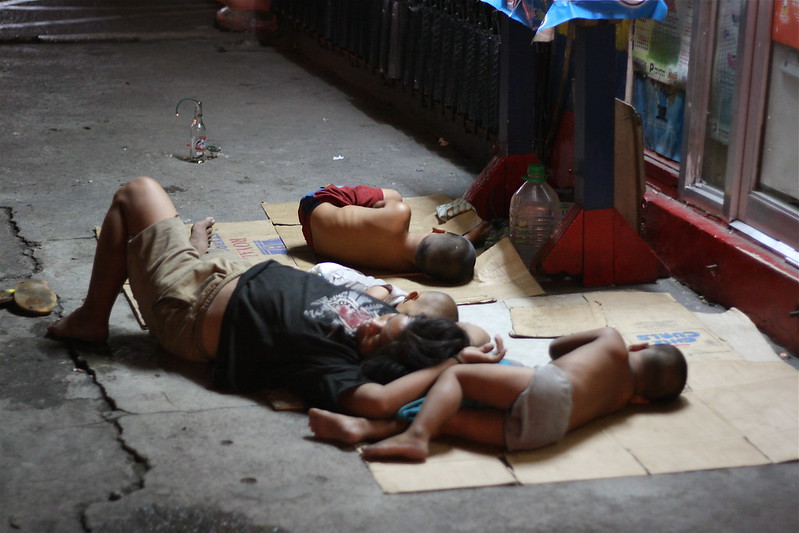
The Philippines is one of the fastest-growing economies in Southeast Asia, yet it is facing a homeless crisis. There are approximately 4.5 million homeless people, including children, in the Philippines, which has a population of 106 million people. Homelessness in the Philippines is caused by a variety of reasons, including lost jobs, insufficient income or lack of a stable job, domestic violence and loss of home due to a natural disaster. The government and non-governmental organizations (NGOs) are working to address this issue.
Causes of Homelessness
In the Philippines, families end up homeless for many reasons, including:
- Poverty: Although the unemployment rate in the Philippines is low (5.3% in March of 2020), 16.6% of Filipinos’ wages remained below the country’s poverty line in 2018. Low income can make it difficult for many families in the Philippines, especially those living in Manila, to pay rent.
- Domestic violence: Women and children in the Philippines are in danger of domestic abuse, exploitation and trafficking. Approximately one in five women between the ages 15-49 in the Philippines experience domestic violence in their life. Women who escape their abusive partners could lose their source of income and have difficulty finding a place to stay. Shelters for women tend to have long waiting list.
- Human trafficking: In the Philippines, there are approximately 100,000 people trafficked each year. Many trafficked victims are promised jobs in the cities. However, after moving to a city, they are exploited and forced into prostitution.
- Natural disasters: In addition, some families have lost their homes due to natural disasters such as typhoons, earthquakes and volcano eruptions. In 2019, more than 20 typhoons battered the Philippines. One of the typhoons that hit the country damaged over 500,000 houses. A volcano eruption that happened in January impacted half a million people and forced the relocation of 6,000 families.
Types of Homeless Families
According to the Modified Conditional Cash Transfer for Homeless Street Families (MCCT-HSF) program, homeless families fit into four different categories:
- Families on the street: “Families on the street” represent 75% of the homeless population. They are families who earn their livelihood on the street, but eventually return to their original communities. This category includes both “displaced homeless families” and “community-based street families”.
- Families of the street: “Families of the street” are families who live on the street for a long time and have created communities among themselves. They perform daily activities, like cooking, bathing or playing in the public spaces they live in. They are visible by their use of a “kariton,” also known as a pushcart that contains their family’s belongings, which they move around within Manila.
- Displaced homeless families: “Displaced homeless families” are families who have lost their homes due to natural disasters or live in their communities. They are families who leave their rural communities of the Philippines to find a job in the cities. This category also may also include families and children who may be escaping abuses at home. Displaced homeless families may also push around a kariton that contains their personal belongings.
- Community-based street families: “Community-based street families” are families who are from rural communities, but move to urban areas for a better way of life; however, they often end up returning to the rural area they are from.
Homeless Children
Homeless children are among the most vulnerable of the homeless in the Philippines. There are approximately 250,000 homeless children; however, that number could be as high as 1 million. Children leave home and end up on the streets because of the excessive beating from their parents, poverty or sexual exploitation.
When children are on the streets, they can face problems such as sexual exploitation, abuse and prostitution. Although victims of circumstances beyond their control, children who live on the street are often viewed as criminals or future criminals resulting in discrimination from the police. Additionally, to numb their pain and their hunger, some children may turn to drugs. Both the external and internal factors that children face make it very difficult for them to escape the street life.
Addressing Homelessness in the Philippines
The government, NGOs and religious institutions are working help the homeless. Government programs include the Modified Conditional Cash Transfer for Homeless Street Families program (MCCT-HSF). This program provides financial support, such as housing grants and funding for health and education, to homeless families in Metro Manila.
To help street children, ASMAE-Philippines travels the streets of Manila to teach kids on the basics of hygiene. The organization also provides children with school support, as well as supporting other NGOs in the area. Kanlungan sa ER-MA Ministry, Inc. is another organization that works to educate street children, though projects that teach children about hard work while providing them with an income.
Although the government and NGOs have made efforts to help the homeless population, much more still needs to be done. Moving forward, these initiatives need to be increased in order to significantly reduce homelessness in the nation.
– Joshua Meribole
Photo: Flickr
