6 Facts About Disasters and Homelessness in Haiti
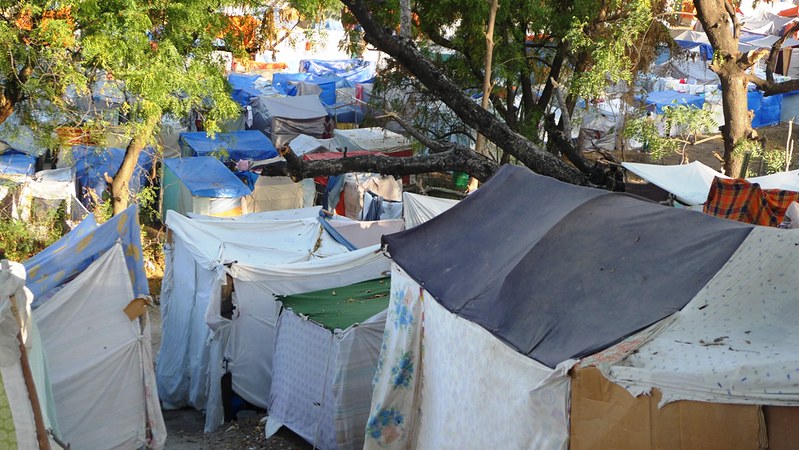
In January 2010, Haiti’s capital city, Port-au-Prince, was in the epicenter of a magnitude 7.0 earthquake. Concrete buildings were reduced to rubble, homes were destroyed and more than five million people were displaced. As one of the poorest countries, the fight against disasters and homelessness in Haiti is a continuous uphill battle. Here are six facts about the link between natural disasters and homelessness in Haiti.
6 Facts About Disasters and Homelessness in Haiti
- Haiti needed around 300,000 houses before the 2010 earthquake, and over 500,000 afterwards. At the time of the 2010 earthquake, 70% of Haiti’s population was living below the poverty line. As a result of frequent natural disasters, political unrest and the high dependency on agriculture for livelihood, the country fell behind in development.
- Buildings in Haiti were not built to withstand powerful earthquakes. Before 2010, there were no proper building codes for houses in Haiti. Over half of the population lives in rural areas with their homes consisting of mud walls and palm leaves woven together for a roof. In the cities, most live in overpopulated slums with no enforced safety regulations. This leaves a majority of the population vulnerable to losing their homes if a natural disaster strikes.
- Those who lost their homes in the 2010 earthquake had to go to internally displaced persons (IDP) camps. There, they lived in makeshift tents of sheets and tin, had no direct access to running water, no electricity and no security. However, countries around the world banded together in an effort to help the displaced by sending supplies, along with doctors and relief workers. Donors of Direct Relief provided up to $7 million for rebuilding in Haiti.
- Continuous natural disasters delay the recovery process. In 2016, Hurricane Matthew struck Haiti as a category 4, damaging the south end of the country. Once again, countries and organizations like World Vision continued to supply relief well into 2018. The Red Cross also funded livestock replacement and vet clinics that brought benefits to 5,000 families. Collectively, it raised a total of $5.2 million to help those in Haiti who had been impacted by the hurricane.
- IDP camps are still in use today. Of the 1.5 million people who lived in IDP camps in the summer of 2010, there are 50,000 that remain. Those who were able to leave the camps had either raised enough money to rebuild their home or received rental subsidies from the government. There are also hundreds of non-profit organizations, such as Homes for Haiti, Build Change, Build Abroad and the Red Cross, providing volunteers to build shelters for the homeless in Haiti.
- A cholera outbreak took place in one of the camps after the earthquake. However, along with the foreign aid and continuous construction of houses, the country has been successful in containing the cholera outbreak that overtook the camp after the earthquake. Haiti’s last confirmed cholera case was in January 2019, and has not seen any since.
There is hope for homelessness in Haiti. Recovery from disasters in poor countries like Haiti take time, but with coordinated efforts between humanitarian organizations, Haiti can continue to rebuild.
– Molly Moline
Photo: Flickr
