Higher Education in Venezuela
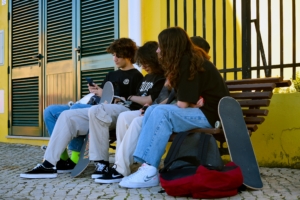 The pursuit of a college degree in Venezuela has become a powerful testament to the resilience of its students. Amid a complex humanitarian crisis, these students bravely confront power outages, food shortages, unreliable transport and the breakdown of public institutions. Here is information about higher education in Venezuela and efforts to improve it.
Higher Education in Venezuela Under Pressure
Public universities operate with minimal budgets. Autonomous institutions struggle to maintain operations. Most professors earn $8 a month, making them the lowest-paid in Latin America.
These challenging conditions have led to a brain drain, delayed graduation timelines and a decline in academic quality. Yet, many universities continue to function, fueled by the unwavering commitment and resilience of students and professors.
Endurance
In interviews with The Borgen Project, students shared how endurance, not just academic effort, has helped them carry on.
Take Víctor Solórzano, for instance, who recently earned a degree in social communication from Universidad Católica Andrés Bello (UCAB). His college years were a mix of trauma, fun and enrichment. Balancing part-time jobs and scholarships, he navigated frequent blackouts and inflation. His motivation was the thought of his mother’s pride on his graduation day.
Meanwhile, Jeremy Mata, a computer science student at Universidad Nacional Experimental de Guayana (UNEG), is completing his thesis despite a shortage of faculty and materials. “Many professors left because their salaries couldn’t support them,” he said. He credited study groups with helping him stay focused. “For me, finishing this thesis proves I didn’t give up.”
Poverty, Inflation and Brain Drain
In Venezuela, university costs reflect the hardship students endure rather than traditional tuition rates. Hyperinflation has a severe impact on daily life and the education sector, with the government allocating only 2.6% of its budget to universities in 2024.
Electricity, water and internet access are far from reliable. According to the Venezuelan Universities Observatory (OBU), 95% of universities lack stable internet, and more than 80% experience frequent power and water outages. These issues interrupt classes regularly and limit access to digital learning tools.
On top of this, most professors earn under $10 per month, nowhere near enough to cover basic expenses. In 2024, a single household needed more than $530 a month to afford a basic food basket.
This situation is why more than 40% of professors have left their positions in the last three years. Those who stay often juggle multiple classes, skip meals or rely on outside jobs to make ends meet.
Professor Lilia (a pseudonym), who teaches at UNEG in the southern part of the country, said some of her students arrive at class without eating or miss lectures due to transportation issues. “Sometimes they don’t choose a career based on interest, but based on what’s available nearby or what they can afford,” she said. To keep classes going during outages, they often use WhatsApp voice notes or meet in person when possible.
According to the NGO Aula Abierta, between 40% and 70% of students have dropped out of their studies since 2023, mainly due to migration or a lack of financial means to continue.
Ramón Rivera Verde, a former university professor, witnessed this collapse up close. “My salary didn’t cover the basics. I resisted as long as I could,” he said. He now lives abroad but still follows the state of education in his country. “The resilience of the institutions that continue to serve students under impossible circumstances.”
Innovation as a Lifeline
Despite adversity, local organizations and universities have developed creative ways to support students. Fundación Andrés Bello, which is affiliated with the Universidad Católica Andrés Bello, offers scholarships, school supplies and community support to low-income students.
Meanwhile, the now-closed Alimenta la Solidaridad operated more than 300 community kitchens across Venezuela, providing daily meals to families and students. It ended activities in May 2025 due to a lack of government protection.
Cáritas de Venezuela is an organization that addresses malnutrition by distributing food and monitoring the health of children. Its work improves cognitive performance and helps students stay in school.
To respond to new challenges, UCAB launched shorter, job-oriented programs, such as associate degrees (TSU) in software design and occupational safety and insurance.
Students can also pursue technical certifications in areas such as cooking and pastry arts at CIAP-UCAB. These programs offer quick paths to employment. The UCAB Fashion Academy links design skills with income opportunities.
Looking Ahead
The higher education system in Venezuela faces significant challenges, but students and educators are addressing these issues through grassroots initiatives. Education becomes a form of resistance, providing hope for a brighter future.
– Su Ying Lee Yang
Su is based in Chicago, IL, USA and focuses on Good News for The Borgen Project.
Photo: Unsplash
