Planting Prosperity: The Green Wall of China Combats Poverty
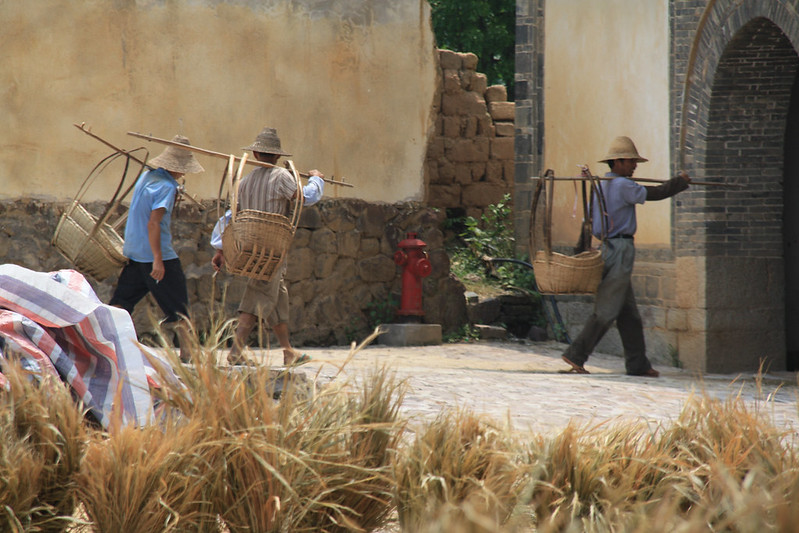 In the Taklimakan Desert of Xinjiang, China, dunes shift as much as 20 meters each year due to powerful and relentless winds. The dunes creep across the land, consuming the environment and deepening the struggles of those living in poverty. But China is fighting back. The Green Wall of China combats poverty by pushing back the desert and restoring both land and livelihoods.
On November 28, 2024, the final stretch of the desert met its match. The last 100 meters of shifting sand along the southern edge of the Taklimakan Desert was planted with various seedlings like red willows, saxaul and desert poplar, sealing the gap in what is now a 3,046-kilometer-long green barrier. With that, the Green Wall stands as a living shield against desertification and poverty.
Drivers of Desertification in China
Desertification is “the transformation of fertile land into desert or arid waste” due to a combination of natural and human factors. Shifting climatic and weather patterns can intensify wind speeds and soil erosion, accelerating the spread of desertification. Human-driven climate change has intensified the problem. Specifically, China’s rapidly growing population has placed immense pressure on natural resources, with rising consumption leading to land degradation and creating conditions that allow desertification to swiftly creep up.
The Three North Shelterbelt System
Otherwise known as the Green Wall of China, the Three North Shelterbelt System is one of China’s most significant ecological and economic initiatives. The project carries calculated responsibilities such as improving the ecological environment, mitigating natural disasters and expanding habitable and arable land. These activities have led to its recognition as a key national project.
Beyond environmental goals, it also plays a role in enhancing production conditions, reducing regional disparities and fostering shared prosperity among all ethnic groups. Additionally, the Green Wall of China combats poverty by supporting the restructuring of rural industries, accelerates poverty alleviation among farmers and contributes to long-term sustainable economic and social development.
After generations of sustained effort, the Three North Shelterbelt System has completed afforestation and conservation work across 31.7429 million hectares. As a result, forest coverage in the project area increased from 5.05% in 1977 to 13.84% by 2020.
The initiative created the “Great Green Wall” along China’s northern frontier— serving as a barrier against wind and sand, conserving water and soil, protecting agriculture and supporting animal husbandry and has achieved ecological, economic and social benefits.
Protecting the People and Lands
According to the Xinjiang Uygur Autonomous Region Forestry and Grassland Bureau, the successful completion of the Green Wall along the Taklimakan Desert will enhance the region’s ecological barrier, stabilize agricultural production, improve urban living conditions and support both economic and social development.
Expanding tree cover helps stabilize water supplies, absorb carbon dioxide and offer communities sustainable access to resources like timber and other forest products. China has adopted scientific sand control technologies, including engineering sand fixation, biological sand control and photovoltaic sand control. While stabilizing and preventing the spread of sand, these efforts have also supported the development of local, sand-based industries– helping to improve lives and boost regional economies.
Looking ahead, Xinjiang plans to further build upon and strengthen the “edge-locking” efforts, contributing to the construction of a robust ecological security barrier in northern China.
How The Green Wall of China Combats Poverty
Along with the hardships of desertification, farmers were uneasy about losing their sole source of income and falling into poverty as the desert expanded. Their fears have been eased through local government subsidies and additional employment opportunities.
The Chinese government launched the “Returning Farmland to Forest Program,” also known as “Grain for Green.” This initiative provided financial incentives to farmers to cease cultivation on vulnerable land and instead plant trees. The program has a dual purpose: first, to reduce soil erosion and prevent further flooding; and second, to ensure that farmers’ quality of life continues to improve, even with the loss of arable farmland. In return for the protection of the newly planted trees, farmers received subsidies, as well as land rights to the fields and terraces that they managed.
The amount of compensation varies based on location and the type of land cultivated; however, according to the State Forestry Administration, the average household receives no less than 9,000 yuan, or $1,253. Households engaged in the program receive payments directly to their bank accounts after forestry officers conduct annual inspections of their forest plots.
Employment Diversification
In addition to providing subsidies, the Returning Farmland to Forest Program has helped diversify employment opportunities and broaden the industrial base in impoverished areas. A study conducted by four Chinese universities examining the program’s long-term impact on rural economic development found that there was a 10.9% increase in the value generated by local primary sectors, compared to similar counties that did not participate. Furthermore, rural employment in agriculture, forestry, animal husbandry and fishing rose by 8.2%.
The Three-North Shelterbelt System holds the title of the Green Wall of China and with it, the aid for poverty. The project has enhanced the region’s ecological environment, boosted grain production and achieved progress in developing forest product bases. Through the growth of forest and fruit-related industries, the project has helped lift tens of millions of local residents out of poverty.
The project has generated a wide range of job opportunities in areas such as tree planting and land maintenance, offering stable sources of income for local communities. This rise in employment has elevated living standards and stimulated economic growth in rural and impoverished regions.
The restoration of arable land has revitalized agriculture, allowing farmers to improve crop yields and diversify their production. The benefits of the Green Wall are evident in the rise of agricultural productivity, which has bolstered food security and aid for poverty. In 2023 alone, forest-related industries in China generated an annual output of 8.04 trillion yuan, exceeded $180 billion in forest product trade and directly employed 60 million people across the country.
Other Poverty Alleviation Initiatives
The Green Wall of China was among the first large-scale projects to link environmental restoration with poverty reduction, but it is not the only one. The following are other poverty alleviation initiatives:
- The Natural Forest Protection Project (1998). Aims to protect natural forests by stopping commercial logging to preserve ecological balance and biodiversity. To offset income loss, farmers and communities receive subsidies, while funds support forest conservation, habitat restoration and wildlife protection for long-term sustainability.
- The South China Slopes Land Conversion Program (2002). Targets soil erosion on steep slopes in southern China by promoting the restoration of forests and grassland. Goals to reduce landslide risk, improve water retention, enhance ecosystem resilience and encourage sustainable land management for ecological stability.
- The Ant-Forest Program (2011). Created by Ant Financial and the U.N. Environment Programme (UNEP), the app is connected to Alipay and rewards users with “green energy points” for eco-friendly actions. These points lead to the planting of virtual and real trees in degraded areas of China. The app encourages user engagement through tracking, competition and sharing, making environmental conservation interactive and rewarding.
Looking Ahead
The Green Wall of China shows how large-scale environmental projects can restore fragile ecosystems while improving livelihoods. By combining ecological restoration with poverty alleviation, China’s afforestation programs have created jobs, strengthened food security and offered long-term stability to millions. As these efforts expand, the Green Wall stands as a model of how investment in nature can build resilience against both environmental and economic challenges.
– Gabriella Luneau
Gabriella is based in Raleigh, NC, USA and focuses on Good News and Global Health for The Borgen Project.
Photo: Flickr
