Gaza’s Health System: From Emergency Response to Recovery
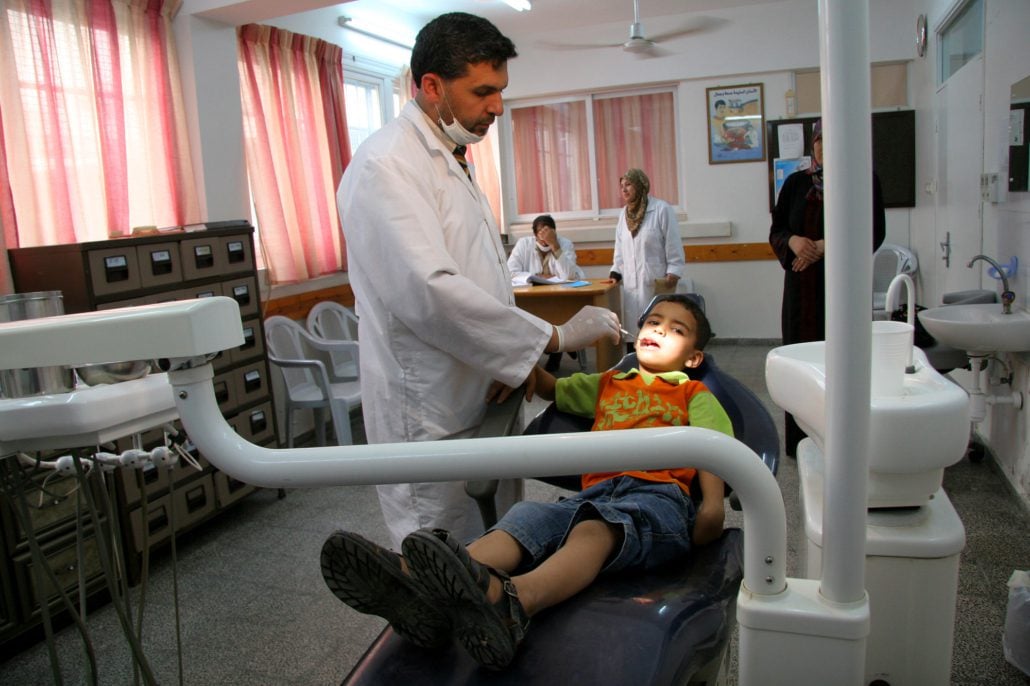
Since the outbreak of hostilities on Oct. 7, 2023, Gaza’s health system has faced what the United Nations Relief and Works Agency for Palestine Refugees in the Near East (UNWRA) describes as a “systemic collapse,” severely undermining its capacity to meet the population’s basic health needs. The conflict has damaged health facilities, degraded services, created shortages of medical supplies and fuel and severely constrained health care personnel’s delivery of care.
As of August 2026, 35 of the 57 hospitals and field hospitals, and 146 of the 233 primary health care facilities, were partially or fully operational, according to the World Health Organization’s HeRAMS assessment. Despite these extraordinary restrictions, the United Nations Relief and Works Agency for Palestine Refugees in the Near East has maintained primary health care services wherever possible by adapting its operational model, expanding mobile health teams, and establishing temporary health facilities.
Emergency Medical Teams Fill Critical Gaps
In Gaza, Emergency Medical Teams, international and national professional health teams coordinated through the World Health Organization (WHO) response, have helped provide surge capacity while local services remain severely constrained. Their role is not to replace Gaza’s health system but to help keep essential services functioning while local capacity remains severely constrained. Comprising more than just doctors and nurses, these teams are self-sufficient mobile units that also include logisticians, water and sanitation specialists, and administrative staff. In Gaza, Emergency Medical Teams are responding to high levels of injury and illness alongside the local health workforce. As of April 15, 2026, 23 Emergency Medical Team partners were supporting 36 active teams in Gaza, comprising 72 international and 310 national personnel. According to the World Health Organization, Emergency Medical Teams had provided 4,288,220 general medical consultations, 65,056 emergency surgeries and treatment to 272,483 critical trauma patients from January 2024 through March 2026.
Primary Health Care Keeps Essential Services Accessible
When the capacity of hospitals—which constitute only one part of the broader health system—is severely constrained, primary care centers, health posts, mobile teams and temporary facilities become key avenues for ensuring access to care. From June 8 to 14, 2026, the United Nations Relief and Works Agency for Palestine Refugees in the Near East reported 70 mobile medical teams working through 28 medical points alongside six health centers and four temporary health centers. During that week, the United Nations Relief and Works Agency for Palestine Refugees in the Near East health personnel provided 73,165 medical consultations, including maternal care, physiotherapy, laboratory services and vaccinations.
Rebuilding Gaza’s Health System Requires More Than Hospitals
Rebuilding Gaza’s health system will require more than just repairing damaged hospital buildings. The health system also relies on medical equipment, pharmaceutical supply chains, electricity and fuel, laboratories, ambulances, referral systems and trained health care personnel. Meanwhile, damage to water and sanitation infrastructure increases public health risks, while a lack of rehabilitation equipment and specialized services can lead to long-term disability. A 2026 qualitative study based on interviews with health care workers found that future reconstruction efforts should incorporate local expertise, workforce development, emergency preparedness and stronger coordination among health stakeholders.
From Emergency Care to Long-Term Recovery
One can already see he transition from emergency response to recovery in services such as rehabilitation. The Limb Reconstruction Center at the Nasser Medical Complex in Khan Younis originated on June 1, 2026, and provides orthoplastic surgery, physiotherapy and limb reconstruction services for patients with complex conflict-related injuries. The center has access to 16 World Health Organization-funded beds and dedicated operating theater sessions twice a week.
According to the Humanitarian Situation Report, such services demonstrate why the recovery process does not end when a patient leaves the emergency department; serious injuries may require surgery, rehabilitation and long-term medical support. These interventions should not be viewed merely as simple wound care. Long-term recovery also requires ongoing attention to chronic diseases, mental health, maternal and child health, rehabilitation and medical follow-up. Therefore, the goal is not simply to restore individual buildings, but to rebuild a health system capable of providing continuous and comprehensive care to the population.
Health Care as a Foundation for Recovery
In conclusion, Gaza’s health crisis cannot be addressed through emergency medical aid alone. Immediate intervention is essential, but long-term recovery requires re-establishing the systems that enable the day-to-day functioning of health care services. This requires the rehabilitation of facilities, the reconstruction of supply chains, support for health workers, the re-establishment of referral and ambulance networks, the expansion of primary health care services and investment in rehabilitation, mental health and public health infrastructure. Rebuilding health services for Gaza is also part of rebuilding daily life. Access to reliable health services can help people manage chronic conditions, recover from injuries and maintain maternal, child and mental health services. These conditions can contribute to people’s ability to return to education, work and community life.
– Ömer Valyozoğlu
Ömer is based in İstanbul, Türkiye and focuses on Global Health for The Borgen Project.
Photo: Flickr
