Water Scarcity, Inadequate Sanitation and Food Insecurity in Chad
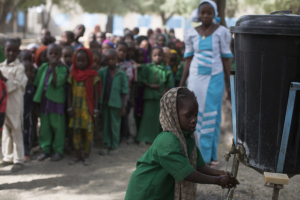 Chad has been experiencing severe food insecurity and water scarcity, combined with insufficient sanitation services, for several years now. The main contributors to these disasters have been flooding, drought, conflict and inadequate infrastructure. According to the World Food Programme (WFP), Chad is now facing its sixth consecutive year of crisis-level hunger.
These crises have been worsened by the influx of refugees entering the country from Sudan, the Central African Republic, Nigeria, Cameroon and other neighboring states. According to UNHCR data, more than 1.45 million refugees currently reside in Chad. According to the World Health Organization (WHO), nearly 90% of these refugees are women and children.
There are also nearly 226,000 internally displaced Chadians. In addition, children account for 57% of Chad’s total population, according to UNICEF.
Food Insecurity in Chad
Chad is currently the sixth most food-insecure country in the world. The WFP reports there are currently more than 3.4 million Chadians facing extreme hunger, a 240% increase since 2020. UNICEF has stated that there are more than 2 million Chadian children in need of treatment for severe wasting, which is the most life-threatening stage of malnutrition.
Additionally, according to the Global Nutrition Report, 31.1% of children in Chad under the age of 5 are stunted. The Food and Agriculture Organization of the United Nations (FAO) reports that in Chad, “the 2024/25 agricultural season is marked by the destruction of 819,370 hectares of sown land, primarily due to floods, plant pests and straying livestock. Conflict has also disrupted agriculture, adding to food insecurity in Chad.
The International Crisis Group has reported that between 2021 and 2024, farmer-herder conflict claimed the lives of more than 1,000 Chadians and left more than 2,000 injured. According to FEWS NET, agropastoral clashes have led to significant loss of life: “Since May 2025, 42 people were killed in Logone Occidental, 16 in Ouaddaï, 17 in Mayo Kebbi Ouest and six in Salamat due to these conflicts.” FEWS NET also reported that as of late June, only 11.8% of people earmarked for Chad’s 2025 humanitarian assistance plan had received food aid.
Humanitarian Aid
The WFP reported that between June and August 2024, it had disbursed food, cash and nutritional support to up to 1 million people and provided aid to an additional 400,000 people who had been impacted by flooding. Furthermore, it aims to assist 1 million breastfeeding and pregnant women, along with children aged 6-59 months, with treatment for malnutrition.
According to the FAO, in 2024, the United Nations (U.N.) provided 58.7 tonnes of crops and 3.5 tonnes of vegetable seed to more than 22,800 households in Chad. As a result, 42,660 tonnes of staple foods and 14,400 tonnes of fruits and vegetables were cultivated. Thirty percent was consumed and the remainder was sold for more than $5 million, distributed in average payments of $280 per household, which was sufficient to supply food for up to six months.
Additionally, in early 2025, the European Commission announced that it had allocated €74.5 million (approximately $83.9 million) to Chad for humanitarian assistance. According to UNICEF, in April, the organization appealed for $114.2 million in aid for Chad, with more than $50 million allocated for nutritional support and more than $24 million dedicated to WASH services. However, only 34% of the required funding has been secured.
Water Scarcity and Sanitation
According to the Interactive Country Fiches (ICF), “Chad has the third-lowest level of access to safe water and the lowest level of access to adequate sanitation in all of Africa.” Only 52% of Chad’s population has basic access to drinking water. However, Gannet’s Data Friendly Space (DFS) has reported that only 18% have access to safely managed sources and merely 10% of Chadians have access to basic sanitation.
Doctors Without Borders (DWB) reports, “In refugee camps across the Ouaddaï, Wadi Fira and Ennedi Est provinces, most refugees are receiving far less than the recommended 20 liters (nearly 5 gallons) of clean water per day. This shortage disproportionately affects women and children.” According to UNICEF, Chad’s mortality rate for children under the age of 5 is approximately one in 10. Gannet’s DFS reports that malaria is the leading cause of these deaths, while noting that insufficient sanitation, stagnant water and overcrowded camps further increase the risk of transmission.
Additionally, according to UNICEF, 68% of the population practices open defecation. This stems in part from the lack of latrines in refugee camps; DWB reports that many camps fail to meet the minimum standard of one latrine for every 50 people. With such a high rate of flooding, open defecation and inadequate water management, waterborne disease has wreaked havoc, leading to outbreaks of hepatitis E, cholera and typhoid. According to the WHO, between January and April 2024, there were 2,092 suspected cases of hepatitis E.
Cholera Outbreak
Regarding the recent cholera outbreak, the chief of WASH in Chad, Oumar Doumbouya, stated: “As of 20 October, we have 2,770 cases of cholera and 156 deaths, including 69 in communities. The disease remains active in three provinces: Ouaddaï, Sila and Guéra.” In 2024, the International Water Association reported that more than 78% of the population in N’Djamena, Chad’s capital, obtained water from hand pumps.
Doumbouya noted that UNICEF is working to improve water sources across the country. “Just to give you a figure, we have been recently working on trying to upgrade water points in Chad to put this from a simple hand pump to a solar motorized water supply system and basically, we were able to identify more than 5,000 water points that needed to be upgraded.”
UNICEF has reported that in February 2024, it facilitated funding for the installation of two water treatment units in Baga Sola and Bol, which, combined, provide 20 liters of water per person to 4,000 people each day. DWB has also made significant contributions to improving conditions in refugee camps. According to the organization, “In the last two years, MSF [DWB] treated 43,908 patients for acute malnutrition and responded to hepatitis E and typhoid outbreaks in Adré, Aboutengue and Metché.”
In the Adré transit camp alone, water systems built by DWB produced 654,000 liters of water per day in May. The organization also restored 229 latrines, constructed 80 long-term latrines and cleaned 539 existing ones in Adré.
Final Remarks
The battle against food insecurity, water scarcity and poor sanitation in Chad is far from over. However, with the help of international organizations, the nation is making progress every day.
– Owen Armentrout
Owen is based in Detroit, MI, USA and focuses on Global Health and Politics for The Borgen Project.
Photo: Flickr
