World Food Program Boosts Operations to Provide Food in Sudan
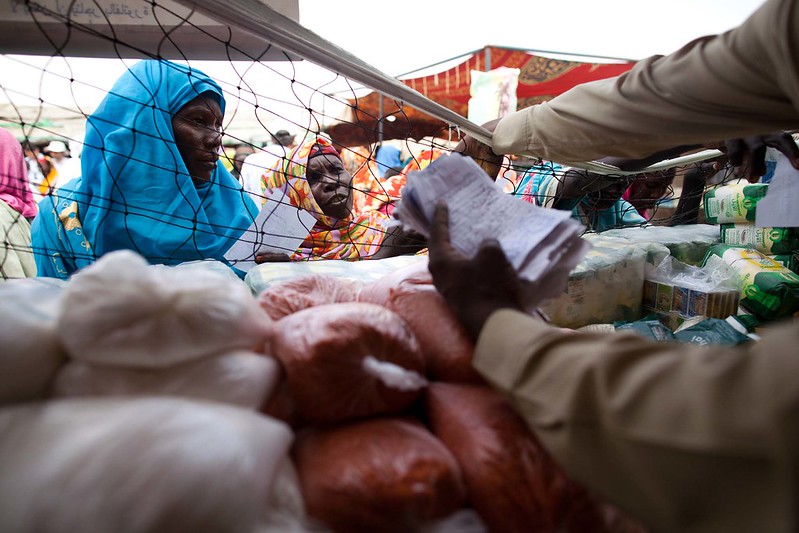 Sudan is one of Africa’s poorest and most war-torn nations. When South Sudan seceded in 2011, Sudan lost a majority of its oil revenue, causing high rates of inflation and bringing the poverty rate to 51.07%. In April of 2023, a civil war between two factions of the nation’s military began. The war created the world’s worst displacement crisis to go along with one of the world’s worst hunger crises. Of its population of 48.1 million people, more than 25.6 million people face extreme hunger. Fourteen areas in nine states throughout Sudan have recently been declared at risk of famine. With more than 5 million people on the verge of starvation, the World Food Program (WFP) is urgently seeking support for the nation.
World Food Program in Sudan
WFP has been working in Sudan since 1963. Through the years, it has become “the logistics backbone of humanitarian response” throughout the country. By providing food to communities and internally displaced people, treating malnutrition for young children and providing farmers with agricultural training, WFP has helped Sudan avoid a hunger catastrophe. Despite these efforts, the escalating conflict has strained resources and complicated distribution efforts, resulting in famine in the country.
As the threat of famine continues to grow, WFP is rapidly expanding its emergency food and nutrition services. The nonprofit organization is scaling up to provide food and nutrition for five million people in Sudan by the end of 2024. Along with food and nutrition assistance, WFP will provide more than $1.2 million in cash to families in 12 Sudanese states. This cash injection aims to stimulate local economies by boosting farmers and markets, enabling communities to increase food production independently and reduce their reliance on external aid.
WFP’s comprehensive approach in Sudan not only addresses immediate needs but also fosters long-term resilience among affected communities. By supporting local agriculture and economies, WFP helps create sustainable solutions that empower Sudanese families to rebuild their lives and improve their self-sufficiency. This dual focus on urgent aid and structural support is crucial in stabilizing the region and mitigating the ongoing humanitarian crisis.
The Future
Since the war started in April 2023, WFP has assisted more than 6.7 million people across 18 states. As fighting continues, regions such as Khartoum, Gezira and others are at high risk of falling into famine if they do not receive assistance as soon as possible. The United Nations (U.N.) has identified two million people across 40 hotspots who are in desperate need of food and nutrition services. The program is in urgent need of $200 million to continue delivering assistance to the Sudanese for the rest of 2024. Without immediate financial support, the crisis could deepen, leading to even more severe humanitarian consequences and potentially unmanageable levels of suffering.
– Nicolas Mezzaucella
Nicolas is based in New Rochelle, NY, USA and focuses on Good News and Global Health for The Borgen Project.
Photo: Flickr
