Top Facts about Poverty in Spain
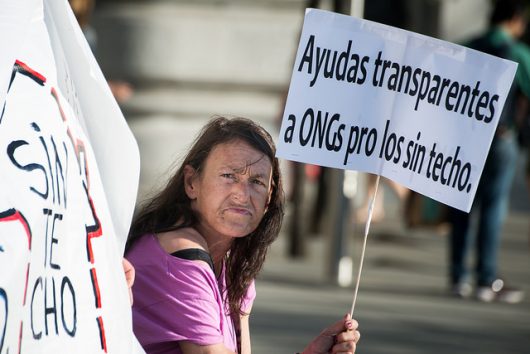
Spain is a simultaneous representative of both the success and the struggles of twenty-first century Europe. The Spanish economy was hit particularly hard by the 2008 recession that sent shockwaves throughout global markets. As a result, Spain, along with Greece and Italy, has often been cited as an example of the straining of Eurozone economics. Though Spain remains firmly a developed country, the country’s struggle with poverty should not be overlooked. Here are nine important facts about poverty in Spain.
Nine Facts About Poverty in Spain
- Over one-quarter (26.6 percent) of the Spanish population is at risk of poverty or social exclusion as of 2017. These results do also show, however, that this number has fallen from a peak of 29.4 percent in 2014.
- Spain has the highest youth poverty rate (.221) in Western Europe. According to the Organization for Economic Co-operation and Development, an intergovernmental economic organization, Spain sits ahead of both its neighbors, Portugal and Italy, and is even ahead of its Mediterranean counterpart Greece.
- Nearly 40 percent of Spain’s youth labor force were unemployed in 2017. This number is compared to a 9.2 percent in the Euro Area.
- Poverty in Spain is concentrated in rural areas. A chart published by a Spanish statistical website compares the different regions of Spain based on their per capita GRP (gross regional product) or PIB in Spanish. In general, the more rural provinces, such as Extremadura, Castilla La Mancha and Andalucía, have a lower GRP than the Basque country, Madrid and Catalonia. The poorest households in Spain are those of young, inexperienced foreigners who live in southern Spain.
- The migrant crisis has put a strain on Spanish support systems. The New York Times reports that over 20,000 migrants have reached Spain by sea in 2018. This has put added pressure on the migrant support systems and increased the population of those in need of assistance.
- About 34.4 percent of Spanish households were unable to afford a week-long vacation in 2017 according to data compiled by the National Statistics Institute, a Spanish government agency. This is down, however, from 45.8 percent when the study began in 2013.
- Unemployed Spaniards are gaining employment via temporary or part-time jobs. Now that Spain’s economy is rebounding, many new jobs have been created and, although temporary, they may help ease the poverty of previously unemployed Spaniards.
- Spanish youths are the beneficiaries of the European Commission’s Youth Guarantee program. This program has the mission of ensuring that all of Europe’s young people have “a good quality offer of employment, continued education, apprenticeship and traineeship within a period of four months of becoming unemployed or leaving formal education.” This program, among others like it, hopes to reduce youth unemployment and a more employed workforce may mean a reduction in poverty.
- Spain is now recovering well from the 2008 recession. According to a 2017 article by the New York Times, the economy of Spain is growing roughly at three percent, is producing goods for export and “is restoring a sense of normalcy” to the country. With this growth, the unemployment rate is expected to decline as per the European Commission’s forecast for 2018.
In Spain, the reduction of poverty and economic recovery in the wake of the 2008 recession represent great strides for a long-troubled economy. These facts about poverty in Spain show that more people in the country are working, and there are more and more jobs being created. These strides must not be undervalued. However, continued efforts in Spain are needed to reduce poverty and improve the quality of life for all.
– William Menchaca
Photo: Flickr
