7 Facts About Hunger in Venezuela
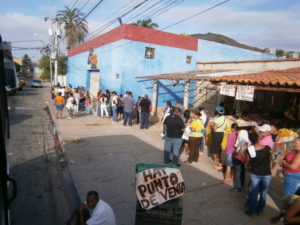
Food shortages across Venezuela started to rise in 2013, around the time of President Hugo Chávez’s death. Less than a year later, the nation’s oil-dependent economy began to tank and inflation began to soar. Venezuela could no longer afford the cost of its imported basic goods, resulting in nationwide shortages in food and medicine. While the nation’s instability worsens, people are going hungry in Venezuela. Here are the top seven facts about hunger in Venezuela.
7 Facts About Hunger in Venezuela
- In 2017, 89.4 percent of Venezuelan households could not afford basic food supplies due to inflation and six out of 10 Venezuelans reported going to bed hungry. In February 2019, peak inflation in food prices hit a staggering 371,545.6 percent and high rates are continuing throughout 2019.
- Due to hunger in Venezuela, malnourishment is quite common. The United Nations reported that nearly 3.7 million Venezuelans suffered from malnourishment in 2018.
- Mass weight loss is also common across Venezuela as 64.3 percent of Venezuelans lost weight due to food shortages in 2017. Venezuelans who lost weight dropped an average of 11.4 kg each since the shortages began.
- Available food supplies all too often end up on the black market and are sold by bachaqueros. Bachaqueros buy subsidized goods at government-set prices, then sell those goods at double, even triple, the original price, taking advantage of struggling communities. This illegal practice is exacerbated by Venezuela’s compounded crises.
- Without easy access to affordable food supplies, some Venezuelans resort to using alternative resources. For example, the yuca root can replace potatoes, which is a similar, yet far cheaper vegetable. In more desperate cases, scavenging for scraps has also become popular.
- Although President Nicolás Maduro has rejected many types of humanitarian aid, including extensive efforts to send food supplies, the government has accepted aid from nonpartisan groups. In 2018 alone, Cuatro Por Venezuela, one of the largest relief suppliers, sent 41,804 pounds of food to Venezuela, amounting to 120,000 standard meals for people in need. These supplies are distributed directly to schools, orphanages, nursing homes and homeless shelters all over Venezuela.
- In addition to nonpartisan NGOs, international government groups, such as the European Commission (EC), allocated another €50 million to the crisis in Venezuela, along with additional food supplies and nutritional services in March 2019.
As food shortages continue and people remain hungry, these seven facts about hunger in Venezuela show that the country is in a clear humanitarian crisis. While there are aid efforts out there, supplies must be sent in as nonpartisan support. So long as aid efforts adhere to this restriction, there is hope for hunger relief in Venezuela.
—Suzette Shultz
Photo: Wikimedia Commons
