10 Important Facts About Girls’ Education in Uganda
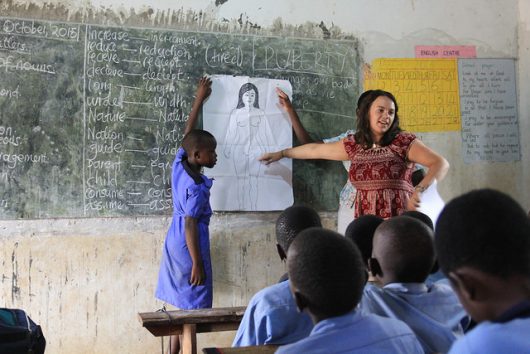
Girls’ education in Uganda varies from region to region. The gender gap has become smaller; however, there are serious issues holding back the progress of the development of girls’ education. Below are 10 facts about girls’ education in Uganda that highlight the obstacles as well as the benefits proven to be derived from the continuation of a girls’ education.
10 Facts About Girls’ Education in Uganda
- The United Nations Girls’ Education Initiative (UNGEI) reported that more than 700,000 girls in Uganda between the ages of six to 12 have never attended school. In fact, around half of girls between the ages of 15 to 24 are illiterate and four in five girls do not attend high school.
- A large contributor to low female literacy rates and school attendance rates is that up to 40 percent of girls in Uganda are married before the age of 18. Around 10 percent of these girls are married before the age of 15. Around 35 percent of girls drop out due to marriage and 23 percent drop out due to pregnancy. In contrast, allowing girls to continue through secondary education significantly reduces the chances of early marriage and childbearing.
- In Uganda, teenage pregnancy rates are some of the highest in the world. The national average is 24 percent; however, statistics change from region to region. The poorest regions have the highest percentage of teenage pregnancy.
- Poverty is the largest contributor to low standards in girls’ education in Uganda. Though education is free, school supplies and uniforms are not. Because of this, when faced with either sending a son or a daughter to school, a son’s education will usually be prioritized.
- Because of the high poverty rates, girls are usually expected to work as a way to increase the family’s income. The Global Partnership for Education reported that especially in rural areas, local traditions dictate that girls can be married in exchange for a dowry, a sum of money given to the daughter’s family as payment.
- Uneducated girls are highly susceptible to sexually transmitted diseases as well as other health complications. Health issues put girls at a risk of not continuing their education. In 2015, around 567 young people between the ages of 15 to 24 contracted HIV/AIDS on a weekly basis. A staggering 363 of these young adults were female.
- Girls are less likely to attend school during their menstrual cycle which creates gaps in a girl’s education. This is caused by inadequate infrastructure and resources for good hygiene in schools, especially for girls. Furthermore, girls often feel ashamed and embarrassed about their cycle because women’s health education is not a priority.
- Statistics show that educated mothers are more than twice as likely to ensure the education of their children. They are also more likely to earn higher wages than an uneducated person. A World Bank report shows that there would be a 14 percent rise in a girl’s wage if she would continue her education rather than get married.
- Educating girls would see a reduction in child marriage and births. This is closely linked to lower mortality rates as well. It would also greatly improve the standard of living across Uganda and reduce poverty rates.
- Educated women are more likely to invest back into their families. Roughly 90 percent of an income will usually go back to the family.
While the Ugandan education system has progressed and policies have been adopted, the lack of enforcement is the real issue. There must be further investment in the future of girls and their education; as these facts about girls’ education in Uganda illustrate, investing in girls would benefit the country in immeasurable ways.
– Trelawny Robinson
Photo: Flickr
