Aging in Need: The Struggles of Elderly Poverty in Liberia
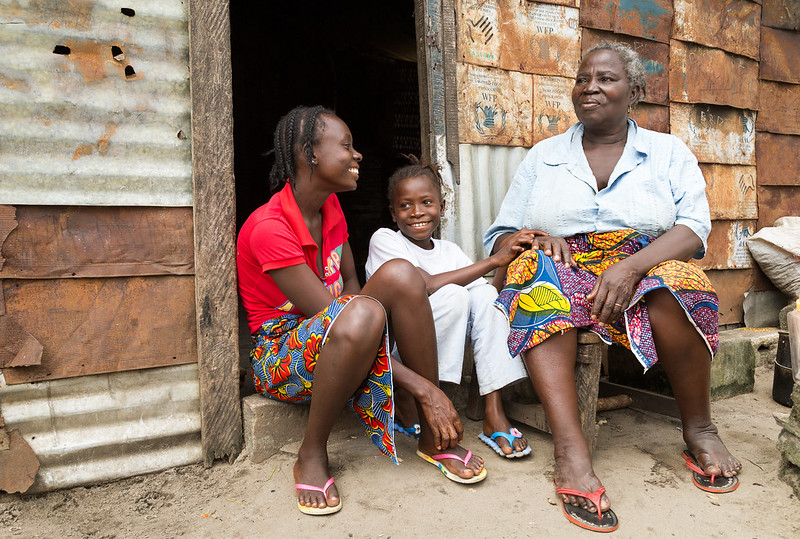 Liberia is a country on the west coast of Africa with a population of around 5.5 million and ranks as “the ninth poorest country in Africa and the world.” Still recovering from years of civil conflict and the Ebola crisis over the past decade, Liberia has achieved significant development progress, focusing on reducing poverty and enhancing basic service delivery for its population, while successfully transitioning between democratically elected governments This essay will discuss the state of the elderly poverty in Liberia, the work that the government has been doing to address this growing crisis.
Elderly Poverty in Liberia
The elderly living in poverty in Liberia face significant challenges, as it lacks a “universal statutory social security system for its older population.” The highest level of poverty is among individuals aged 60, with more than 60% living in absolute poverty, 48% facing food poverty and 22.2% in extreme poverty.
As most elderly citizens have not participated in the formal labor market, they are not eligible for pension schemes that could provide income security. At present, the only available option is a contributory national pension scheme. Unlike high-income countries that provide comprehensive pension systems, few African nations including Liberia, offer similar protections.
For those who do have pensions, coverage remains inadequate, lacking the support systems for surviving spouses and children that are typical in wealthier nations. According to the International Monetary Fund (IMF) study, there is only a small fraction—approximately 300,000 people—qualifying for the national pension scheme.
NASSCORP
The Liberian government operates the National Social Security and Welfare Corporation (NASSCORP), a statutory public trust established in 1975. NASSCORP administers the country’s social insurance program, providing benefits for individuals who contributed premium fees while employed. The program addresses “income loss due to injury, invalidity, old age, or the death of a breadwinner.”
Despite this framework, Liberia faces significant unemployment challenges, with many citizens unable to secure formal-sector jobs and, consequently, not contributing to NASSCORP. As they age, a majority rely on family support rather than a pension. NASSCORP aims to pay a monthly pension equal to at least 25% of a retiree’s average monthly earnings, funded by contributions from employers (3%) and employees (4.75%)—a total of 7.75% of monthly wages. To qualify for this pension, individuals must be at least 60 years old and have made contributions for a minimum of 100 months, with additional contributions increasing the pension.
However, many eligible citizens struggle to prove their entitlement due to the loss of records during 15 years of civil war, and a significant number lack any history of formal employment, particularly in rural areas. Consequently, elderly individuals often depend on family care, which is more sustainable in rural communities than in urban areas, where higher living costs and weaker traditional bonds complicate support systems.
PAPD
The Pro-Poor Agenda for Prosperity and Development (PAPD) 2018-2023 aims to address elderly poverty as part of Liberia’s broader national development strategy, according to the IMF report. This agenda builds on previous strategies and lessons learned from past poverty reduction efforts and focuses on enhancing the welfare of vulnerable populations, including the elderly poverty,
The four major pillars of the PAPD are:
- “Power to the people:” Empowering citizens, including the elderly, with necessary skills and tools for better life control.
- “The economy and jobs:” Fostering private sector-led growth and job creation, with an emphasis on economic inclusion,
- “Sustaining the peace:” Promoting social cohesion to support sustainable development
- “Governance and transparency:” Strengthening state capabilities for inclusive governance.
As for the way forward on empowerment, stakeholders consistently cited access to good quality education and health as the top priorities for the PAPD. Demand for more and better health and education facilities and, for good quality instruction, was high. Water and sanitation facilities were also high in demand. Moreover, special programs targeting youth, empowerment of women and people with disability and support for the elderly were high on the order of priorities, the IMF reports.
Conclusion
Liberia’s elderly population faces a significant crisis of poverty. The absence of a universal pension system, coupled with high unemployment rates and the historical impact of civil conflict, has left many older citizens without the means to support themselves. While the National Social Security and Welfare Corporation (NASSCORP) offers some relief through a contributory pension scheme, its coverage is limited and many eligible individuals struggle to access these benefits due to lost documentation and a lack of formal employment history.
– Hoi Ieng Chao
Hoi is based in Macau and focuses on Politics for The Borgen Project.
Photo: Flickr
