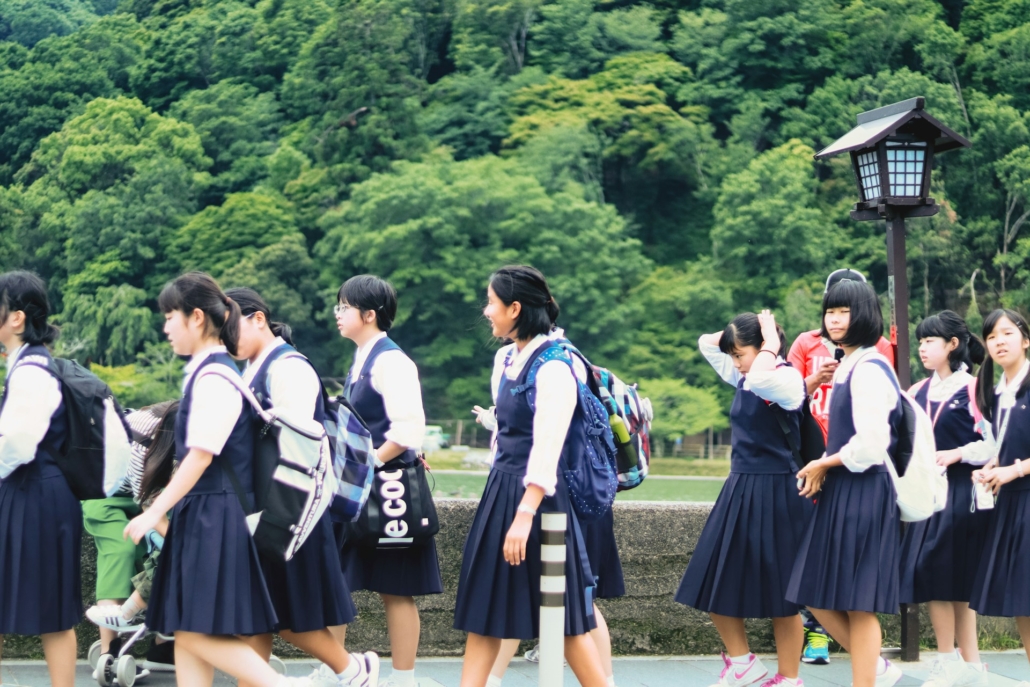
Japan’s education system is known for its blend of tradition and modernity, combining long-standing customs with cutting-edge technology. Character building, moral development and social responsibility are emphasized along with academic excellence and a rigorous curriculum.
10 Notable Facts About Education in Japan
- High Level of School Achievement: A country with a literacy rate of 99%, Japan ranks third by primary and secondary school net enrollment—99% primary NER and 95% secondary NER, behind only Norway and Finland. Japan’s high school dropout rate is less than 2%, and 85% of Japanese adults have at least completed upper secondary education.
- Pressure to Succeed: It is very rare for a Japanese student to fail a grade, but the academic challenge of high school and university entrance exams puts intense pressure on students to be adequately prepared.
- Equality in Education Performance: Japan ranks high in providing equal educational opportunities for students, regardless of socioeconomic status. According to the Organization for Economic Co-operation and Development, for example, the overall impact of socioeconomic status on student performance in math was 12%, which was below the OECD average of 15% (2022). The OECD also reported little variance in performance across schools. This same ranking reported that Japanese 15-year-olds ranked in the top five in all subjects: mathematical literacy, scientific literacy and reading.
- Financing education: In terms of percent of GDP, Japan’s spending on education (3.9%) is less than the OECD average (4.7%), but its 29.4% of GDP per capita is among the OECD’s highest.
- Equality in Education Financial Support: Beginning in April 2025, an annual support fund of $760 –the equivalent of the tuition fee of public high schools—was provided to all students, regardless of parental income. As of April 2026, private high-school students will be provided annual support funds of up to $2,942, effectively making their tuition free as well.
- O-soji. Probably unique to Japan is the tradition of o-soji, the students’ 4-days/week, 20-minute routine of cleaning classrooms, corridors and shared spaces. The objective is to teach teamwork, responsibility, respect for the environment and appreciation of what it takes to maintain that environment. A mentoring/role-model relationship develops as older students help younger ones.
- Tokkatsu Curriculum and the “Whole Child”: A central aspect of the Japanese official national curriculum is Tokkatsu, the period of special activities that brings together non-subject areas such as clubs, student council and even lunch. The idea is to support basic psychological needs for autonomy, belonging and competence that will then foster an “attachment” to school.
- Teacher Shortage: Hirotoshi Yamasaki reported in 2025 that there was a “dramatic” decrease in the national competition rate for elementary school teacher positions, falling to 2.3 applications for every position in 2023, with 40% of prefectures unable to fill the desired number of elementary school teaching positions. Reasons included an increase in sick leave and maternity/paternity leave, an increase in retirements and increased private sector employment. A reduction in maximum class size has led to a demand for more teachers, as well as the promotion of special-needs education and the introduction of new compulsory subjects. However, some of the trends are changing, and a declining birthrate may further reduce demand.
- Technology in the classroom: AI-powered learning systems have been incorporated into Japanese classrooms nationwide, impacting students’ academic performance. The “Smart Education Initiative,” for example, has brought AI-enhanced learning tools into over 70% of Japan’s public schools, and schools that have adopted AI tutoring platforms have reported a 27% increase in test scores over multiple subjects. Some teachers are training as “AI-Enhanced Instructors.” Said one, “We’re becoming curators of knowledge rather than mere deliverers.”
- Technology increasing access: The implementation of AI language assistants in English education has “democratized” access by bringing quality language practice to areas where there are few English speakers, e.g., rural areas.
The Japanese education system is focused, perhaps uniquely, not only on producing well-educated children/adults, but also well-rounded citizens. This model should give other countries pause for thought.
– Emily Joy Oomen
Photo: Flickr
