Education for Children with Disabilities Stunted Globally
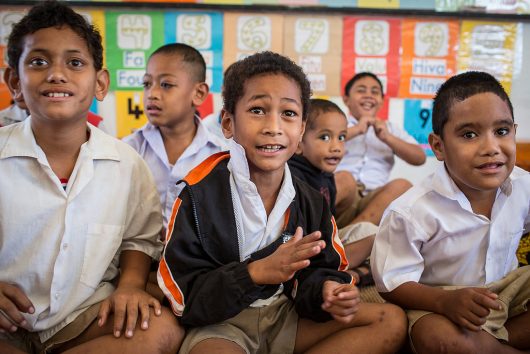
An international advocacy group released a report this month outlining the enormous task the world faces on the global issue of education for children with disabilities. The report states that “at least half of the world’s 65 million school-age children with disabilities are not in primary or lower secondary school.”
The International Disability and Development Consortium (IDCC) commissioned the report with an eye on understanding whether the 2030 sustainable development goals (SDGs) can be achieved with respect to “inclusive and equitable quality education for all.” According to UNESCO, “children with disabilities make up the largest group of readily identifiable children who have been and continue to be persistently excluded from education.”
The contrast between education for children with disabilities and children generally is stark. As of 2016, 91 percent of all children in the majority world are enrolled in primary education. Meanwhile, in a 2015 report by UNESCO, 98 percent of children in majority world countries do not have any schooling afforded them.
The link between poverty and the disability is also telling. In the majority world, where poverty rates are often severely detrimental to social growth, the problems self-perpetuate each other. UNICEF notes that “Poverty and disability reinforce each other, contributing to increased vulnerability and exclusion.”
UNICEF explains that’s because children who are poor and who also live in poor countries are more likely to become disabled because of poor health care and other social systems. Furthermore, they are often denied basic resources that would otherwise mitigate or prevent their increasingly impoverished state.
Much is to blame for the apparent discrimination toward children with disabilities. One primary cause is a lack of understanding by government officials on the efficacy of investing in children with disabilities. The IDCC in part concluded that many governments incorrectly believe that investing in education for children with disabilities will yield low returns.
However, the group’s research has shown that inclusive education for all can reduce the population of uneducated, tackle discrimination generally and promote solutions for other school-related problems. They also found that segregated education, beyond the extent to which certain students may need it, is more expensive.
UNESCO and the IDCC conclude that to tackle the problem as it is now, greater reform culturally and politically is needed among “stakeholders.” Governments and non-governmental organizations must reverse global trends of divestment in education for children generally, as well as educate on nearly all social levels the need for investment in children with disabilities.
The IDCC urges prioritization of education for children with disabilities around the world if the SDGs are to be realized. Those changes must occur in terms of increased and targeted funding practices and increased normalization of disability-awareness and responsiveness to the needs of children with disabilities.
– James Collins
Photo: Flickr
