Threats and Solutions To Crop Farming in Uganda
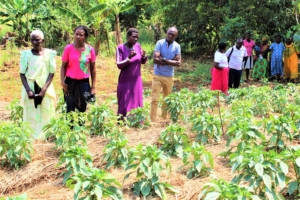 Uganda is located in East-Central Africa. It is a landlocked country, with the Democratic Republic of Congo to its west, South Sudan to its north, Tanzania to its south and Kenya to its east. Uganda is resource-rich, but relatively underserved. Its GDP per capita was $1,072 in 2024, which places the country at 196 in the world for this measurement.
Farming in Uganda
Crop farming in Uganda is a major sector. About 80% of Uganda’s land is arable, but only 35% is cultivated. Agriculture remains vital, accounting for nearly 25% of the country’s GDP.” Environmental factors are intrinsic to crop farming and in recent years, these factors have become unpredictable and extreme.
Since smallholder farmers are some of the most impoverished members of Ugandan society and often rely on every harvest for their sustenance and livelihoods, the increasing environmental challenges can become a real problem.
Maize and beans are two essential crops in Uganda. While they do not rank in the top five for exports, they are significant domestic foods and cash crops. Both crops are facing new environmental challenges and the solutions demonstrate the resilience and dynamism of the Ugandan agricultural community.
Better Beans for Ugandans
Beans are vital to Uganda, providing nourishment for its people. However, rising droughts and unpredictable rainfall threaten harvests, putting the country’s most vulnerable smallholder farmers at risk.
Dr. Clare Mukankusi is a Ugandan plant researcher at the International Center for Tropical Agriculture (CIAT). She is a firm believer in the importance of beans as a foundation of Ugandan life, having grown up on them herself. Through selective crossbreeding, Mukankusi has been developing a new type of bean that matures in two months, rather than the three to four months taken by traditional beans.
This will make them much more likely to survive an unpredictable and shorter growing season. As this new breed of bean is further developed and eventually distributed across Uganda, it will help secure the future of crop farming in the country. It offers vulnerable smallholders a crucial advantage in facing an increasingly challenging environment.
Fighting the Armyworm Threat
Pests have always been an issue in Uganda, but pesticidal chemicals were a clear solution. The armyworm, in particular, threatens maize, an important food, cash crop and export crop on which many smallholder farmers depend. However, the armyworm is becoming increasingly pesticide-resistant, forcing farmers to adapt and find new ways to keep the pest at bay:
- Parasites: Introducing certain parasites that feed on armyworm larvae can help control their population. If managed carefully, this could become an effective mitigation method.
- Planting techniques: Deep ploughing and strict management of crop residue after harvest can reduce pest survival.
- Crop rotation: Regularly rotating maize with other crops can disrupt pest life cycles and lower infestation risks.
These techniques have the potential to counter pest threat without increasing chemical potency, which many farmers have had to do in the interim. While effective, this is not sustainable. Scientists from multiple institutions warn that overuse damages soil health in the long term and accelerates pest resistance.
The Need for Government Action
Many Ugandan environmental scientists agree that their government must become more involved in crop farming in Uganda. As mentioned, increased potency of pesticides has risks to human and environmental health and risks of further pest-resistance.
Dr. Kalyebi, the lead author of armyworm research in Uganda, stated that the government needs to educate farmers on the dangers of chemical mitigation and fund different solutions, such as those aforementioned. It is widely agreed upon that the Ugandan government should recognize the importance of maize farming, particularly farming and invest in research and subsidies.
Conclusion
Crop farming in Uganda is vital to the country’s economy and people. The underserved depend on good harvests to survive and environmental factors such as droughts and pests directly threaten them. However, the determination of the Ugandan people to find ways around these problems is remarkable and one can hope that the government will match these efforts.
– Oliver Evans
Oliver is based in Winkleigh, Devon, UK and focuses on Good News and Technology for The Borgen Project.
Photo: Flickr
