World Bank Support: Strengthening Agriculture in Sri Lanka
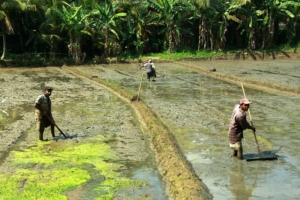 Recently, the World Bank has pledged to support Sri Lanka’s economic recovery, committing to a $1 billion initiative over three years. Of this, $185 million is allocated for solar and wind projects, $200 million toward supporting tourism through protecting cultural and natural assets and generating employment and another $200 million for regional infrastructure. However, one of the most important investments that the World Bank is making in Sri Lanka is the $100 million for agriculture to help farmers adopt new technologies and attract private capital.
Agriculture in Sri Lanka
To become a stronger player in the global food trade, Sri Lanka must improve efficiency in handling its top exports: mangoes, cinnamon, coconut and seafood. More robust systems are needed to ensure these products meet international standards and to reduce food loss. The World Bank is investing in Sri Lanka’s National Quality Infrastructure (NQI), a behind-the-scenes system that guarantees exported food is safe, traceable and up to code for global markets. To catch up with some of the higher-grossing nations worldwide, the NQI provides digital systems for tracking products, labs for testing and agencies for certification.
Sri Lanka is one of the most impoverished countries in the world, with less than $5,000 GDP per Capita. However, the World Bank’s investment will strengthen the country’s local industry, expanding economic opportunity and attracting private capital to support long-term growth. “This support from the World Bank Group is an investment in the people of Sri Lanka,” President of Sri Lanka, Anura Kumara Dissanayake, said. “It will help create jobs, support small businesses and open new opportunities across the country. We are committed to ensuring this partnership delivers real change for our communities.”
World Bank Backs Sri Lanka as a Trusted Global Exporter
The $100 million agricultural investment will help farmers and agribusinesses access markets, attract private capital and adopt new technologies. It will benefit more than 38,000 people, including 8,000 agri-food producers and is expected to gain $17 million in private financing. In 2017, agriculture provided a living for 2.1 million Sri Lankan households. It represented more than 26% of the GDP, which is only forecasted to increase with the World Bank’s assistance.
The World Bank’s support for Sri Lanka’s agribusiness aims to strengthen its position as a trustworthy exporter. Plans include reviewing laboratory systems and developing digital tools to improve efficiency. Indeed, these tools will streamline compliance processes for traders, speed up regulatory approvals and make product tracking easier. A strong NQI, a key World Bank focus, establishes clear standards and communicates them to producers and processing facilities, ensuring high-quality food delivery.
Conclusion
Ultimately, strengthening Sri Lanka’s NQI will raise the standard of agricultural exports and improve the quality of food imports, which is crucial for households struggling to afford nutritious meals. Though largely behind the scenes, lab testing, digital tracking and equipment upgrades reshape the country’s agricultural system. Backed by a sizable World Bank investment, these reforms promise to boost profitability in the sector while creating countless jobs, positioning Sri Lanka for a stronger, more resilient economy.
– Gregory Walker
Gregory is based in York, PA, USA and focuses on Global Health for The Borgen Project.
Photo: Flickr
