Clean-Air Schools in Cairo Offer Hope for Low-Income Children
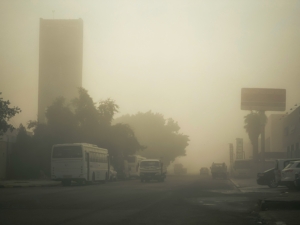 In Egypt’s crowded capital, children living in low-income neighborhoods face an invisible threat every day: air pollution. According to the World Bank, Cairo ranks among the world’s most polluted cities, with vehicle emissions, industrial pollution and desert dust contributing to hazardous air quality that disproportionately harms vulnerable communities. Children from impoverished districts, where schools sit near congested roadways and factories, face an elevated risk of developing asthma and other respiratory illnesses.
The World Health Organization (WHO) notes that children breathe faster than adults and are more vulnerable to fine particulate matter, which can become trapped in developing lungs.
Pollution and Poverty Reinforce Each Other
Across Cairo, environmental health and economic inequality are closely linked. According to UNICEF, children in low-income communities experience higher exposure to environmental hazards and have less access to quality health care. For many families, chronic respiratory illness creates additional financial hardship, including missed school days, lost wages for parents caring for sick children and recurring medical costs.
The Egyptian Ministry of Health reports that asthma is among the most common chronic illnesses affecting Egyptian children, with higher prevalence in densely populated urban areas.
Clean-Air Schools Take Root
To address this challenge, NGOs and parent-led coalitions have begun implementing “clean-air schools” initiatives in the most polluted districts of Cairo. These programs equip classrooms with portable air purifiers, increase natural ventilation and plant trees and shrubs around school grounds to trap airborne pollutants. Environmental groups, such as Greenish, a Cairo-based nonprofit, partner with schools to “provide workshops focused on environmental awareness.”
According to the American University in Cairo’s Center for Applied Research on the Environment, urban greening has been shown to lower particulate matter levels, improving both air quality and student well-being.
Health and Education Benefits
Cleaner indoor air is more than a health measure; it is a tool for improving educational outcomes. Research cited by the U.S. Environmental Protection Agency (EPA) indicates that air purifiers in schools can reduce respiratory symptoms and absenteeism, two key factors that hinder academic performance in children with asthma. In Cairo’s low-income areas, where asthma-related absences can lead to learning delays and higher dropout rates, clean-air classrooms provide an opportunity to break the cycle of disadvantage.
Government Policies and Future Expansion
National efforts reinforce local programs. Under the National Air Pollution Reduction Plan, Egypt aims to reduce particulate pollution by 50% by 2030, supported by upgrades to public transportation, stricter emissions monitoring and urban greening projects. Egypt’s National Climate Strategy 2050 also includes expanding electric buses and increasing green spaces in urban centers, measures expected to improve air quality in commuting corridors near schools.
A Breath of Relief for Cairo’s Youngest Learners
While systemic improvements will take time, clean-air schools in Cairo are already beginning to reduce asthma symptoms and improve student well-being in participating districts. For families in Cairo’s most impoverished communities, where health and education resources are limited, these small interventions can mean the difference between chronic illness and opportunity. As Egypt invests in cleaner transportation and environmental protection, community-driven school programs ensure that the most vulnerable children benefit today, helping them breathe more easily, learn better and envision a healthier future.
– Katie Williams
Katie is based in England, UK and focuses on Global Health for The Borgen Project.
Photo: Unsplash
