Cities That Will Run Out of Water Soon Without Proper Attention
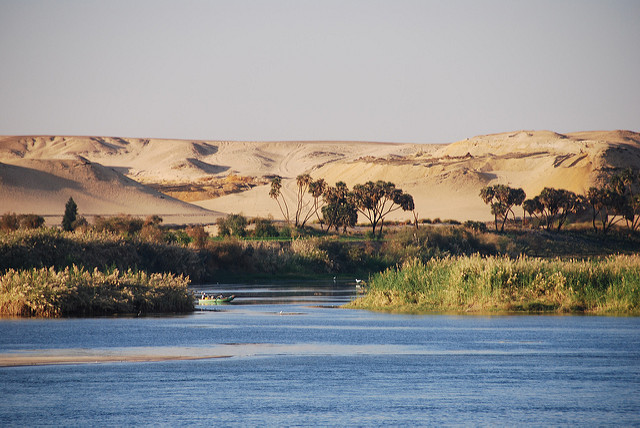
Over 70 percent of the world’s surface area is covered in water. However, the majority of the world’s poor, who number about three billion, live in areas absent of clean water. Most of the earth’s water is saltwater, but there are still means to purify it for drinking and cooking purposes.
According to UNICEF, women may spend between 30 minutes to eight hours a day searching for water. The average walking distance for women in Africa and Asia is 6.0 km (3.7 miles) to walk and carry the water for their families. The following are all cities that will run out of water soon without proper attention.
- Cape Town, South Africa: There might be a large-scale shutdown of tap water this summer. Mayor Patricia de Lille laments that residents have not heeded to advice to reduce consumption. If national consumption exceeds the dam capacity, there will be a total shutdown this April. This is referred to as “Day Zero.”Solution: Large-scale desalination plants along the Indian Ocean and the Atlantic Ocean.
- Sao Paolo, Brazil: Brazil’s largest city was recently devastated by droughts. The Cantareira Reservoir is now a cracked and parched dirt field. This is a result of reduced rainfall and increased demand for water by the unauthorized settling of residents in nearby areas.Solution: Restoring degraded forests; this will prevent soil erosion, floods and allow for plants to store the water naturally and recycle it as a watershed.
- Bangalore, India: This city cannot ignore the water shortage any longer. The local demand far exceeds the available cubic meters of safe water. Bangalore has a reputation of possessing the most inefficient water pumping and distribution network in all of Asia.Solution: Repair the rampant leakage in the corroded, 100- to 200-year-old piping system, and improve the efficiency of the distribution system. Water is plentiful in Bangalore, but a modern distribution mechanism will ensure it evades being among the cities that will run out of water soon.
- Beijing, China: China is home to nearly 20 percent of the world’s population, but only has seven percent of the world’s freshwater. To make matters worse, what little water it has is unsafe for drinking due to pollution. Furthermore, the Chinese government has authorized the construction of oil refineries in areas where water is scarce, such as the Xinjiang province.Solution: Recycle more than half of its water, which would be on the same standard as developed European nations. With this development, Beijing can strive for a living standard of cleaner water instead of being among the first cities that will run out of water.
- Cairo, Egypt: The Nile is almost all of the country’s source of water. A city of 20 million people, and rapidly growing, does not fare well with a fixed water share. Some farmers have even been forced to irrigate using sewage water.Solution: Currently, the Egyptian government is urging people to move to surrounding cities whose water sources are detached from Cairo. This will reduce the water stress on the city and prevent further stress on new desalination plants exclusively for the city of Cairo.
Better planning and management of water sources are only possible once wealth increases and corruption is eradicated. Eliminating undue bureaucracy is a difficult step, so it is important to approach each of these cities’ challenges on a needs basis. It is necessary to understand that water is not only a basic human need but also a basic human right.
– Awad Bin-Jawed
Photo: Flickr
