Fighting Hunger and Cholera in Sudan
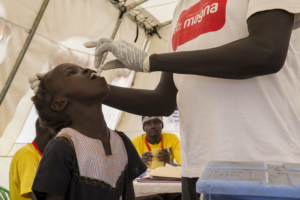 Sudan is caught in the middle of a dual emergency. A devastating cholera epidemic and widespread famine have left millions of people facing preventable illness and hunger. Ongoing conflict has only deepened the crisis, destroying infrastructure, displacing families and cutting off humanitarian access. Yet even in this bleak picture, targeted global efforts are showing that solutions exist; if they can be scaled and sustained.
The Scale of the Crisis
Since 2024, Sudan has endured one of its worst cholera epidemics in decades, with hundreds of thousands of suspected cases reported and thousands of deaths. At the same time, more than 25 million people are now acutely food insecure, with famine conditions confirmed in parts of Darfur. The war between Sudan’s military and the Rapid Support Forces has turned health into a casualty, destroying water systems and hospitals and blocking supply lines. Without outside help, this fight against cholera and hunger could possibly wipe out half of Sudan’s population.
Emergency Responses on the Ground
Despite these barriers, humanitarian organizations are working on the frontlines to contain the damage. The World Health Organization (WHO) and Médecins Sans Frontières (MSF) are leading cholera vaccination campaigns, distributing rapid diagnostic kits and deploying mobile health clinics into hard-to-reach areas. These global efforts are critical not only for treating current outbreaks but also for limiting future spread and helping rebuild Sudan.
Meanwhile, the World Food Program (WFP) has stepped in to confront hunger and malnutrition. WFP is providing food aid, therapeutic feeding for children, and cash assistance where local markets still function, ensuring that the most vulnerable can survive through the worst of the shortages. Local NGOs add another layer of support, such as SUDO, repairing broken water points and working with communities to restore sanitation systems.
Building Long-Term Resilience
Sudan’s health system should be able to withstand future shocks. That means training local health workers, strengthening laboratory capacity and investing in disease surveillance to enable early detection of outbreaks like cholera. International strategies like the WHO’s ‘Global Cholera Roadmap 2030’ provide a framework for reducing cholera deaths by 90% worldwide. Applying this roadmap in Sudan, through water and sanitation upgrades, vaccination drives and better outbreak detection, could turn the tide not just in this crisis, but for decades to come and help Sudan fully rebuild itself.
The Role of Funding and Coordination
The financial dimension is also critical. The WFP warns that humanitarian operations in Sudan remain severely underfunded, with hundreds of millions of dollars still needed this year. Donor countries and development banks will need to align funding with coordinated strategies, ensuring resources go where they are most necessary. These small global efforts could lead to a big step to help Sudan rebuild itself by fighting cholera and hunger!
A Path Forward
Sudan’s crisis is far from over, but the path forward is clearer than it may appear. By protecting humanitarian access, expanding vaccination & food aid and investing in long-term health resilience, global actors can help Sudan move from mere survival toward recovery. The country’s people have endured staggering loss; what they need now is a consistent international partnership that delivers not just aid, but the tools to rebuild their health and dignity.
– Nilay Ersoy
Nilay is based in Cambridge, MA, USA and focuses on Global Health for The Borgen Project.
Photo: Flickr
