Child Poverty in Ghana
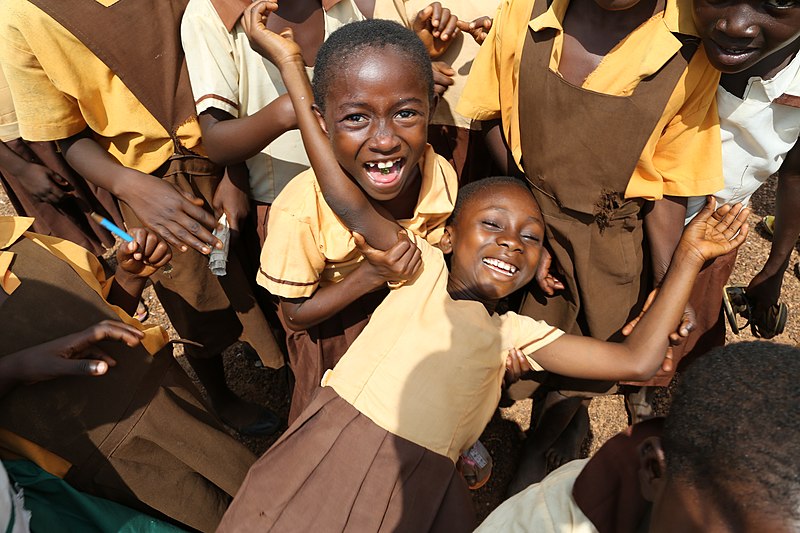
In Ghana, both the incidence and intensity of child poverty have steadily decreased in recent years. From 2008 to 2014, for example, multidimensional child poverty in Ghana dropped by 11.6% in urban areas and 11.4% in rural areas while severity reduced by 0.1% and 3.0% in urban and rural areas respectively. Despite these successes, however, it is still a significant problem that deserves much attention. Many Ghanaian children still face health complications, lack of education and child labor, which the U.N. and non-governmental organizations (NGOs) alike must address head-on.
General Data
According to 2014 data, multidimensional child poverty in Ghana stood at about 34.7% in urban areas and 75.9% in rural areas. Also of great concern is the severity of child poverty, which stood at about 43.7% and 52.3% in urban and rural areas respectively. A January 2020 UNICEF study also found that 73.4% of children in Ghana suffer from multidimensional poverty, experiencing at least three dimensions of deprivation. These dimensions include nutrition, health, learning and development, child protection, water, sanitation, housing and information.
The multidimensional poverty rate is greatest among children under the age of 5 at around eight in 10, whereas the rate for children aged 5-17 is about seven in 10. Many Ghanaian children are disadvantaged financially as well — 28.2% of Ghanaian children are considered monetarily poor based on their family’s income. Again, the statistics are generally worse in rural than in urban areas.
Health
Multidimensional poverty in Ghana leads to poor health in children. According to UNICEF, “One child in every five in Ghana experiences stunted growth during the first thousand days of life caused by inadequate nourishment, frequent illness and an unhealthy environment,” affecting their development physically, socially and cognitively. Additionally, a lack of knowledge, skills and monetary resources to prepare nutritious meals for children means children’s diets typically lack diversity. Many children also go unvaccinated, leaving them susceptible to diseases.
Education
The deprivations that come with child poverty in Ghana also impact children’s education, as “[c]lasses are overcrowded, water and sanitation facilities are inadequate and trained teachers and school books are in short supply,” according to UNICEF. Children with disabilities are especially impacted as one in every five disabled children from the ages of 6-24 has never received an education due to discrimination. Many of these issues have worsened with the onset of the COVID-19 pandemic, which forced many schools to shut down, further depriving millions of children of proper education.
Child Labor
Child labor is another factor affecting children in Ghana. Estimates indicate that about 21% of children in Ghana aged 5-17 are involved in child labor, with 14% of those children laboring in hazardous working conditions. About 79.2% of working children in Ghana work in agriculture, primarily in cocoa production, where many face health risks such as musculoskeletal disorders, head injuries and fractures, among others.
While child labor in Ghana has long been a point of concern, the COVID-19 pandemic certainly exacerbated it as school shutdowns and widespread unemployment forced many more children into the workforce. According to interviews of several Ghanaian children by Human Rights Watch, many of these children faced exposure to dangerous substances and chemicals, including mercury. A number of children did not even receive payment for their services.
The Bright Side: Progress and Aid
Amid persistent child poverty in Ghana, several NGOs are stepping up to provide much-needed aid. World Vision International, for example, has worked with communities within the country to reduce poverty and injustices.
According to its annual National Impact Report from 2021, the organization has provided aid through a number of means, including providing more than 20,000 school supplies, such as books, pencils and backpacks to 7,180 children. The organization has also built water systems to provide clean drinking and bathing water for more than 38,000 children.
WVI also helped provide various health and training programs to educate Ghanaian parents on nutrition and “appropriate feeding practices” and taught more than 49,000 community members strategies for the prevention and treatment of diseases such as malaria and diarrhea.
Onechild Ghana came about in 2002 and seeks to provide educational opportunities for thousands of children by providing resources from fundamental infrastructure (classrooms and dorms with running water, toilets and electricity) to funds for vocational schools so that students can learn subjects such as electricals, masonry, math, English and health. Onechild Ghana currently supports more than 1,000 children across 14 different vocational schools in Ghana.
Such support from NGOs, along with coordinated plans by international government bodies such as UNICEF and others, can make significant improvements in the lives of Ghanaian children and reverse the course of child poverty in Ghana.
– Adam Cvik
Photo: Wikipedia Commons

