• Link to X
  • Link to Facebook
  • Link to Instagram
  • Link to TikTok
  • Link to Youtube
  • About
    • About Us
      • President
      • Board of Directors
      • Board of Advisors
      • Financials
      • Our Methodology
      • Success Tracker
      • Contact
  • Act Now
    • 30 Ways to Help
      • Email Congress
      • Call Congress
      • Volunteer
      • Courses & Certificates
      • Be a Donor
    • Internships
      • In-Office Internships
      • Remote Internships
    • Legislation
      • Politics 101
  • The Blog
  • The Podcast
  • Magazine
  • Donate
  • Click to open the search input field Click to open the search input field Search
  • Menu Menu

Archive for category: Global Poverty

Key articles and information on global poverty.

Global Poverty

The Impact of Food Banks in India

Food Banks in IndiaIndia currently ranks 107 out of 116 on the Global Hunger Index, implying that roughly 14% of the population is undernourished. According to a 2021 report by the Global FoodBanking Network, hundreds of food banks in India serve over 6 million people across 100 cities. However, this is still a small fraction of the country’s estimated 190 million undernourished people.

In the last year, India has seen a 250% increase in the volume of food distributed through food banks. Donation banks are essential lifelines for millions of people living in poverty in India. These organizations provide food and clothing to those who cannot afford to buy them, helping to reduce hunger and malnutrition and improve the lives of the poor.

The Potential for Food and Clothing Banks to Reduce Poverty

Food donation banks have the potential to play a significant role in reducing poverty in India. By providing free food and clothing to the poor, these organizations can help to reduce hunger, improve health outcomes and increase educational attainment.

Here are a few examples of food and clothes banks in India that are making a difference:

  • Feeding India: Feeding India, operated by Zomato, India’s leading food delivery start-up, is one of the largest food banks in India. By 2019, Feeding India distributed over 1.1 million meals a month, catering to over 82 cities. The number of Hunger Heroes (volunteers at Feeding India) has grown over the past three years from 8,500 to 21,500.
  • India FoodBanking Network: The India FoodBanking Network partners with over 300 NGOs and more than 25 corporations, through which they serve over a million meals every year in 10 locations. This multi-stakeholder partnership ensures a large-scale impact on hunger and malnutrition.
  • No Food Waste (NFW): NFW follows a unique process for identifying specific community needs, which involves working with municipality leaders early on to focus on the donation of food products and logistics.
  • Clothes Bank of India: The Clothing Banks in India collect and distribute used clothes to people in need. Organizations, such as Society for Bright Future (SFBF) and SERUDS India, are leading the way and plan to have cloth banks all over India by 2026

Challenges

Food loss and waste are major social challenges in India. Although India has recently become a net food exporter, despite the expansions in agricultural production, 40% of all the food produced remains wasted in India. Government agencies have developed strategies to divert food waste to mitigate food access issues. 

Food banks in India face several challenges, including:

  • Limited Funding: Food and clothes banks rely on donations from individuals and businesses. However, funding can be limited, especially during times of economic hardship.
  • Lack of Quality Food Storage Systems: The food waste issue can be resolved by adopting strategies for food storage that have been implemented successfully in other countries. For example, China has built advanced storage facilities filled with modern equipment. 
  • Inadequate Food Distribution Systems: Distributing food and clothes to many people across a vast country can be logistically challenging. Food distribution through India’s public distribution mechanisms (PDS) is also a reason for growing food insecurity in the country — people who are the right candidates for receiving the subsidy are excluded due to the ineffective implementation and distribution of their below-poverty line (BPL) status, the criterion used for obtaining the donation.

Final Thoughts

Despite the challenges, food banks have the potential to play a significant role in reducing poverty in India and improving the lives of millions. However, they face many challenges, including limited funding, lack of awareness and logistical challenges.

It is essential to support food and clothes banks in India by donating food, clothing and money. Raising awareness of these organizations and advocating for policies supporting their work could significantly impact them. By working together, India could create a future where its citizens can access the food and clothing they need to thrive.

– Brijesh Goel
Photo: Flickr

October 20, 2023
https://borgenproject.org/wp-content/uploads/borgen-project-logo.svg 0 0 Yuki https://borgenproject.org/wp-content/uploads/borgen-project-logo.svg Yuki2023-10-20 08:22:302023-10-20 08:50:45The Impact of Food Banks in India
Disease, Global Poverty

3 Diseases Caused by Malnutrition

Diseases Caused by MalnutritionMalnutrition is a public health problem that can be seen mostly in developing countries, especially in sub-Saharan Africa and Southern Asia. According to the WHO, malnutrition refers to deficiencies or excesses in nutrient intake, imbalance of essential nutrients or impaired nutrient utilization. People all over the world suffer from malnutrition, especially in places where there is war, economic crisis, drought, floods or other manners of human suffering. However, the focus of this article will be the diseases or syndromes that can stem from malnutrition. Malnutrition and disease often go hand in hand. Here are three diseases caused by malnutrition. 

Kwashiorkor

Kwashiorkor is a disease that stems from malnutrition and severe protein deficiency. Kwashiorkor causes fluid retention and swelling, especially in the abdomen. This disease most commonly affects children, especially in developing countries where there is food insecurity and high levels of poverty. 

If left untreated, Kwashiorkor can be fatal. This disease can cause immune system failure, liver failure, growth and development delays in children and can lead to starvation and death. 

Kwashiorkor primarily affects children, especially from ages 3 to 5. This disease is widely spread throughout sub-Saharan Africa and is also common in Southeast Asia and Central America. Kwashiorkor affects both girls and boys equally and remains a major threat in food-insecure countries. 

Marasmus 

Marasmus is a severe form of malnutrition. While kwashiorkor is a deficiency in protein, marasmus is a deficiency of all the macronutrients in the body. Marasmus causes the wasting of fat and muscle under the skin, making one look depleted and visibly underweight. 

Marasmus can be caused by starvation or not having enough nutrients. The body will start feeding on its own fat and muscle, then begin shutting down some functions to conserve energy. Marasmus causes low heart rate, blood pressure and body temperature. This form of malnutrition can be fatal, leading to heart failure. It also compromises the immune system making malnourished people more prone to infection and illnesses. 

It is thought that there are 18 million children living in low or middle-income countries who are suffering from Marasmus. It is more common in developing countries like some areas of Asia and Africa. Unfortunately, people in the nations have poor access to food, making it difficult to get the correct amount of nutrients, which leads to Marasmus.

Rickets 

Rickets is a condition that affects bone development in children. It specifically softens and weakens the bones typically due to an extreme deficiency of calcium and vitamin D. This condition only occurs in growing bones, so it occurs most commonly in infants and young children.

Any child who lacks these vitamins can develop rickets, however, children in areas of low food income may be more affected. Rickets is common in regions of Asia where there is pollution and a lack of sunlight or low intake of meat. Rickets is also common in Africa, partly because people tend to have darker skin, which reduces vitamin D absorption. 

In severe and untreated cases, the bone becomes more fragile and prone to fractures, and some children may develop heart diseases that can be fatal. 

All in all, malnourishment is a direct cause of 300,000 deaths per year while contributing to 50% of deaths in younger children. It’s thought to be around 852 million people globally that are starving, with the majority (815 million) in undeveloped countries. 

Victims of suffering hunger around the world can be threatened by many different variables. These are just a few examples of syndromes and diseases that can stem from malnutrition.

However, in 2019 a plan to reduce malnutrition in Africa was adopted by WHO. The strategic plan includes specific goals to be met by 2025 and strives to develop evidence-based policies and national capabilities. Priority interventions include enforcing laws and food safety regulations, utilizing financial incentives to promote healthy food selections, and incorporating crucial nutrition acts into systems for delivering health care services to reduce malnutrition and ultimately, reduce diseases caused by malnutrition. 

– Paige Falk
Photo: Flickr

October 20, 2023
https://borgenproject.org/wp-content/uploads/borgen-project-logo.svg 0 0 Yuki https://borgenproject.org/wp-content/uploads/borgen-project-logo.svg Yuki2023-10-20 08:02:342023-10-21 11:30:083 Diseases Caused by Malnutrition
Global Poverty

5 Active Nonprofits in Ukraine

Nonprofits in UkraineWith the war in Ukraine long passing its one-year anniversary, poverty and homelessness have skyrocketed. Over 8 million people across Ukraine are homeless with hundreds of thousands more being sheltered in foreign countries as refugees. Here are five active nonprofits in Ukraine.

5 Active Nonprofits in Ukraine

  1. United24 – United24 is a charitable organization that supports three key projects in Ukraine during the ongoing war. They focus on providing medical aid, defense and demining efforts and helping with rebuilding initiatives. Donations are collected through Ukraine’s national bank and then allocated to these programs. United24 also collaborates with celebrities to raise awareness and funds. For instance, they organized a fundraising concert with Imagine Dragons, where the band signed the Ukrainian flag and auctioned it for charity. Since their establishment, United24 has raised over $458 million for Ukraine. They’ve used these funds to purchase body armor, uniforms, drones, ALV apparatuses and X-ray machines, benefiting both the military and medical relief efforts in Ukraine.
  2. Nova Ukraine – Nova Ukraine is a humanitarian and education-focused organization dedicated to aiding the most vulnerable individuals in Ukraine. They achieve this through various means, including delivering medical aid, providing educational support and raising awareness in the United States. They’ve partnered with The Howard Buffett Foundation to establish Zmistovno Learning Centers, which offer extracurricular activities and socialization opportunities for children. Nova Ukraine also operates the Humanitarian Demining Project to assist first responders and supply protective gear. Since its inception, Nova Ukraine has contributed over $80 million in emergency aid to vulnerable communities in Ukraine. Their 3,517 volunteers have assisted more than 4.5 million people by providing over 2.5 million meals and 582,654 emergency air packages. Additionally, they’ve played a vital role in evacuating over 156,000 people and animals during the ongoing war.
  3. World Vision – World Vision offers food, school materials and shelter to those impacted by the crisis in Ukraine. They put measures in place to safeguard children affected by violence and displacement and to advance the welfare of families who are in danger. Additionally, “Child-Friendly Spaces” (CFS) have been developed to provide emotional assistance to children affected by the conflict. Over 27,000 impacted Ukrainians have been touched by World Vision since they began their work in Eastern Europe. 11,497 of those people were youngsters, about. In all corners of the nation, they have provided more than 8,000 people with vital goods. They have also provided food and sanitary kits to 4,000 more Ukrainians living in Georgia.
  4. Razom for Ukraine – Through programs that create capacity, Razom for Ukraine seeks to give Ukrainians a greater voice. They carry out both short-term and long-term programs to promote cooperation and community growth. For instance, they assist health care facilities all around Ukraine by educating neurosurgeons and supplying essential medical supplies through their Razom Health Initiative. Additionally, they give funds to groups who share their values in order to promote Ukrainian civil society and increase humanitarian relief through their Razom Relief Program. Since its founding, Razom for Ukraine has provided more than 141 tons of medical supplies to more than 410 hospitals around Ukraine. For instance, they recruited more than 400 volunteers in 2021 to carry out their programs and services, which included transporting more than 70 relief pallets to Ukraine and over 218 tons of necessities and supplies.
  5. Dzygas’s Paw Charity Fund – The Dyzga’s Paw Charity Fund provides modern tools and assistance to Ukrainian armed forces. For instance, they offer thermal cameras, drones, night vision devices and encrypted communications to increase combat efficiency and safety. In order to replace essential equipment destroyed in bombs and fires, they also plan fundraising and awareness campaigns. In one instance, they are replacing the supplies lost by Carpathian Sich soldiers after a Russian missile attack caused a disastrous fire in their equipment warehouse through their Phoenix Project. The Dzyga’s Paw Charity Fund was established with the intention of aiding Ukrainian soldiers engaged in front-line combat. For instance, they sent the Ukrainian military more than $91,000 worth of equipment in just July 2023.

Working for Ukraine

In the ongoing crisis, these nonprofits in Ukraine have emerged as vital pillars of support. United24, Nova Ukraine, World Vision, Razom for Ukraine and Dzygas’s Paw Charity Fund have collectively raised millions and impacted thousands of lives through medical aid, emergency relief, child welfare and armed forces support. These organizations exemplify the power of collective action and stand as beacons of hope in challenging times.

– Jake Marks
Photo: Flickr

October 20, 2023
https://borgenproject.org/wp-content/uploads/borgen-project-logo.svg 0 0 Yuki https://borgenproject.org/wp-content/uploads/borgen-project-logo.svg Yuki2023-10-20 07:51:062023-10-20 10:24:365 Active Nonprofits in Ukraine
Global Poverty, Women

NGOs Helping Women in Ethiopia

NGOs Helping Women in EthiopiaIn August of 2023, a sixth-month-long state of emergency was declared and government curfews were enforced as more conflict in Ethiopia erupted, only nine months after the end of a devastating two-year civil war. As a result of turbulent political conflict, more waves of violence have broken out in the northern Amhara region. 

With the second largest population in Africa, the country is still feeling the effects of the initial conflict that began over two years ago. At least 5.1 million people were displaced in 12 months, which is “the most people internally displaced in any country in any single year.”

Two years on, in 2023, the U.N. requested $4 billion to provide aid to twenty million people still affected by the conflict, including more than four million internally displaced people. 

The Impact of Conflict on Women

With such destructive conflict there always comes a surge in gender-based violence. In the last civil war, nearly 26,000 women and girls reported experiencing sexual violence. Due to the sensitive nature of the topic as well as powerful social stigma, the majority of cases are not reported meaning that this number is thought to be much higher. 

With the absence of strong welfare services and the intense conflict in Ethiopia aggravating this need, many women rely on nonprofit organizations that are committed to helping women and girls affected by the violence.

Ethiopia Aid and AWSAD’s Safe Houses

Ethiopia Aid is dedicated to “breaking the cycle of poverty by enabling the poorest and most vulnerable to live with dignity,” as stated in their mission. Over 80% of the adults that they help are women, and their projects have aimed to tackle the lack of education for girls, poor menstrual health resources and female genital mutilation (FGM). 

The organization’s current appeal is focused on ensuring the maternal health of the thousands of women who have been displaced by the conflict in Ethiopia and are living in crowded camps with too few resources.

The organization has partnered with The Association for Women’s Sanctuary (AWSAD) which provides nine safe houses for women and girls at risk of violence or who have fled and suffered traumatic experiences. These safe houses not only provide a space for women and their children to recover but allow them to socialize with others whilst also providing quality care, support services, therapy, basic literacy and numeracy classes and legal follow-up. 

UN Women

U.N. Women have partnered with Norwegian Church Aid to address social attitudes and norms that contribute to gender-based violence. The initiative was started by Tegenie, a gender-based violence expert in 2021 after he saw the impacts of child marriage on his sisters. He explains how such violence “has spiked amid the brutal two-year conflict, drought and the COVID-19 pandemic, which have trapped women and girls in vulnerable conditions.”

To tackle this spike, the initiative aims to social norms at the roots by holding community conversations led by trained facilitators, where the ramifications of child marriage and violence against women are discussed. They have also made it their priority to rally community leaders who have a significant social influence, as well as faith leaders to ensure that they are not promoting harmful practices. By creating open conversations, Tegenie and his team hope to engage all members of the community with these issues, and insight meaningful, long-term social change. 

Women for Women’s Conflict Response Fund

This organization’s Conflict Response Fund (CRF) worked with three other organizations: Agar Ethiopia Charitable Society, Association for Women’s Sanctuary and Development and Mums for Mums. Each works to support survivors of sexual violence as a result of war and the conflict in Ethiopia and has reached thousands of women, providing safe housing, psychological support and health care.

While there is no immediate end to the turbulence in Ethiopia in sight, these organizations and their dedicated members will continue working tirelessly to support the women affected and continue to have an immense impact on the lives of thousands.

– Maia Winter
Photo: Flickr

October 20, 2023
https://borgenproject.org/wp-content/uploads/borgen-project-logo.svg 0 0 Yuki https://borgenproject.org/wp-content/uploads/borgen-project-logo.svg Yuki2023-10-20 07:44:512023-10-22 03:12:38NGOs Helping Women in Ethiopia
Global Poverty

Competition Tackles Energy Poverty in Developing Countries

Energy Poverty in Developing CountriesThe European Social Innovation Competition was launched in 2013 to highlight the need for sustainability in Europe and beyond. The European Commission oversees the competition in partnership with the European Innovation Council. The competition pays homage to Diogo Vasconcelos, a pioneer in global innovation. Three winners are selected each year, who receive €50,000. The contest allows innovators to test their ideas and make a name for themselves. The competition focuses on a new challenge yearly but centers around sustainability and solving societal problems. The European Social Innovation Competition (EUSIC) is tackling energy poverty this year.

Competition Criteria

The EUSIC is open to anyone who resides in an EU member state. The competition highlights four main categories:

  1. The first is the degree of innovation. The proposed idea must be new and connect well to the given challenge. 
  2. Secondly is impact. The creation must possess the possibility of addressing the challenge. The innovator must also be able to explain how their innovation will solve the problem. 
  3. Viability is the third category. The invention must highlight environmental and financial stability. 
  4. The final category addresses scalability and replicability. The proposed idea must be easy to replicate and renew. Replicability allows the innovation to expand globally. 

A creation with all four qualities has a higher chance of being recognized.

Energy Poverty in Developing Countries

In 2023, the European Social Innovation Competition is tackling energy poverty. There are now 15 finalists. The idea is to “Repower the EU” with affordable and sustainable innovations. Energy poverty refers to insufficient access to reliable and efficient energy sources or when one spends sufficient income on providing energy. In many developing countries, citizens lack access to affordable, safe energy to support themselves. A lack of energy can contribute to food insecurity, illness, an unsafe environment and a shortage of education opportunities. About 13% of the population has no access to electricity. 

Energy poverty has improved in recent years compared to the early 2000s, but it still disproportionately affects developing countries. In 2022, the IEA predicted that the number of people living without electricity worldwide would rise by about 20 million. The pandemic severely set back the world in having sufficient energy. Social innovation is essential in solving energy poverty. This year’s creations include energy shares, social housing, energy poverty detection technology and many more brilliant ideas. The EUSIC highlights the importance of social innovation and the need for solutions to energy poverty.

Looking Toward the Future

The European Innovation Council will announce the competition’s three winners on November 14 at the EUSIC awards ceremony. The EUSIC demonstrates how social innovation can create a positive change. The ideas and innovations that come out of the competition showcase Europe’s intelligence and creativity. The world must nurture and support these innovators who want to make a difference in the world. There is so much to learn from these innovations and the minds behind them. They are building a more prosperous and sustainable future for Europe and the world. This year, the European Social Innovation Competition tackled energy poverty. The future is bright for this competition and the transformations it will continue to make.

– Madison Rogers
Photo: Flickr

October 20, 2023
https://borgenproject.org/wp-content/uploads/borgen-project-logo.svg 0 0 Yuki https://borgenproject.org/wp-content/uploads/borgen-project-logo.svg Yuki2023-10-20 07:43:172023-10-21 03:39:19Competition Tackles Energy Poverty in Developing Countries
Global Poverty

Embracing High-Tech Agriculture in Vietnam

Agriculture in VietnamVietnam is an agricultural giant. It is not only one of the largest rice industries in the world, but also readily produces products such as coffee, rubber and fish. However, despite Vietnam’s success in the agricultural sector, challenges such as pests, water scarcity, climate change and natural disasters threaten the security of agricultural production and the income of Vietnamese farmers, and a need to combat these challenges has arisen. Farmers in Vietnam are embracing high-tech agriculture to keep up with these challenges and sustain their livelihoods, spreading the use of sustainable farming methods that increase productivity. 

Sustainable Agriculture With VinEco

VinEco is a pioneer of sustainable agriculture in Vietnam. It owns 15 high-tech farms spreading over 3,000 hectares and aims to increase the quality and output of production through the application of advanced production technology such as Microgreen Production, Nutrient Film Technology (NFT), Drip Irrigation and Sprinkler Irrigation.

VinEco is working with Bayer, a global company delivering innovations in sustainable agriculture, to facilitate a knowledge transfer from the experts in VinEco and Bayer to farmers in local communities. The farmers receive training and support for using sustainable farming practices, resulting in better harvests through clean farming and allowing them to keep their jobs in the ever-changing landscape of the agricultural industry. 

Smallholders dominate Vietnam’s agricultural industry and account for over 80% of its coffee exports. VinEco has a network of over 1,000 smallholder farmers, and providing them with technology and training to boost production can unlock opportunities in international markets and trading. By participating in international fairs, VinEco is sharing Vietnam’s agricultural products with the world and promoting local businesses. Embracing high-tech agriculture in Vietnam contributes to poverty reduction through the export of local products to Japanese, Korean and European markets. 

Bac Ninh’s Agricultural Breakthrough

In Bac Ninh, a densely populated province, the use of high-tech agricultural production has expanded to account for 30% of total agricultural production value, with 100% of the province’s communes and districts applying advanced rural development standards. There are 72 high-tech cultivation facilities in Bac Ninh, covering a total area of 161.65 hectares, and 72 high-tech livestock farms with automated stalls and water suppliers. There are also 153 aquaculture farms that supply 400–500 tons of fish per year to the market, bringing in a revenue of VND 18–20 billion annually. By investing in synchronous mechanization, there has been an increase in productivity as well as the quality of products, resulting in high economic efficiency. 

Bac Ninh’s efforts at sustainable economic development have not only contributed to poverty reduction by increasing economic value and efficiency for farmers, but have also attracted nearly 200 agricultural companies, such as Vietnam National Seed Group Joint Stock Company (VINASEED) and Orion Company. With farmers cooperating with companies to increase efficiency and innovations in production, Bac Ninh has established close links to giant firms and created more than 20 certified safe food and agricultural supply chains. 

Rice Farming in the Mekong Delta

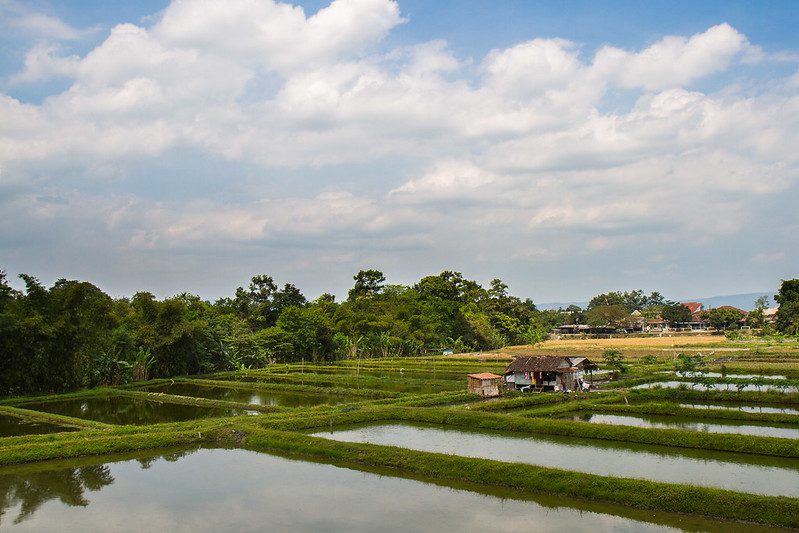
Much of Vietnam’s rice farms run along the Mekong Delta. The emergence of climate change, however, has started changing the waterscapes of the Mekong, leading to farmers looking for change in the water-intensive process of rice farming. 

In one pilot project, university researchers from Tra Vinh University (TVU) have teamed up with local farmers in the Phu Can cooperative to implement the alternate wetting and drying (AWD) technique, which allows farmers to reduce water consumption. Instead of continuously flooding fields for rice harvest, as farmers from the Mekong Delta have traditionally done, AWD allows farmers to flood and drain their fields in quick rotation, leaving the fields to dry for several days before flooding them again. To ensure farmers can monitor their fields to determine when they should reflood, TVU researchers have created an app that links to solar-powered sensors in AWD plots that record the underground water levels every five minutes. 

Upon realizing that AWD not only uses up to 20% less water, but also costs less and consumes fewer resources, farmers in the Mekong Delta have started taking up AWD, recognizing the need for innovation and moving away from traditional methods. AWD also has environmental benefits — it reduces greenhouse gas emissions by 30–50%, creating a more sustainable method of rice farming without negatively impacting productivity. In the face of climate change, these benefits are more important than ever for farmers to sustain their livelihoods.

Embracing Sustainable Agriculture in Vietnam

With climate change affecting the landscapes of Vietnam, dense populations creating more demand for agricultural goods and natural disasters impacting the security of farmlands, there is a need to embrace sustainable agriculture in Vietnam to prevent farmers from losing their livelihoods. By adopting high-tech methods and innovations, farmers can increase productivity and generate more income, sustaining Vietnam’s status as an agricultural giant. 

– Stephanie Chan
Photo: Flickr

October 20, 2023
https://borgenproject.org/wp-content/uploads/borgen-project-logo.svg 0 0 Yuki https://borgenproject.org/wp-content/uploads/borgen-project-logo.svg Yuki2023-10-20 07:37:202024-05-30 22:32:30Embracing High-Tech Agriculture in Vietnam
Children, Global Poverty

How Nickelodeon is Helping Children Globally

Nickelodeon is Helping Children
Throughout the history of the popular children’s network, Nickelodeon, it has made multiple attempts to assist children around the world with various initiatives. One of these is its community outreach program called The Big Help, which originated in 1994. In 1997 alone, The Big Help reached 28 million children all around the world with the message of the importance of community service, thanks to the help of Nickelodeon tie-ins such as daily service messages and telethons related to the TV channel itself. This is in addition to the endorsements of many public figures of the time, such as basketball star Shaquille O’Neal, actress Whoopi Goldberg, former president Bill Clinton and former general Colin Powell.

Another initiative the TV station took was with their international program, Together For Good, which began operation in 2015. Its mission was to inspire and empower young viewers of Nickelodeon to get active in their communities and create positive changes in the world. Furthermore, the network thought that children have a voice and can contribute to the improvement of their communities, the creation of a more inclusive society and the impact of their future. Additionally, the program has been in partnership with various nonprofit organizations such as the African Wildlife Foundation, Plan International, Citizens of the Great Barrier Reef and Kids’ Rights, tackling such issues as ocean and wildlife conservation and gender equity. Here are more specifics regarding how Nickelodeon is helping children globally.

Our World

Nickelodeon is helping children through its newest initiative, established in 2023, which is called the Our World program. It has the purpose of digitally connecting children, parents and caregivers internationally to developmentally appropriate activities, as well as partner organizations with extra resources. The program emphasizes healthy youth development as a critical component of a successful childhood. This program aims to effect systemic change so that every child grows up believing they have the potential to make a difference in the world. It also assists children in gaining skills to deal with the fast-changing environment around them and fosters youth agency, with the hope of turning them into a coalition of community-led social innovators.

More about Nickelodeon’s Our World Program

Starting on July 21, the Our World program began an international-only campaign with its initial campaign partner, Plan International, across Nickelodeon platforms in 150 countries and territories. Plan International is one of the world’s largest and most established children’s development organizations. It has performed extensive, long-term child-centered work in communities throughout the world to break the cycle of poverty for millions of children and their families.

Together for Good’s Collaboration

In 2021 and through to today, Nickelodeon is helping children through Together for Good, a collaboration with a prominent global nonprofit organization called OneSight. OneSight has committed itself to providing eye care to 1.1 billion individuals who do not have access to it. It launched the Framing the Future campaign to educate kids and families on the significance of eye health, worldwide access to vision care and clean vision through original short-form and digital content. 

The content aims to inspire action, empathy and advocacy by broadcasting in more than 67 million households in 69 areas across Australia, Brazil, the United Kingdom, South Africa, Latin America, New Zealand and Southeast Asia. Additionally, through the campaign’s digital hub, eyes.nickelodeon.tv, children can take a pledge to protect their eyes from the sun and take breaks from devices and can receive the title Junior Glasses Champion for their commitment to advocating for healthy eyes and excellent vision.

President and Executive Director of OneSight, K-T Overbey, commented that their organization encourages children to care for their eyes and teach them about the significance of routine eye exams, saying that children can learn up to twice as much when they wear the proper glasses as the children often do not know they have a vision impairment.

Conclusion

To this day, Nickelodeon continues to help children through its international ventures to help people around the world, with no sign of stopping in sight.

– Deon Roberts
Photo: Flickr

October 20, 2023
https://borgenproject.org/wp-content/uploads/borgen-project-logo.svg 0 0 Yuki https://borgenproject.org/wp-content/uploads/borgen-project-logo.svg Yuki2023-10-20 07:30:582023-10-17 07:36:28How Nickelodeon is Helping Children Globally
Global Poverty, Women

How Tourism Is Helping To Empower the Women of South America

Women of South AmericaSouth America has a large tourism industry with an estimated 20.6 million visitors in 2022. The industry is worth $33 billion and is expected to grow throughout the decade. Tourists in the continent predominately travel to Columbia, Brazil, Argentina and Peru. Women make up 58% of the “care-taking” roles related to the industry, such as hospitality and cleaning staff. Thus, the industry’s influence on the quality of life and economic well-being of the women of South America is significant.

The Situation

Like most of the world, women in South America face many barriers to empowerment. According to a project that Wageningen University conducted, in general terms, Latin American societies follow the traditional doctrine of “hombre de la calle, mujer de la casa,” which means “the men in the street and the wife in the house.” Cultural norms, traditional community roles and caretaking of families often lead them to dependence on men in the family and often leave them unable to provide for their families in the ways they wish.

However, tourism provides new opportunities to empower women by normalizing their presence in new workplaces. Further, despite many of the industry’s female employees taking up low-income roles, the growth of sustainable tourism and “slow” tourism, whereby tourists are moving away from traditional mass tourist destinations to seek more authentic and local experiences, is giving women in South America employment on their terms.

Wild Women Expeditions

Wild Women Expeditions offers guided tours of the famous four-day hike on the Inca trail that takes visitors through ancient Aztec sites. The organization hires female guides and porters, traditionally male-dominated roles, to take tourists along the pilgrimage to Machu Picchu.

Moreover, in the Andes, women of the Quechua community have benefited from tourism. Here, the women weave garments using traditional techniques. Visiting tourists watch the women weave, learn about their culture and purchase products. Increased tourism to the area has broadened the market for selling these textiles, increasing the income of the community, which has previously struggled in poverty. In the wake of increased tourism, a cooperative called “Awamaki” originated to empower indigenous women. It helped them manage their finances and improve their sales skills.

The UN World Tourism Board (UNWTO)

In 2022, the UN World Tourism Board (UNWTO) improved its commitment to women working in the industry by factoring them into guidelines for sustainable tourism. These guidelines include a section on gender equality and women’s empowerment. As governments across the continent follow these recommendations, it is hoped that the principles of female empowerment are included in their approaches to sustainable development. Zurab Pololikashvili, the UNWTO Secretary-General, stated, “These new guidelines will help both governments and businesses harness the sector’s power as a driver of women’s empowerment as the world opens up again.”

How Tourism is Beneficial to Women of South America

The benefits of tourism for the women of South America are two-fold: it creates jobs and fixed incomes for women while simultaneously preserving the cultural heritage and promoting the economic development of their communities. They allow women to gain income and preserve their culture, heritage and community while improving the economic development of rural areas.

To ensure a bright future for the people and environment of South America, it is important organizations such as the aforementioned continue to be supported by sustainable tourism in their areas. By continuing to break the glass ceiling for women’s employment in the tourist industry, the support of these organizations ensures that women’s empowerment continues to be promoted in South America’s tourism industry.

– Lucy Wing
Photo: Flickr

October 20, 2023
https://borgenproject.org/wp-content/uploads/borgen-project-logo.svg 0 0 Yuki https://borgenproject.org/wp-content/uploads/borgen-project-logo.svg Yuki2023-10-20 07:30:492023-10-16 15:57:40How Tourism Is Helping To Empower the Women of South America
Global Poverty, Water

Access To Water in Iran

Water in IranFrom Antiquity to the Modern Era, control of water and its sources has long been a cause for war. Sadly, this continues to be the case even nowadays, with border clashes emerging between Iran and Afghanistan. Caught in the crossfire is the civilian population of a region that is in sore need of access to water amidst a drought in the area. This article will cover the border conflict, what the Iranian government is doing and organizations fighting to expand access to water in Iran.

The Conflict

The source of discrepancies lies in the river Helmand, flowing from the Afghan mountains into Iranian Balochistan. Since 1973, the Helmand River Water Treaty has regulated the amount of water that flows into Iran. Tensions still persisted, however, and after the Taliban took over Afghanistan in 2021, they surged once again. Afghanistan allegedly breached the 1973 treaty by repeatedly withholding more water than stipulated. Most recently, in May 2023, one of these clashes threatened to escalate into a full-blown war after a deadly encounter in Milak-Zaranj.

The Iranian population has been hit hard by the Afghan retention of water. Droughts in Iran have had a steady intensification pattern for the past 40 years, and this only rubs salt in the wound. The region has suffered from desertification and, with one of its primary water sources compromised, access to irrigation water could be at high risk. This issue extends to the entire nation, as Iranian water consumption per capita is significantly above its yield of renewable water sources. High consumption paired with low availability threatens to worsen access to water in Iran, with large parts of its population suffering from water insecurity.

What the Government Is Doing

With regard to the Helmand River, Iran has urged its neighbor to abide by the 1973 treaty and fulfill its obligations in international law. Nevertheless, it has also adopted a conciliatory tone to avoid the risk of escalation. An open war over water still seems unlikely, but should environmental patterns persist, it would be naïve to discard this possibility.

As for the water provision for its population, the Iranian government heavily subsidizes water prices to make it affordable to its population. While effective in achieving its goal in the short run, this policy has increased water consumption in the country. Moreover, the government’s focus on food self-reliance through subsidies has further strained water consumption in agriculture. All in all, this subsidy policy has exacerbated the country’s drought problem.

To address these issues, there have been several studies on Iranian soil to tackle these unwanted consequences and to identify more water-efficient farming methods. So far, these investigations have yielded mixed results, but even if they managed to improve efficiency, the population needs more to reduce water consumption and make access to water in Iran sustainable in time. 

What Is the Role of NGOs?

Access to water in Iran is a hot topic among international NGOs. Notably, the International Federation of the Red Cross and Red Crescent Societies has taken measures to alleviate the effects of drought in the region, targeting to provide aid to 916,200 people during the 2021-2022 drought season. Furthermore, there have also been efforts by Relief International to address the economic effects of droughts and help 30,000 people in need gain access to water, education and financial aid.

Prospects for the Future

Access to water in Iran is a growing issue and, as such, its government should start to pursue policies to address it more actively. Water importation or more water-efficient methods are examples of policies that, while politically improbable, could help lift some of the pressure off the population’s shoulders.

– Daniel Pereda
Photo: Flickr

October 20, 2023
https://borgenproject.org/wp-content/uploads/borgen-project-logo.svg 0 0 Yuki https://borgenproject.org/wp-content/uploads/borgen-project-logo.svg Yuki2023-10-20 07:28:502023-10-22 03:17:28Access To Water in Iran
Global Poverty, Technology, Water

How China Helped More Than 800 Million People Out of Poverty

Out of PovertyIn 1978, Deng Xiaoping, the leader of the Chinese Communist Party, changed the course of millions of lives when he declared, “Poverty is not socialism; socialism means eliminating poverty.” Beginning China’s stride to eradicate poverty, Xiaoping focused on boosting China’s economy through agricultural and social reforms to improve living conditions. Here are three changes Deng Xiaoping implemented to tackle poverty in China.

1. Open Door Policy

China was one of the poorest countries in the world in 1978, with a GDP of $156 and home to 40% of the world’s population living in extreme poverty. Compared to neighboring Asian economies, China appeared vulnerable as the communist regime had failed to generate economic growth. Recognizing the risk to the communist party if China could not raise its people out of poverty, Deng Xiapoing committed to improving the living standards of the Chinese people through economic growth.

The Open Door Policy actively introduced foreign capital and technology to China as foreign investments were made into multiple zones such as the special economic zones, peninsula open zones, open border cities, high-tech industry development zones, etc. These zones sparked substantial foreign investment while China continued to promote its socialist market economy concept, whereby state-owned businesses and privately-owned businesses could co-exist.

Implementing The Open Door policy allowed China to use its huge labor resources and land to move away from the damage of the Cultural Revolution and towards rapid economic growth. Within 10 years, China’s GDP per capita had grown to $284, and within 20, it reached $829. The progressive industrialization of China created more and better jobs, as the laborers who were no longer needed in agriculture moved to the consumer goods and services sectors, initiating global investments while providing further job opportunities.

2. Agricultural Reform

During Mao’s time in power, collective farming had been enforced on the rural population. This enforcement meant pooling farms from hundreds of families together to create one large farm. The upper and middle-class farmers had to give up possession of their land to the state, decreasing their morale. In contrast, the lower-class farmers lost motivation to work in the large, impersonal collectives where it was practically impossible to monitor the work individuals completed.

Although some farmers favored collective farming, by 1979, Xiaoping’s de-collectivization effort to incentivize more production and increase economic prosperity for rural workers began spreading across China. Farmers had their land restored to them or were assigned contracts to work on certain areas of land, needing to produce a specified grain quota for the state at a low fixed price of rent. After delivering this grain, farmers were free to consume, trade or sell on the open market and grow whatever they wanted. To further encourage production in rural China, the purchase price for compulsory grain deliveries to the state increased by 20% while the price for excess grain increased by 50%. Overall, increased state prices and the opening of free markets resulted in a substantial rise in food production and average rural family incomes.

3. Targeted Poverty Reduction

As part of the anti-poverty campaign established at the end of 2012 and headed by President Xi Jinping, China made Targeted Poverty Reduction efforts. Jinping believed, “The CPC cadres should pay inspection tours to identify the truly poor. Poverty reduction must reach intended hands or those who truly need it, and poverty must be eradicated completely.”

In January 2014, the guideline on Promoting Poverty Reduction in Rural Areas with Innovative Policies was released, detailing targeted poverty relief across China. The CPC collected and used data to identify the most poverty-stricken areas and their requirements. Hard infrastructure, such as electricity access, water supply, roads and railways, were upgraded, boosting agricultural productivity, raising people’s standards of living and connecting villages to cities.

The effective irrigated area now covers more than 5.35 million hectares, water supply capacity increased by 18.1 billion cubic meters, and more than 98% of poor villages gained access to 4G and optical fiber technology. Soft infrastructure such as health care, education and social security also improved. For example, 108,000 rural schools were renovated to support compulsory education. At the same time, 98% of hospitals in poor countries have a minimum of one competent hospital that can treat 90% of diseases treated at similar hospitals.

China’s dedication to eradicating extreme poverty through government reforms is a remarkable feat that has provided a blueprint for tackling poverty globally. Through economic growth, agricultural prosperity and targeted efforts such as improved infrastructure in the poorest areas, China has demonstrated it is possible to lift millions of people, 40% of the world’s extreme poor, out of poverty in only four decades.

– Alice Isola
Photo: Unsplash

October 20, 2023
https://borgenproject.org/wp-content/uploads/borgen-project-logo.svg 0 0 Yuki https://borgenproject.org/wp-content/uploads/borgen-project-logo.svg Yuki2023-10-20 01:30:492024-06-11 00:17:55How China Helped More Than 800 Million People Out of Poverty
Page 410 of 2161«‹408409410411412›»

Get Smarter

  • Global Poverty 101
  • Global Poverty… The Good News
  • Global Poverty & U.S. Jobs
  • Global Poverty and National Security
  • Innovative Solutions to Poverty
  • Global Poverty & Aid FAQ’s
Search Search

Take Action

  • Call Congress
  • Email Congress
  • Donate
  • 30 Ways to Help
  • Volunteer Ops
  • Internships
  • Courses & Certificates
  • The Podcast
Borgen Project

“The Borgen Project is an incredible nonprofit organization that is addressing poverty and hunger and working towards ending them.”

-The Huffington Post

Inside The Borgen Project

  • Contact
  • About
  • Financials
  • President
  • Board of Directors
  • Board of Advisors

International Links

  • UK Email Parliament
  • UK Donate
  • Canada Email Parliament

Get Smarter

  • Global Poverty 101
  • Global Poverty… The Good News
  • Global Poverty & U.S. Jobs
  • Global Poverty and National Security
  • Innovative Solutions to Poverty
  • Global Poverty & Aid FAQ’s

Ways to Help

  • Call Congress
  • Email Congress
  • Donate
  • 30 Ways to Help
  • Volunteer Ops
  • Internships
  • Courses & Certificates
  • The Podcast
Scroll to top Scroll to top Scroll to top