10 Facts About Business with The Visegrad Four
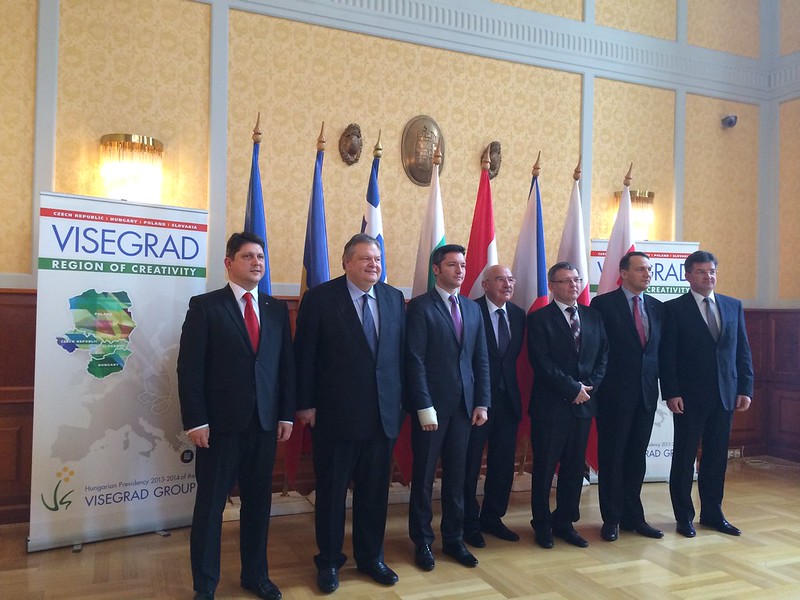 The Visegrad countries of Central Europe achieved a remarkable transition to democracy and a market economy. The Visegrad Group (V4) – Czechia, Slovakia, Poland and Hungary – declared a commitment to expand political and economic stability in East Europe. Below are 10 facts about business with the Visegrad Four.
Top 10 Facts About Business with the Visegrad Four
- East-West Trade 1989-1993. The European Community normalized trade relations with Czechoslovakia, Hungary and Poland in 1988 and 1999. The Poland and Hungary – Aid to Reconstruct Economies (PHARE) program provided vocational training, food aid and investment promotion. PHARE also removed quantitative restrictions and granted some Visegrad products preferential trade status. The European Bank for Reconstruction and Development (EBRD) promoted private and entrepreneurial activity and encouraged investment in Eastern Europe. The Europe Agreements in 1991 lowered trade barriers and increased financial assistance to the V4. These arrangements laid the foundation for continued East-West trade.
- European Integration. European Union (EU) membership in 2004 meant guaranteed access to the Cohesion Policy and Common Agricultural Policy (CAP). The V4 countries used EU transfers and subsidies to implement projects that promote enterprises, develop human capital and increase overall competitiveness. Accession to the EU also harmonized regulations, streamlined commerce and reduced business risk in the V4 countries.
- The International Visegrad Fund (IVF): The V4 Prime Ministers agreed on an international donor organization at a summit in Bratislava in May, 1999. The Fund promotes projects in the area of culture, education and science. The budget (€11 million) comes from equal contributions from the V4 governments. The Fund provides support to students, nongovernmental organizations (NGOs) and private companies through Grants, Scholarships and Artist Residencies.
- Labor Force. The V4 countries recently underwent structural changes. Small and medium enterprises moved to the forefront of innovation and the number of self-employment and small businesses multiplied. The V4 developed intensive productive sectors (mining and agriculture) and increased research and development funding. The Visegrad countries now play an important role in the automotive industry, with an economy based on a blue-collar technical workforce.
- Strong Industrial Base. The V4 built up manufacturing capabilities. The V4’s main exports are transportation and machines, accounting for around 38% in Poland and 60% in Czechia, Slovakia and Hungary. It increased annual car production from 1.4 million to 3.5 million since 2004, with the automotive sector employing around 1.5 million people. The car industry represents a trademark of the Visegrad economy, with many leading brands represented.
- Foreign Direct Investment (FDI). The Visegrad countries dominate in Foreign Direct Investment (FDI) inflows to the region. Access to EU markets, low production costs and favorable conditions granted to multinational firms attract foreign investment. The automotive sector is almost fully foreign-owned – Germany is the primary buyer of imports of cars and car parts. While FDI stimulates technological progress and economic development, it leaves the V4 vulnerable to global business cycles.
- Export Orientation. The export orientation of the V4 contributes to economic development. COVID-19 impacted local businesses and created demand for regional support. The Council of Slovak Exporters (CSE) aims to help Slovak firms export and access foreign markets, by facilitating information, providing export related assistance and organizing professional networking events.
- V4 Energy Sector. A number of internal and external factors shape the V4’s energy policy. The V4 faces environmental pressure and vulnerability associated with dependence on Russia’s gas and oil imports. The V4 increasingly supports diversification strategies aimed at changing the energy mix (increasing share of renewables and natural gas) and the supplier countries. Poland opened the LNG terminal in Świnoujście in 2016 and got Qatar as a contractor. The Polish Oil and Gas Company (PGNiG) signed a contract to extract hydrocarbons in the United Arab Emirates.
- V4 Business Conference. The Conference is an annual and nongovernmental forum, where participants share insights and combine know-how to navigate pressing problems and find solutions. The 2025 conference covered trade with America, automotive industry crossroads, V4 and emerging markets and EU competitiveness.
- V4 Network on Entrepreneurship. The V4 governments co-financed the V4 Network on Entrepreneurship project in 2019, which facilitated information sharing on small business. HEFTA Research Institute (HU) partnered with IDEA Development Foundation (PL), University of Economics (CZ) and Slovak Business Agency (SK). They set up an online database for researchers, experts, stakeholders and organizations focused on entrepreneurship. The partners also created a brochure with comprehensive policy recommendations in 2020.
Looking Ahead
The Visegrád Four represents an important forum for teamwork, with a strategic geographical location for business. Through regional cooperation and EU integration, the V4 built competitive economies rooted in industrial strength and foreign investment. While the V4 faces shared challenges in the energy sector and with global market fluctuations, they embrace proactive strategies, such as the V4 Business Conference, to find solutions.
– Alessandra Lewis
Alessandra is based in CT, USA and focuses on Business and Politics for The Borgen Project.
Photo: Flickr
