How BOMA Is Building Climate Resilience in Africa’s Drylands
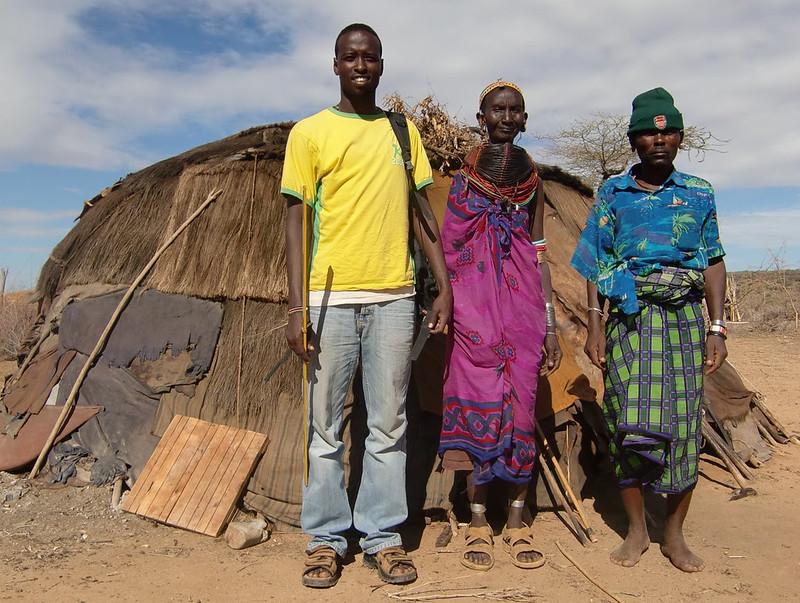 In the Samburu region of Kenya, Pamela Lenolnyenje is one of the thousands of nomadic people living in/around the Kirisia Forest. Many such people live in extreme poverty partly due to rising temperatures and the collapse of fragile local ecosystems. However, due to financial training and a $175 grant provided by BOMA, a nonprofit organization dedicated to ending poverty and mitigating the effects of adverse weather, Lenolnyenje has since gained an income from managing a tree nursery while setting up her shop to sell produce. Likewise, due to intervention by BOMA, destructive land management practices have fallen considerably among the local community.
This is just one example of the work BOMA is doing to combat both environmental degradation and extreme poverty in Africa’s drylands. By combining education with access to capital, BOMA has sought to help vulnerable people escape the trap of climate-induced poverty by improving climate resilience. Refugees, in particular, have formed a primary target group, with sub-Saharan Africa hosting more than a quarter of the world’s refugee population.
The Rural Entrepreneur Access Project
The organization’s Rural Entrepreneur Access Project (REAP) strategy has been key to helping vulnerable populations in this way. Through this strategy, BOMA maps the key barriers to overcoming extreme poverty for pastoral families before implementing a series of interventions, including conditional cash transfers and financial training, for two years. However, due to the unique challenges facing Africa’s drylands, a more specialized “Green REAP” strategy is now used to tackle the twin crises of environmental collapse and extreme poverty.
The Green Reap Project
While environmental issues may appear of secondary concern to those facing extreme poverty, the sustainable management of scarce resources and fragile ecosystems can, in fact, considerably reduce poverty levels. Improving communities’ resilience to the impacts of changing climatic conditions, flood control, water filtration and other issues is crucial for sustainable development. Thus, BOMA, alongside its partners, provides funding and training to help people set up small, environmentally-friendly enterprises, which also help to conserve local ecosystems, such as the tree nursery discussed earlier.
One example of this Green REAP approach in action is the LIFT project in Northern Kenya, established in 2023. The project aims to improve opportunities for 15,600 women, young people and refugees by helping these people build and sustain 3,650 small enterprises. Of these 15,600 LIFT participants, approximately 30% of them come from in and around the Kakuma Refugee Camp and Kalobeyei Refugee Settlement, thus underlining BOMA’s commitment to refugees.
Impact
A 2016 study found that BOMA’s model resulted in a 147% increase in income for participants, alongside a 14,000% increase in savings and a 63% decrease in the number of children going to bed hungry. The Green REAP pilot scheme similarly indicated that 60% of participants shifted away from destructive practices such as charcoal harvesting, demonstrating Green REAP’s impact on climate resilience.
Final Remark
Ultimately, BOMA’s estimates indicate that more than 93,000 people in Kenya will benefit directly or indirectly from the LIFT project in the next two years. However, as the earth’s average temperature continues to ravage the drylands of Africa and trap many in positions of extreme poverty, the need for programs like this remains as high as ever. Thus, only through the incredible work of charities like BOMA can extreme poverty truly be eliminated from the African continent.
– Ben Evans
Ben is based in Abbots Langley, Hertfordshire, UK and focuses on Good News for The Borgen Project.
Photo: Flickr
