How Bolivia’s Ineffective Education System Is Failing Its Children
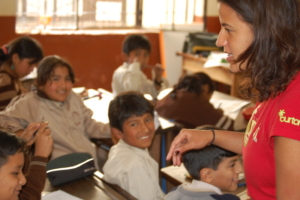 In the heart of South America, Bolivia faces a profound education crisis that threatens its youth’s future and the nation’s economic stability. Despite minimal efforts to reform and invest in education, systemic barriers, poverty and inequality continue to prevent millions of Bolivian children from accessing quality schooling. Only one in seven children completes their education. Additionally, more than a million Bolivians aged 15 and above remain illiterate. Hence, the country is grappling with a cycle of underdevelopment that could deepen if left unaddressed.
The Roots of the Crisis
Bolivia has the lowest GDP per capita in South America, at just $4,000. This economic reality directly impacts education, especially in rural and indigenous communities. Students in rural areas complete an average of only 4.2 years of schooling before dropping out to support their families, compared to 9.4 years in urban areas.
Data from the Bolivian Campaign for the Right to Education (CBDE) shows that most students struggle with basic literacy and comprehension. About 70% of third graders and 80% of sixth graders cannot interpret or reflect on written texts. Math and science performance is similarly low, with most students scoring at the lowest levels and unable to apply fundamental concepts.
Data from the World Bank shows that over time, Bolivian children are not completing secondary education courses, while fewer and fewer students enroll in primary education. Bolivia’s ineffective education system fails to equip students with even the most basic skills, leaving them unprepared for higher education and the workforce.
The country’s education system also suffers from a mismatch between what students learn and what the labor market demands. This makes it one of the significant catalysts for an ever-growing wealth disparity. Many graduates find themselves ill-equipped for Bolivia’s dominant agriculture, mining and construction industries, which favor hands-on experience over formal education.
Poverty and Education: A Repeating Cycle
The lack of education in Bolivia is both a cause and a consequence of poverty. Children who leave school early often enter informal labor markets with little opportunity for upward mobility. This keeps a cycle going where families stay trapped in poverty, unable to invest in their children’s futures and it continues for generations. Similar patterns are seen in other countries facing economic struggles.
Several studies have found a strong correlation between education and poverty reduction. Higher levels of education significantly decrease the probability of being impoverished and reduce income inequality. Yet, Bolivia’s ineffective education system fails to deliver these benefits to its vulnerable populations.
Government Efforts and Community Initiatives
Bolivia has tried to make notable efforts to reform its education system. The 1994 education reform aimed to decentralize funding, improve teacher training and expand intercultural bilingual education. These reforms were designed to address the diverse needs of Bolivia’s population, especially in rural and indigenous areas. While efforts to mainstream Indigenous languages in education and reform teaching methods yielded encouraging results, other challenges hinder broader school progress.
In 2010, the Bolivian government enacted the Avelino Siñani–Elizardo Pérez Education Law. This law redefined the country’s educational framework by establishing an educational system rooted in cultural diversity, social inclusion and lifelong learning principles. Rather than using the term “lifelong learning,” the law emphasizes “alternative education,” which serves youth and adults seeking to continue their studies outside the conventional educational system given to them.
The law also promotes education as a fundamental human right and an integration into intercultural and multilingual approaches to strengthen social cohesion, especially among indigenous communities. The holistic approach aimed to democratize access to education and align learning with Bolivia’s social and cultural realities.
Organizations like CHOICE Humanitarian have also taken action to fill gaps. CHOICE Humanitarian has built schools with solar panels, internet access and ecological classrooms that double as greenhouses, providing education and nutrition to students in remote areas. Despite these efforts, Bolivia’s ineffective education system struggles with implementation, consistency and scalability, especially in underserved regions.
The Path Forward
Bolivia’s ineffective education system is complex, rooted in historical inequalities and economic hardship. Yet, the country can pave the way for a brighter future with sustained investment, community involvement and policy reform. In this future, every child can learn, grow and contribute to a prosperous Bolivia.
– Dylan Fly
Dylan is based in Detroit, MI, USA and focuses on Business and New Markets for The Borgen Project.
Photo: Flickr
