China Eases One-Child Policy
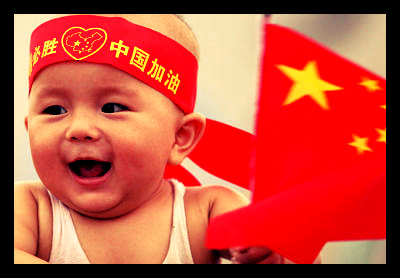
In late December 2013, China’s Standing Committee of the National People’s Congress formally introduced measures to ease its notorious one-child policy.
The major tweak of the one-child policy now allows parents to conceive a second child if just one of the parents is an only child.
Previously, parents were allowed a second child only if each parent was an only child. Rural couples on the other hand, were allowed a second child only if the first born was female.
The new measures will be implemented in a phased process at the local level. Furthermore, provincial leaders now have the authority to introduce the changes in accordance with local demographic needs.
While modest, the change will hopefully reduce the number of human rights abuses perpetrated against Chinese women since the policy’s inception in 1979. In the New York Times, OP-ED contributor Ma Jian details some of the horrific experiences Chinese women endure when authorities become aware of a second conception.
She describes the staggering amount of personal invasion local officials engage in to enforce the one-child policy. Family planning officers vigorously chart data regarding menstrual cycles and pelvic exams of every female of child bearing age within every village.
Many of these women are subjected to forced abortions and sterilizations if they are found within violation of the policy.
Probably one of the most egregious injustices of the policy is its disproportionate enforcement. The policy frequently targets poor citizens while bypassing wealthy individuals.
In fact, all violators can avoid the consequences of having a second child if they pay a fine that falls within the range of three times to 10 times the annual household income. It goes without saying that poor citizens, unable to pay the steep fine, either flee their home to avoid the authorities or become victims of forced abortions.
Many see the easing of the policy as a response to the looming demographic crisis that China now faces after 30 years of steadily implementing the one-child policy. Some say the change is too little, too late.
Nicholas Eberstadt reports in the Wall Street Journal, that even with the policy change, the Chinese government only expects one million extra births per year, resulting in only a six percent increase in the fertility rate.
He also discusses the lasting effect the one-child policy will have long after its easing. For instance, individuals born under the previous policy will be entering the workforce in 2030 and deciding to get married in 2035.
Demographers predict that at the end of the decade there will be over 24 million men incapable of finding a woman to marry. One can expect this number to increase by 2035.
The inability for many to reproduce will leave China with an aging population that will increasingly reduce the number of individuals who are able to work as well as government resources. By 2050, over one quarter of the Chinese population will be over the age of 65.
– Zachary Lindberg
Sources: BBC, The Wall Street Journal, The New Yorker
Photo: Dailystormers
