Most Corrupt Countries
Transparency International’s annual ranking of corruption around the world reveals that every country suffers from forms of corruption. The ranking is measured from 0–100 (with lower numbers denoting more corruption) and is based on the perceptions of business people and experts in each country on the African Development Bank’s governance ratings, the World Bank and World Economic Forum assessments and a Bribe Payers Survey. 70 percent of countries earned a score of 50 or below.
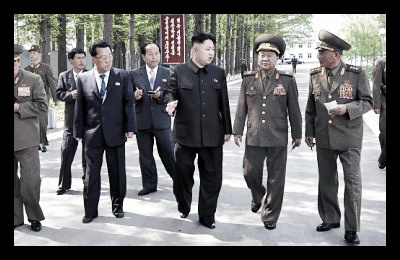
Dominating the lowest scores on the list are nations in Sub-Saharan Africa, Eastern Europe, and Central Asia, with 90 percent to 95 percent of countries earning a score of less than 50. Lowest on the list were Somalia, North Korea, and Afghanistan in a three–way tie, with a score of eight.
Director of Research at Transparency International, Finn Heinrich, explains, “Corruption is very much linked to countries that fall apart…These are not countries where the government is functioning effectively, and people have to take all means necessary in order to get by, to get services, to get food, to survive.”
Syria’s decline in rank was the most dramatic this year, dropping 24 spots to 168th place—the 10th worst. The country has experienced a bloody civil war since 2011, with the United Nations estimating over 100,000 people have died.
Conflict zones Afghanistan, Iraq, and Libya were also all at the bottom of the list.
European countries had the best scores. Only 23 percent had a score less than 50. The highest ranking were Denmark, New Zealand, Finland, and Sweden.
However, European countries that were struck hard during the financial crisis—primarily Spain, Iceland, and Slovenia—saw their ranks fall this year.
China and the United States’ rankings remained stable at 19 and 80, respectively. Myanmar, which rid itself of military rule in 2011, made the biggest advance, moving up fifteen places to 157th.
No country received a perfect score of 100. Transparency International reports that even Denmark struggles with campaign finance issues, lack of whistleblower protections, and challenges in citizens’ access to information. Countries such as the U.S. and the United Kingdom struggle with concerns over lobbying, political funds, financial fraud, and insider trading, which have affected their rankings negatively.
None of the poorest nations in the world (based on GDP)—Democratic Republic of the Congo, Zimbabwe, Burundi, Somalia, Liberia, Eritrea, Central African Republic, Niger, Malawi, and Madagascar—received a score over 38.
The link between corruption and extreme poverty is inextricable.
According to the World Bank, good governance is essential to lifting the 1.2 billion people of the world who live on $1.25 or less per day out of extreme poverty and to make sure that wealth benefits all people.
Sri Mulyani Indrawati, the Managing Director of the World Bank, clearly asserts, “A state that does not deliver ‘clean services’ will choke its engine of growth—a strong middle class—and creates a major obstacle for achieving shared prosperity.”
Huguette Labelle, the Chair of Transparency International, reiterates that efforts to improve the major crises facing the modern world such as climate change, failing economies, and extreme poverty will not succeed unless international bodies clamp down on corruption in all levels of society and make every country more transparent—from Denmark to Somalia.
– Kaylie Cordingley
Sources: The World Bank, CIA, LA Times, NPR, Bloomberg Businessweek, Al Jazeera, Wall Street Journal, Transparency International, CNN
Photo: CNN
