The Economic and Social Impact of the Bangalore Metro System
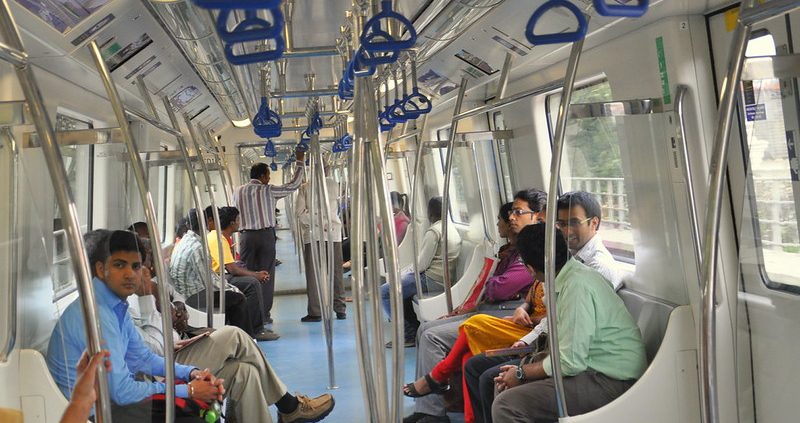 Bengaluru, India, is one of the country’s fastest-growing economic centers, but its rapid growth has created a major transportation problem. Long commutes, traffic congestion, expensive private transportation and unequal access to jobs can make it difficult for lower-income residents to take advantage of the opportunities the city offers. The Bengaluru Metro, formally recognized as the Bangalore Metro System and locally known as Namma Metro, is increasingly becoming an important part of the solution. High-capacity mass transit connects residents to employment, education, health care and commercial centers that would otherwise be difficult or costly to reach.
Transportation Challenges
The scale of Bengaluru’s transportation challenge can be seen in the growth of Namma Metro itself. The system began operating in 2011, and its network has expanded substantially since then. Official operational data from the Bangalore Metro Rail Corporation Limited indicates that by 2024, approximately 76 kilometers of Metro lines were operational. Namma Metro’s average daily ridership hit a record high of around 762,000 passengers in July 2024. The network crossed the one-million-rider mark for the first time on Aug. 11, 2025, with 1,048,031 passengers in a single day, days after the Yellow Line opened. Ridership climbed further in August 2026, when the system recorded its highest-ever single-day ridership of 1,119,815 passengers on Aug. 10, illustrating how heavily Bengaluru residents depend on mass transit.
Impact on Low-Income Households
This expansion matters particularly because transportation costs can have a large effect on low- and middle-income households. A study of 1,350 low- and low-middle-income households in Bengaluru examined how residents choose between different transportation options. Researchers found that travel cost was the most important factor influencing transportation choices, followed by travel time and travel distance. The study also found that Metro use remained relatively low among lower-income residents even when a station was accessible, largely because Metro fares could still be difficult for some households to afford.
This finding demonstrates both the potential and the limitation of urban rail transit. A train station alone does not guarantee economic opportunity. If a worker cannot afford the fare, has to pay for another vehicle to reach the station, or cannot easily get from the station to their workplace, the benefits of the Metro are reduced. Researchers therefore argue that affordable fares and better connections between Metro stations and surrounding neighborhoods are essential if public transportation is going to serve lower-income residents effectively.
Expanding Job Opportunities
When transportation is affordable and accessible, it can significantly expand the geographic area in which people can search for jobs. Instead of being limited to employment opportunities within walking distance or a short bus ride, workers can potentially reach major employment centers across the city. This is especially important in Bengaluru because jobs are concentrated in particular economic corridors, including areas associated with the city’s technology and business industries. Better transportation allows workers to consider jobs farther from their homes without necessarily having to move.
Economic Development
The economic effects of rapid transit extend beyond individual commuters. A study analyzing job proximity along the Bangalore Metro System found that transit infrastructure can influence the location and density of commercial activities. Researchers found that station-area job densities are not yet strongly correlated with current ridership, and recommended that policymakers prioritize job density in future transit-oriented development planning. In other words, a Metro station can become more than a transit stop: it can serve as an anchor for offices, stores, housing, services and other economic activity.
Property markets provide another measurable example of transit’s economic reach. Research published in Transportation Research Part A: Policy and Practice found that the Metro was associated with a 4.5% increase in land values across the city. The study noted that this land value appreciation extended beyond the traditional 500-meter station catchment area, demonstrating that the economic influence of transit infrastructure reaches surrounding neighborhoods rather than remaining limited to the immediate station entrance.
Travel Time and Environmental Benefits
The Metro’s impact can also be measured through travel time savings. Bengaluru experiences significant traffic congestion, and long travel times impose a direct economic cost on workers. Every hour spent commuting represents lost time for employment, education, family care, or rest. Faster and more predictable transportation increases the personal time available to commuters. For a worker traveling five days a week, a 30-minute reduction in daily travel adds up to approximately 130 hours per year — equivalent to more than five full days.
Environmental benefits provide an additional dimension to transit investments. Data reviewed by India’s Ministry of Housing and Urban Affairs indicates that average daily Metro ridership nationwide increased from approximately 2.8 million passengers per day in 2013 to 2014 to more than 11.2 million per day by 2025. Government analysis highlights urban rail systems as an effective mechanism to reduce reliance on private vehicles, ease road congestion, conserve fuel and reduce overall vehicle emissions. Bengaluru’s transit development therefore contributes directly to urban sustainability and pollution reduction goals.
Future Expansions
The Bangalore Metro System is also continuing to expand. The planned Pink Line covers approximately 21 kilometers connecting Kalena Agrahara and Nagawara, while the planned Blue Line covers approximately 58 kilometers, connecting Silk Board with Kempegowda International Airport. These expansions are designed to extend high-capacity public transportation to additional commercial and residential sectors of the city.
Ultimately, Bengaluru’s Metro demonstrates that transportation infrastructure functions as an economic and social policy. For low-income residents, reliable public transportation reduces the distance between where people live and where opportunities exist. It makes employment centers, schools, hospitals, and businesses more accessible while encouraging new economic activity around stations. However, these benefits depend on broader policy alignment. Research involving 1,350 low- and middle-income households shows that affordability remains a critical factor, highlighting the importance for policymakers to integrate fare structures, feeder buses, pedestrian infrastructure, and last-mile connectivity into long-term transit planning.
– Shreya Aman
Shreya is based in San Ramon, CA, USA and focuses on Technology and Solutions for The Borgen Project.
Photo: Flickr
