The Montagnards and Ethnic Minority Poverty in Vietnam
 Over the last three decades, Vietnam has become one of the world’s leading poverty reduction stories. Between 2010 and 2020, the World Bank’s poverty rate for lower-middle-income countries fell from 16.8% to 5%, lifting more than 10 million people out of poverty. Yet this progress has not reached all communities equally. In 2020, 27% of Vietnam’s ethnic minority population remained in poverty, compared with near-zero poverty among the country’s Kinh majority. Ethnic minorities accounted for 79% of those still living in poverty despite representing only about 15% of the population.
This disparity is particularly significant in the Central Highlands, home to many of Vietnam’s Indigenous communities, including the Jarai, Ede, Bahnar and Mnong. The World Bank has identified ethnic minorities as part of the country’s “last mile” in poverty reduction, with the Central Highlands remaining one of Vietnam’s poorest regions. Poverty in the region stood at around 20% in 2018, compared with a national rate of about 7% under the same poverty measurement.
Who are the Montagnards
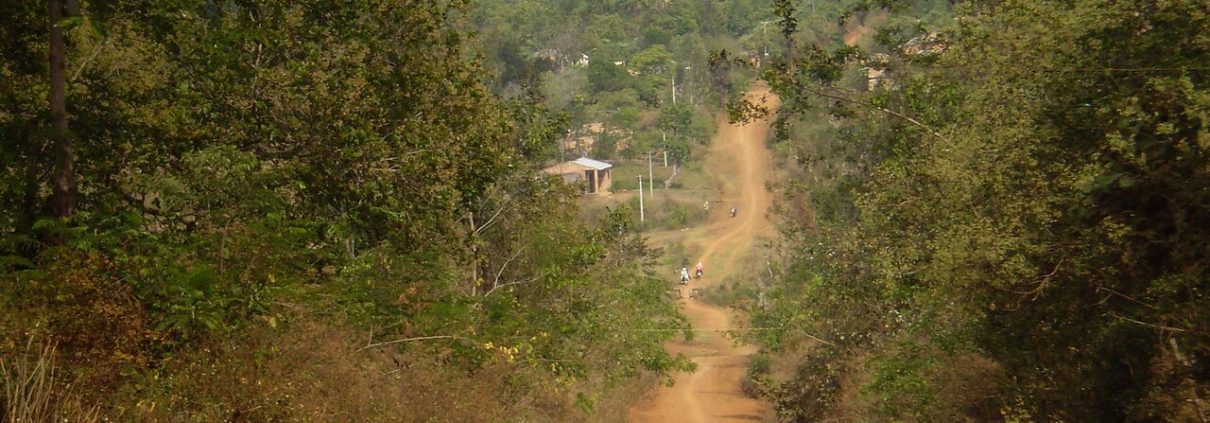
The biggest obstacle to sustained poverty reduction among the Montagnards is geographic isolation. The Central Highlands is one of Vietnam’s more remote regions, where villages can be separated from major towns and economic centers by mountainous terrain. The World Bank has found that poverty is increasingly concentrated among ethnic minority households living in rural and remote areas. Limited roads and poor transport links make it harder for farmers to reach markets, access services and pursue employment outside of agriculture. As a result, many Montagnard households remain dependent on small-scale farming. They have fewer opportunities to diversify their incomes.
Land also plays a significant role. Many Montagnard families rely on agriculture for their livelihoods, yet population growth, environmental pressures and changes in land use have reduced access to productive farmland in parts of the Central Highlands. With limited assets and few alternative sources of income, households can be particularly vulnerable to poor harvests, fluctuating crop prices and climate-related shocks.
Development Projects That Are Making a Difference
With these challenges remaining, economic growth alone is unlikely to eliminate ethnic minority poverty in Vietnam. The Vietnamese government and the World Bank launched the Central Highlands Poverty Reduction Project in 2014 to address some of the structural challenges facing poor communities across the region.
Backed by World Bank financing and government resources, the project operated across 26 districts and 130 of the country’s poorest communes in six provinces. It invested in rural roads, bridges, clean water infrastructure and basic public services while supporting livelihood activities designed to increase household incomes and strengthen food security. The project’s reach was substantial. By its completion in 2019, it had benefited 638,536 people and 141,897 households.
The project also established 4,383 Livelihood Enhancement Groups, which benefited approximately 63,531 households. These groups provided support for agricultural production, livestock, nutrition and income diversification. The results show the potential of combining infrastructure investment with livelihood support. The project’s impact evaluation found that household income from primary wage employment increased by 18.2%, while total household wage income increased by 7.7%. The evaluation attributed part of this change to workers, particularly men, moving from agricultural work into wage employment.
The project also produced improvements in food security. Among poor households, dietary diversity increased by 6.5% relative to the comparison group. Poor households also experienced increased access to markets, while residents reported greater accessibility to commune and district centers.
Infrastructure Development
Infrastructure improvements provided another practical benefit. The project constructed 666 kilometers of rural roads, 30 bridges and 150 water systems. These investments helped connect remote communities to schools, markets and services.
However, the results also demonstrate why poverty reduction requires sustained and targeted investment. The World Bank’s impact evaluation found mixed effects across some of the project’s broader development indicators. While certain livelihood and access outcomes improved, there was no statistically significant project-wide impact on several measures, including productive assets and some infrastructure and service indicators.
Beyond the World Bank, organizations such as the International Fund for Agricultural Development (IFAD) have also supported efforts to create sustainable livelihoods in rural Vietnam. Since 1993, IFAD has invested $334.5 million in 14 agricultural development projects and programs in Vietnam, benefiting 669,070 rural households. Its work has focused on helping rural communities improve agricultural productivity, access markets and strengthen resilience.
IFAD’s figures cover rural households across Vietnam rather than Montagnard communities specifically. However, because ethnic minorities are disproportionately represented among Vietnam’s poorest rural populations, rural development initiatives can play an important role in addressing the structural factors contributing to poverty in communities such as those in the Central Highlands.
What Remains?
Vietnam’s economic transformation demonstrates that sustained investment and targeted policies can dramatically reduce poverty. The remaining challenge is ensuring that Indigenous communities such as the Montagnards can participate in and benefit from this progress.
The disparity between ethnic minorities and the Kinh majority shows why national economic growth alone cannot close the poverty gap in Vietnam. In 2020, ethnic minorities still experienced a poverty rate of 27%, despite representing only a small share of the country’s population.
Continued investment in education, health care, infrastructure and sustainable livelihoods could help address the barriers that keep many Indigenous communities economically vulnerable. Community-led planning and culturally appropriate support can also help ensure that development programs reflect local needs.
Projects such as the Central Highlands Poverty Reduction Project demonstrate that combining infrastructure with livelihood support can expand economic opportunities in some of Vietnam’s poorest communities. As Vietnam continues its efforts to eliminate poverty, reaching communities that have benefited less from national economic growth will be essential to making that progress more inclusive.
– Amber Bannon
Amber is based in High Wycombe and focuses on Good News for The Borgen Project.
Photo: Wikimedia Commons
