The Plight of Western Sahara and the Sahrawi People
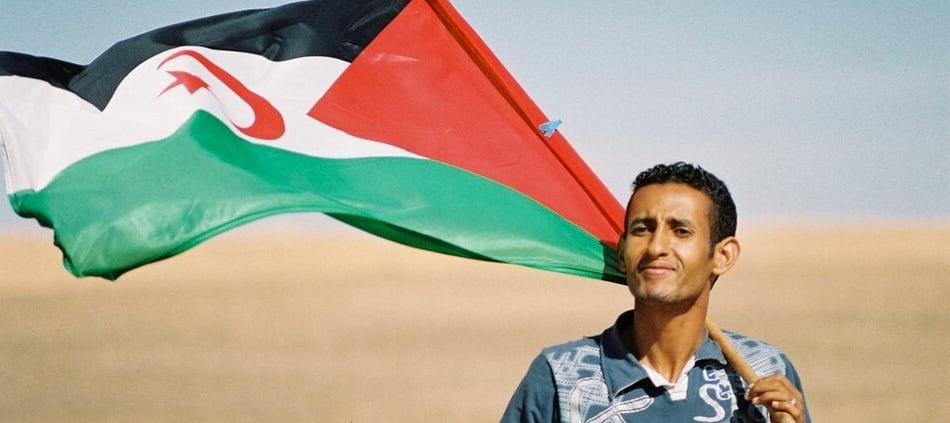 For the last 40 years, a conflict has simmered over the resource-rich lands of the Western Sahara. Since Morocco invaded in 1975, an estimated 165,000 Sahrawi people have been displaced, most living in Algeria.
Where Is Western Sahara?
Western Sahara is a region sitting on the Atlantic coast, just south of Morocco and north of Mauritania. It’s a region slightly larger than the U.K., but has only a population of around half a million. Before Morocco annexed the territory, Spain governed it as a colony. Under Spanish rule, the Sahrawi people lived a sedentary life by force, abandoning their nomadic lifestyle. The West ignored this until the UN began demanding the decolonization of Western Sahara in 1965.
In 1960, the UN passed resolution 1514, which recognized that the peoples of the world have an ardent desire to end colonialism in all forms. The UN classified Western Sahara as a non-self-governing territory, meaning that decolonization must happen. However, in 1975, King Hassam defied the resolution and ordered the “Green March,” a demonstration where 350,000 Moroccan civilians marched into Western Sahara. This sent the message that Morocco should have determination over the Western Saharan territory.
How Did Western Sahara Respond?
The Moroccan military forces and the Polisario Front began combat over Western Sahara. The Polisario Front is a collection of resistance fighters, aiming to liberate Western Sahara as an independent nation. In 1973, a group of students established the Polisario Front in Algeria, aiming to ensure that the Spanish Sahara would become an autonomous country, unburdened by colonialism. The UN brokered a ceasefire after 16 years of fighting. This left approximately 20% of the country under Polisario control. The other 80% belongs to Morocco, defended by the “Berm” wall, manned by 150,000 soldiers.
The Sahrawi Who Stayed
Those who remain in their homeland continue to face pressure from the Moroccan government. The Moroccan authorities have arrested journalists and human rights activists, some being imprisoned for only trying to enter the Western Sahara region. Recently, the Moroccan parliament adopted Draft Law 97-15, the draft law includes a passage outlawing strike action for political purposes. This restriction on freedom of speech would prevent the Sahrawi people striking to demonstrate their desire for autonomy. On the other hand, youth protests calling for better health care and job opportunities in rural Morocco, have seen success. Western Sahara could benefit from these protests, giving the Sahrawi people some long awaited improvement.
Morocco has significantly reduced poverty in recent years, including across the territories of Western Sahara. Between 2001 and 2007, the region formerly known as Laâyoune-Boujdour-Sakia El Hamra, which covers the northern half of Western Sahara, reduced its poverty rate by 66%. The study also shows that Oued Ed-Dahab-Lagouira, which covers much of the southern part of Western Sahara, has one of the lowest poverty rates in Morocco. These reductions have significantly improved the quality of life for Sahrawis who remain in the territory. However, poverty still affects rural communities in Laâyoune-Boujdour-Sakia El Hamra, with around 8% of the rural population living below the poverty line.
The Sahrawi Who Fled
Those who fled the conflict have dispersed across the world, with many fleeing to Algeria. Some refugees have lived in refugee camps based in the Algerian Sahara for over 45 years. In the camps the Sahrawi combat 50 degree centigrade summers, sub-zero temperatures in the winter, and total reliance on humanitarian aid in order to survive. Despite the challenges, they still think of a future for their children, believing that in the future they will be able to return to their home country.
Sahrawi refugees in Algeria live across five different camps and face food insecurity and limited employment opportunities. WFP reports that 78% of Sahrawi refugees experience food insecurity, which contributes to other health problems. For example, 53.5% of Sahrawi refugee women aged 15–49 suffer from anemia, as do more than half of children aged six months to five years. In response to these challenges, the Algerian government developed the Sahrawi Refugee Response Plan (SRRP), which aims to address the refugees’ most pressing needs. The plan estimates a funding requirement of approximately $200 million and focuses on three main objectives: protection, food security and employment opportunities. The plan also extends beyond these priorities by outlining development initiatives in areas such as education, sport and logistics.
The International Response
The Sahrawi people have seen mixed results with the international community. After Western Sahara was recognized by the UN in 1965, very little has been done to help the Sahrawi people, by the West. The UN brokered a peace deal between Morocco and the Polisario Front, in 1991, creating a task force named MINURSO to help establish a referendum on independence.
Looking Ahead
While there is peace in West Sahara now, the Sahrawi people remain displaced across North Africa. Various legislative resolutions concerning their independence have challenged the idea of an autonomous Western Sahara. However, Algerian aid to Sahrawi refugees is opening the door to a better life. These people still have hope that their children will one day be able to return to their homeland, clinging to that dream for 45 years and counting.
– Eoin Baxter Mackay
Eoin is based in Prestwick, Scotland and focuses on Politics for The Borgen Project.
Photo: Wikimedia Commons
