From Patient to Facilitator: Treating Depression in Zambia
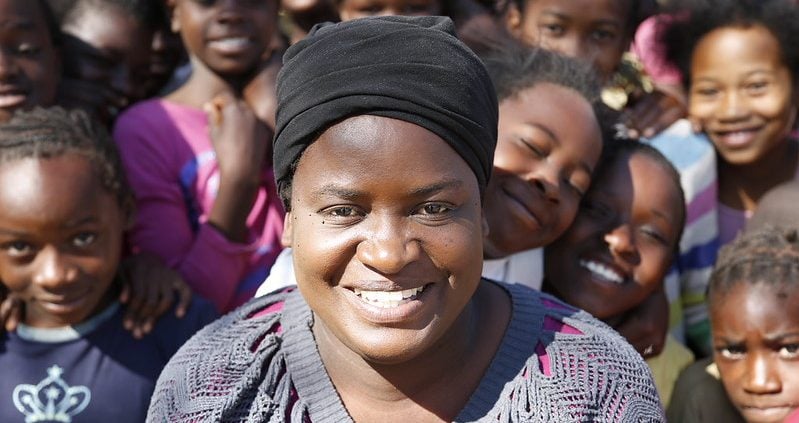 Zambia, a country of about 20 million people, had just 10 psychiatrists as of 2020, according to the World Health Organization’s Mental Health Atlas. For a woman experiencing depression in a low-income community in Lusaka, the odds of ever seeing one are small. Treating depression in Zambia has instead come to depend on a different workforce entirely: women who have recovered from depression themselves. Through StrongMinds Zambia, former clients train as peer facilitators and deliver group talk therapy in their own neighborhoods and the Zambian government is now integrating the model into its own ministries. The workforce this country could not train is emerging from the ranks of the treated.
Difficulty of Treating Depression in Zambia
The treatment gap is stark. As of 2020, Zambia had 10 psychiatrists, 15 psychologists and 425 mental health nurses, a total of about 760 mental health professionals for a population then estimated at 19.6 million. The country has a single psychiatric hospital, Chainama Hills in Lusaka. For most Zambians, formal mental health care is not delayed or rationed. It is simply absent.
Poverty deepens the gap from both directions. In 2022, 64.2% of Zambians, roughly 13 million people, lived on less than $2.15 a day, among the highest rates in the world, and financial shocks are themselves a trigger for depression. The loss of a breadwinner or sudden unemployment “inflicts severe emotional and economic strain on families,” significantly shaping how they experience depression, Chilufya Chimbala, program manager at StrongMinds Zambia, told The Borgen Project in an interview. A woman’s mental health and her household’s income, in other words, rise and fall together.
A Therapy Built for Communities
The StrongMinds answer does not require a clinic. The nonprofit, which runs group therapy programs in Uganda as well as Zambia, delivers Group Interpersonal Psychotherapy, known as IPT-G, a talk therapy model recommended by the World Health Organization and designed specifically for delivery by laypersons. In Zambia, groups of 10 to 12 women meet weekly for six weeks, in sessions lasting 60 to 90 minutes, often in whatever community space is available.
The process begins in the community itself. Facilitators run sensitization campaigns and screen neighbors for depressive symptoms using a standardized assessment tool. Women who show symptoms are invited to a pre-group session, a conversation that identifies their depression triggers and sets their goals for therapy. From there, the group convenes weekly, following a structured curriculum of discussion, role-playing exercises and home practice. A burden rating scale tracks each woman’s emotional well-being session by session.
The Women Who Became the Facilitators
What makes the model unusual is who runs it. The facilitators are not clinicians. They are former clients, women who completed the therapy themselves and chose to deliver it to others. During the final sessions of each therapy cycle, StrongMinds staff identify participants interested in facilitating. Those who qualify receive five days of training in IPT-G, then ongoing coaching from StrongMinds mental health coaches as they lead groups of their own.
Chimbala argues the lived experience is not a limitation but the point. Because peer facilitators have survived depression themselves, she says, “they possess a deep understanding of the model” and can relate to what participants are going through. In close-knit communities where women’s lives already overlap, a neighbor who has survived the same darkness can reach where a stranger with a clipboard cannot.
Maureen Chisanga, 24, of Bauleni in Lusaka, is one of the women the model reached. After her husband lost his job, financial strain and marital conflict tipped her into persistent overthinking, fatigue and emotional distress she did not recognize as depression. In her therapy group, she found women carrying the same weight. Through the sessions’ discussions, role-play and homework, she built skills in communication, negotiation and conflict management.
When Recovery Becomes Income
What happened after Chisanga’s therapy ended is the part no clinical trial measures. She and several group members stayed in contact, supporting one another and together launched a small vegetable vending business. The enterprise now lets her contribute to her household’s income, the very pressure point that had driven her depression in the first place.
Her story reflects something Chimbala sees repeatedly. Depression, she says, makes it harder for women to work, communicate, make decisions and stay connected to family and community. Recovery reverses that: she points to “notable improvements in their behavior,” including better childcare, more active engagement in community life and stronger relationships. In households living close to the poverty line, a mother’s recovered mind is an economic asset as real as a harvest or a wage.
From Pilot to Public System
Treating depression in Zambia is, increasingly, government business. Rather than expanding as a standalone organization, StrongMinds Zambia is integrating its peer facilitators into the government system. The organization currently works with four government ministries, with plans to integrate across all of them, so that ministries take ownership of the program and supervise its delivery. In 2025, a partnership with the Ministry of Community Development and Social Services embedded depression care into Community Welfare Assistance Committees.
In February 2026, StrongMinds and the Zambia Correctional Service launched group therapy for inmates and officers, facilitated by trained inmates and officers themselves. Demand is the pressure that never eases. The therapy is free or low cost, and Chimbala says stakeholders consistently push for expansion into new areas, growth the organization manages through government partnerships.
What the Evidence Shows
The results are tracked, not assumed. StrongMinds Zambia conducts post-assessments at two weeks, six months and 12 months after therapy ends, alongside client satisfaction measures. Across StrongMinds programs, roughly 73% to 80% of clients screen depression-free after therapy, with results sustained six months later. A peer-reviewed 2025 analysis of program data from Uganda and Zambia found the group model effective at scale, including when delivered by peers. Independent evaluators have noted that effect sizes in recent studies are smaller than in the earliest trials, a reminder that the model is promising rather than proven beyond question.
The Multiplying Cure
Ten psychiatrists cannot treat a nation. But a model in which every recovered woman can become the next facilitator carries its own arithmetic, one that multiplies rather than rations. Chisanga entered a therapy group unable to name what was wrong with her. She left it with coping skills, a support network and a business. Treating depression in Zambia will require sustained funding, government follow-through and honest measurement for years to come. What StrongMinds Zambia has shown is that the shortage of specialists need not mean a shortage of care.
– Amna Al Harrazi
Amna is based in Dubai, UAE and focuses on Global Health for The Borgen Project.
Photo: Flickr
