The Last Mile of Care: Community Health Workers in Lesotho
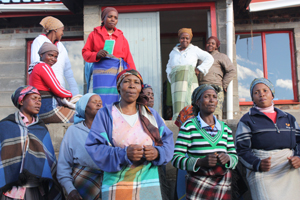 For residents of Lesotho’s mountain districts, reaching a clinic means a walk of several hours across some parts of southern Africa’s highest terrain. This distance determines who receives treatment just as much as a shortage of treatment. Yet a growing network of community health workers in Lesotho is narrowing that gap, carrying Human Immunodeficiency Syndrome (HIV) treatment support, maternal care and disease monitoring directly into villages that the formal health system has struggled to reach.
A Health System Under Strain
Lesotho carries one of the heaviest HIV burdens in the world. An estimated 18.5% of adults ages 15 to 49 were living with HIV in 2023, and roughly 236,000 people 15 and older were on antiretroviral therapy that year, according to the U.S. Centers for Disease Control and Prevention (CDC). Tuberculosis compounds the crisis: an estimated 664 cases occurred per 100,000 people in 2023, and half of all Tuberculosis (TB) cases involved HIV coinfection, making continuous, coordinated care essential rather than optional.
That disease burden overlaps heavily with poverty, and the overlap is sharpest outside Lesotho’s towns. An estimated 27.6% of the rural population lived in multidimensional poverty in 2018, compared with 5.6% in urban areas, according to an analysis by the Oxford Poverty and Human Development Initiative using Lesotho’s Demographic and Health Survey data. Rural residents make up 63.7% of Lesotho’s population, meaning the country’s poverty is concentrated in precisely the districts where distance from a clinic is greatest. This compounds the barriers households already face in reaching care. It also underscores why community health workers in Lesotho are being asked to close a gap that health facilities alone cannot.
Before Lesotho had a national health reform in 2014, primary care clinics were characterized by insufficient staffing, inadequate space and a lack of supplies, according to a peer-reviewed study published in PLOS Global Public Health. The country’s earlier village health worker program existed outside of the formal health system, staffed by undercompensated volunteers who had little supervision or support.
Rebuilding the Village Health Worker Model
The 2014 reform, carried out by the government of Lesotho with support from the nonprofit Partners In Health, restructured how community health workers in Lesotho are recruited, trained and paid. A 2025 study in BMC Health Services Research found the reform introduced a formal reselection process to replace inactive workers, assigned two health workers to each village instead of one and created specialized roles, with one worker focused on tuberculosis and HIV and another on maternal and child health. New supervisor and coordinator positions were added to oversee reporting, and monthly stipends rose from 300 to 400 South African rand, paid electronically rather than in cash.
By 2017, the reform had trained and deployed 5,359 village health workers using a standardized curriculum, extending coverage across more than 70 primary care clinics in four districts, representing close to 40% of Lesotho’s population, according to the PLOS Global Public Health study.
Measurable Gains in Rural Care
The same study found that facility-based deliveries rose from 2% to 33% of births in reform districts between 2013 and 2017, with the share of health centers adequately equipped for childbirth rising from 3% to 95%. Quarterly antenatal care visits increased from an average of 1,877 to 2,729, the number of children fully immunized by age one nearly tripled, from 191 to 294, and quarterly HIV testing volume more than doubled, from 5,163 to 12,210.
Partners In Health has since expanded a Rural Health Initiative built on the same community health worker model, operating seven clinics in Lesotho’s mountain districts. These serve more than 90,000 people in areas that would otherwise have limited access to physicians. The organization also runs the country’s first treatment program for multidrug-resistant and extensively drug-resistant tuberculosis, based at Botšabelo Hospital in Maseru and supported by community-based follow-up. The program reports a cure rate of 77% for a form of the disease that patients often abandon treatment for midway through its long course.
The Work Still Ahead
Community health workers in Lesotho are, by design, a cost-effective way to extend a limited health budget further: workers are drawn from the villages they serve, trained on core protocols and paid a fraction of a clinician’s salary while reaching people a clinic alone would not. The open question is scale. The 2014 reform covered four of Lesotho’s 10 districts, and expanding the same structured, supervised model nationwide will require sustained funding and continued training capacity.
Even so, the shift already underway marks a break from the informal volunteer system that preceded it. Where a village once relied on a single undercompensated worker with little support, many now have two trained, paid health workers connected to a functioning referral system. For a country where the nearest doctor can still be hours away, that change in structure, more than any single new clinic, is what is making rural care measurably more reachable.
– Saakshi Bhat
Saakshi is based in San Marcos, CA, USA and focuses on Global Health and Politics for The Borgen Project.
Photo: Wikimedia Commons
