The New Chengdu-Kunming Railway
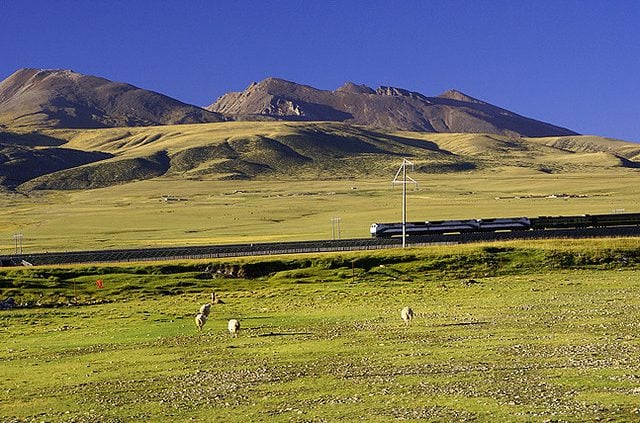 The original Chengdu-Kunming Railway was built to reach people who were being left behind. For the first time, the railway linked remote mountain communities with the wider world, cutting across some of the most difficult terrain in southwest China. Its purpose was always to move people, not just out of rural areas, but also out of poverty.
Built to Last — and Rebuilt to Go Further
The original line stretched 681 miles, and traveling from one end to the other took about 19 hours. In 2010, China Railway Chengdu Bureau Group decided to modernize the route. Engineers introduced new alignments, longer tunnels and a two-track operation. These upgrades shortened the route to 569 miles, increased speeds from 50 to 99 mph, and cut journey times to just 7.5 hours. The rebuilt corridor now has 11 major bridges and seven tunnels. Crews added 30 new stations and upgraded 18 existing ones. The entire modernization project finished on Dec. 26, 2022.
The Slow Train That Changed Everything
Even after the rollout of the upgraded, high-speed train system, the railway continued running its well-known “slow trains.” One of these, the No. 5633 train, has fares as low as 2 yuan (about 30 cents), a price rural villagers could manage. The train runs 353 kilometers through the Daliang Mountain area, home to some of China’s largest communities of the Yi ethnic group, and connects 26 stations to the villages nearby. For mountain communities without highway access, the slow trains became the main way to move crops, building materials and goods to market. This access to public transportation not only helps reduce poverty by giving people the chance to reach government services and marketplaces, but also supports tourism growth and local jobs. Today the line offers daily morning, mid-morning and afternoon services, an extensive station network and substantial goods capacity.
A Conductor’s View From the Slow Train
Axi Aga began working as a train attendant on the No. 5633 train in 1996, at age 21. About 90% of her passengers come from the Yi ethnic group, and she has watched their lives change over nearly three decades. In the past, passengers carried potatoes, maize-flour pastry and radish soup; even instant noodles were considered a luxury. As poverty-alleviation policies took hold, Yi families began building new homes. The train became the way to move in building materials for people without highway access. Axi remembers using spare carriages to carry timber, bricks, tiles, steel bars and doors.
More recently, she has noticed a shift toward education. Families once thought it more practical to send children, especially girls, to work early rather than to school. Now she sees the train filled with students in uniforms every Friday and Sunday, commuting to schools in nearby counties. Passengers have started calling the train “the train to markets,” “the train to schools” and “the train to wealth.”
More Than a Train
The Chengdu-Kunming Railway did not just move people and goods. It moved communities forward by connecting those who were isolated to the wider world. It opened doors to markets, education and opportunities that had long been out of reach. That is a rare result for any infrastructure project, and it is why this railway remains one of the most significant in China.
The Chengdu-Kunming line is only one part of a much larger effort. China Railway, the state-owned operator, runs parallel poverty-alleviation programs across the country, including in Henan, Shaanxi, Ningxia and Xinjiang provinces. These programs operate separately from this specific corridor, but they reflect the same broader strategy: using railway infrastructure and company-led local investment to help isolated communities escape poverty.
– Debra Pierre
Debra is based in Miami, FL, USA and focuses on Good News for The Borgen Project.
Photo: Flickr
