Rebuilding the Table: Fighting Food Insecurity in Peru
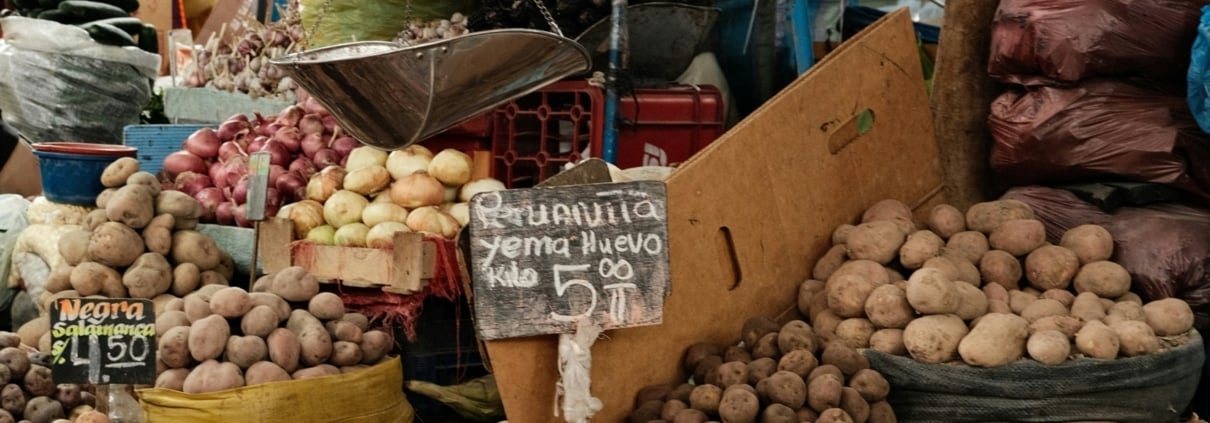 The COVID-19 pandemic significantly impacted food security in Peru, leaving many without reliable access to nutrition. Peru ranked as one of the countries hit hardest by the pandemic. By July 2022, the country saw nearly 6,500 deaths per million people, surpassing every other country, according to the World Bank. Food insecurity following the pandemic remains a significant concern, and efforts are underway to address it.
Efforts to Combat Hunger
Initially, Peru addressed hunger through Action Against Hunger. In May 2023, 16.6 million people faced food insecurity, meaning more than half of the population could not access a healthy diet, based on the State of Food Security and Nutrition (SOFI) 2022 report by the Food and Agriculture Organization (FAO). In Metropolitan Lima, around 80% of families experienced moderate or severe food insecurity, as reported by Action Against Hunger. Refugees and migrants are particularly vulnerable, with nearly 894,000 individuals affected, according to a 2026 ReliefWeb situation report.
By 2025, nearly 30.5% of the population experienced moderate or severe food insecurity. They lacked reliable access to enough food, facing reduced diet quality or sometimes going without eating. Rising prices have exacerbated the situation, forcing vulnerable families to alter their consumption and eating habits, making a nutrient-adequate diet unaffordable for many. Food prices have pushed the basic food basket, a fixed list of items needed to meet a household’s nutritional requirements, to 378 soles, equivalent to about $110.
Another impact of the food crisis is that 12.1% of children under 5 experience chronic malnutrition. These children have a height substantially below what is expected for their age, caused by ongoing poor nutrition, low-quality diets or recurring illness early in life.
Community Support Initiatives
Action Against Hunger addresses urgent needs and food insecurity among both the Peruvian national and migrant populations through support for community kitchens. Food insecurity affects multiple vulnerable groups, sometimes at even higher rates.
Carmen Elizabeth Castillo began running the canteen at Casa de la Esperanza shelter during the COVID-19 emergency, when Action Against Hunger became the first organization to support her and her staff. Although the shelter had dining space, it lacked staff. Castillo, with Action Against Hunger’s support, coordinated efforts with sheltered families, expanding operations from feeding 30 people to nearly 100. Action Against Hunger also trained her in kitchen management, food handling, storage, meal planning and identifying malnutrition as well as anemia in children.
Sustainable Solutions
Peru also addressed hunger through the Arequipa Nexus Institute for Food, Energy, Water and the Environment (ANIFEWE), a multiphase initiative launched in 2018 by the National University of San Agustín de Arequipa (UNSA) and Purdue University. Now in its third phase, the initiative is funded by UNSA to address key sustainability challenges for the region. As part of the project, the joint team has evaluated community greenhouses across the High Andes of Arequipa in collaboration with partners including AgroRural, local mayors’ offices, schools and civil organizations. This work aims to strengthen household nutrition, local markets and climate-resilient food production.
Julia Bello-Bravo, an assistant professor of agricultural sciences education and communication at Purdue and a co-principal investigator on the project, found through focus groups in Madrigal, Yanque and Sibayo that smallholder farmers often view organic agriculture as an extension of traditional practices rather than modern, market-driven farming — a source of pride tied to family and community well-being. The team also visited greenhouses across urban, school and rural settings to learn what was thriving, what challenges owners faced, and how residents used extra produce, while surveying households without greenhouses to understand barriers to adoption.
Gary Burniske, assistant director for program development in International Programs in Agriculture at Purdue, said the team found everything from “flourishing spaces full of leafy greens to half-abandoned frames.” Many participants received little technical advice after construction, he said, leaving them to face water shortages, high indoor temperatures, pests and labor shortages without guidance.
The greenhouses’ impact extends beyond food. Families can eat what they grow, sell surplus at markets and improve their nutrition. The project also strengthens Purdue’s global partnerships and its leadership in sustainable agriculture, with insights from the Arequipa collaboration feeding back into campus research, teaching and extension work.
Community-Level Support
The Owen Hart Foundation (OHF), established by Martha Hart in memory of her husband, the late professional wrestler Owen Hart, is another initiative that has helped Peru address hunger during and after the pandemic. OHF partners with For The Love of Children Society (FTLOCS) to deliver COVID-19 relief food supplies to villagers in Peru, providing resources such as protective gear, food and medical supplies to help vulnerable children and families. Separately, OHF has also supported committee member Ashid Bahl’s own initiative sending aid to Afghanistan, where a COVID-19-driven hunger crisis has caused severe food shortages, through his organization, For The Love of Children Society.
These efforts in Peru have already made a significant difference in food insecurity. In 2022, Peru saw food insecurity soar to 55% of the population. According to the official joint assessment by Peru’s National Institute of Statistics and Informatics (INEI) and the United Nations (U.N.) Food and Agriculture Organization, the rate of moderate or severe food insecurity dropped to 30.5% in 2025. Action Against Hunger has helped address food insecurity to prevent anemia and malnutrition in Peru. The Arequipa Nexus Institute has focused on market-driven farming, food and nutrition research and the sustainability challenges farmers face. The Owen Hart Foundation has emphasized community-level, hands-on work and programs, including housing, scholarships and partnerships, that have helped people across Peru.
– Debra Pierre
Debra is based in Miami, FL, USA and focuses on Good News and Celebs for The Borgen Project.
Photo: Unsplash
