How China Helps Alleviate Poverty in the DRC
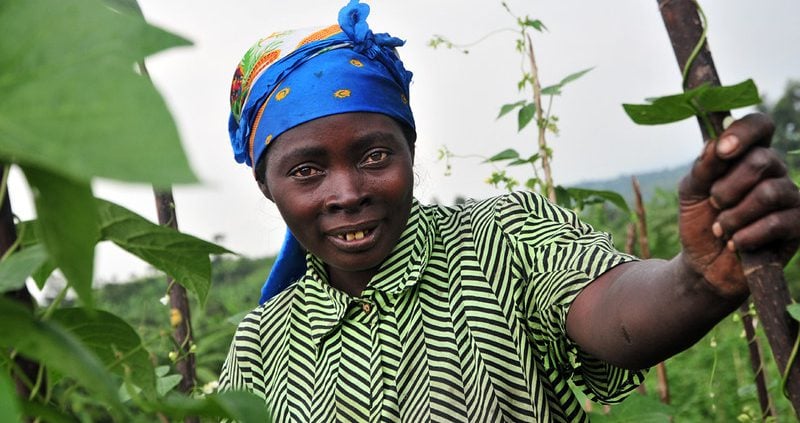 The Democratic Republic of Congo is one of the biggest countries in sub-Saharan Africa, with access to incredible natural resources, such as minerals like cobalt and copper, and significant arable land. Despite this, most of the country has not benefited from this wealth. It is among the five poorest countries in the world. An estimated 69% of the country is considered under the poverty line, according to a national survey by the National Institute of Statistics, while the country’s inequality index is in line with the sub-Saharan African average at 38.1.
International Solutions to Poverty in the DRC
Developed countries have tried to help those suffering the most. One of them, in recent years, has been China, which has offered several forms of assistance aimed at reducing poverty in the DRC, including through agriculture. On Dec. 19, 2024, China and the DRC launched their first training session on agricultural technical cooperation in the capital city of Kinshasa. The goal of this partnership was to enable the DRC to leverage its agricultural resources, achieve self-sufficiency in food production and, in doing so, reduce poverty overall. The training lasted one month and involved more than 40 Congolese participants.
With similar goals in mind, in 2016, China, in partnership with the Food and Agriculture Organization, signed an agreement with the DRC that lasted two years and was worth $1.5 million, intending to increase nutrition and food security in the nation. The project ran from 2017 to 2019 and contributed to measurable change. Technical experts provided farmers with assistance aimed at growing agricultural production. Over the two years, the productivity and profitability of more than 2,200 households improved. Vegetable and cereal consumption needs were met, unlike before; net income improved, and farmers acquired new agricultural technologies.
To help with crop production, experts demonstrated various techniques to local farmers and showed them how to detect and keep pests away. One outcome of this was that rice yield saw increases of 133% to 466%. Similar results occurred in horticulture, with increases in cabbage, pepper, onion and tomato production. Technicians provided assistance on seedbed construction, seeding techniques, soil loosening and land preparation.
Ebola Outbreak Response
At the beginning of May 2026, an Ebola outbreak affected the DRC. The disease spread fast, and according to the European Centre for Disease Prevention and Control, there have been more than 800 related deaths.
Several countries responded with aid. Although the United States (U.S.) sent significant financial aid and medical experts, U.S. officials said the response was smaller in scale than in past outbreaks following cuts to USAID and the country’s withdrawal from the World Health Organization. In June 2026, China sent anti-epidemic medical experts to Kinshasa for a three-month mission in support of the DRC’s response to the outbreak, according to China’s National Health Commission. Two teams have been dispatched so far, including 10 experts specializing in laboratory testing, epidemiology and clinical treatment, working alongside local government.
In July 2026, China contributed a further $2.5 million in emergency funding to the Africa Centres for Disease Control and Prevention (CDC), much of it directed toward the DRC, bringing its total contribution to $4.5 million. The funding is intended to support surveillance, laboratory services, logistics, frontline response operations and community engagement. Africa CDC Director General Jean Kaseya praised China’s support, according to Chinese state broadcaster CGTN, calling the countries reliable partners.
A More Complicated Picture on Mining
China’s broader economic relationship with the DRC is less straightforward. In March 2026, Kinshasa signed a new agreement with China to deepen cooperation in its mining sector, including provisions for data sharing, investment protection and local processing. Chinese state-owned companies already control a majority of DRC’s largest cobalt mines, and Beijing remains the country’s largest bilateral creditor.
That relationship has drawn scrutiny. The DRC has reviewed earlier Chinese mining agreements amid allegations that promised infrastructure went unbuilt and that some Chinese-run operations underreported the cobalt they extracted; a Congolese court stripped one major Chinese mining company of control over one of the country’s largest cobalt mines following a dispute over royalty payments. The DRC has also signed competing minerals agreements with the United States in recent months, and Congolese officials have said they do not intend to align exclusively with either country.
Conclusion
China has become a significant source of aid and expertise for the DRC, from agricultural training to Ebola response funding, and officials on both sides describe the relationship in positive terms. At the same time, the scale of China’s economic role in the country, particularly in mining, remains a subject of ongoing scrutiny in the DRC. Both dynamics illustrate how a single country’s involvement in addressing poverty can be, at once, a source of tangible support and a matter of continued debate.
– Oisín Downes
Oisín is based in Galway, Ireland and focuses on Good News for The Borgen Project.
Photo: Flickr
