Cuerpxs En Resistencia: Reducing Poverty in Colombia
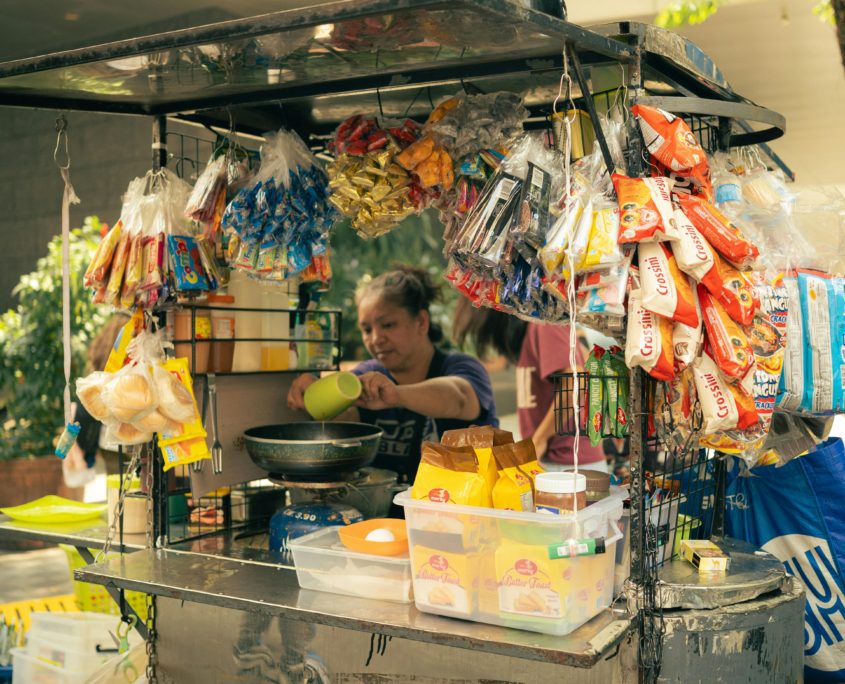 Cuerpxs En Resistencia helps provide warm and dignified community meals in Colombia’s poorest and most dangerous neighborhoods to those in precarious and exploitative positions. Colombia’s first left-wing president, Gustavo Petro, has lifted almost 4 million people out of poverty since his inauguration in 2022. However, with criticisms of an unequal urban-rural welfare distribution and an upcoming election in May, poverty in Colombia is in the spotlight. The Borgen Project spoke with a previous volunteer of Cuerpxs En Resistencia, who helps explain the necessity of social enterprises to provide both physical resources and a sense of community and dignity in an attempt to tackle poverty in Colombia.
Poverty in Colombia
Much of the current poor economic situation in Colombia can be traced back to the U.S.-led war on drugs, where policies led to increased militarization of several key areas and increased rates of criminalization and incarceration. The consequences of these policies led to land dispossession, a decrease in rural autonomy and food sovereignty and an increase in violence and precarious employment.
Although numbers are still relatively high, since the COVID-19 pandemic and President Petro took office, poverty rates in Colombia have been on a steady decline. The most recent statistics from 2024 indicate that 31.8% of the population is below the national poverty line, while 4.5 million people (8.5%) are below the international poverty rate, calculated at living on less than $3.00 a day. Compared to figures in 2020 and 2021, at the height of the pandemic, where 39.7% of the population lived below the poverty line and 15.76% (almost 8 million people) lived on less than $3.00 a day, these figures suggest major improvements to the welfare state in Colombia under President Petro.
Rural Poverty
There does, however, remain an uneven distribution of this poverty. Around 61.5% of people living in rural Colombia are identified as poor, likely as a result of the historically disproportionate delivery of quality public services across departments and municipalities. Poverty and inequality are a particular concern in certain Colombian departments such as Nariño and La Guajira, where vulnerable groups such as Indigenous peoples are disproportionately affected.
An absence of money is not the only aspect of poverty. Multidimensional poverty takes into consideration other factors of deprivation that individuals experience. In Colombia, multidimensional poverty is assessed across five dimensions:
- Employment
- Housing conditions
- Health
- Household education
- Children’s or youth’s conditions
The National Administrative Department of Statistics published the most recent report on multidimensional poverty in Colombia in 2024 and found that in 2023, around 12% of the population was identified as multidimensionally poor. This means that in addition to receiving less than $3.00 a day, they and their households have little to no basic education and poor access to safe drinking water, sanitation facilities and electricity. The World Bank reported that by 2024, this percentage had reduced to 8.76%.
Cuerpxs En Resistencia: Bodies in Resistance
The Borgen Project spoke with Sofia, who has previously volunteered with Cuerpxs En Resistencia, a social enterprise helping to fight poverty in Colombia. Cuerpxs En Resistencia translates to “Bodies in Resistance,” with the “x” in “cuerpxs” indicating inclusivity to all types of bodies. The organization describes itself as a grassroots nonprofit social, community, political, artistic and academic organization that fights for sexual and bodily emancipation. It focuses on the intersections of class, gender and disability to advocate for the ways in which oppressive systems and policy changes do not affect everyone equally. Its work ranges from raising awareness about the lived experience of intersecting forms of oppression to community projects such as providing safe spaces and community meals in Colombia.
Sofia volunteered with Cuerpxs En Resistencia in one of the particularly poor neighborhoods of Colombia’s capital city, Bogota, called Santa Fe. She emphasizes how poverty in Colombia is not simply the lack of money but also leads to an increased sense of dehumanization due to limited access to other human rights, such as access to water and a lack of resources and organizations to turn to in times of need. She also recalls how common gun violence and the use of serious drugs were in Santa Fe as a result of decades of conflict.
Due to these local conditions, many individuals in Santa Fe are forced into exploitative and precarious job situations. Recognizing the need for help, Cuerpxs En Resistencia helped create a community-funded project to form a safe and welcoming community, providing the people of Santa Fe a safe space to receive a free, warm community meal, as well as entertainment, with the goal of improving the lives, health and dignity of those facing multidimensional poverty in Colombia. A diverse group of people attended these community meals — from young children to people in their 70s facing homelessness.
Looking Ahead
Sofia stressed that President Petro has given her and many people in Colombia hope for reducing poverty across the country. Petro has focused on the concept of dignity alongside tangible measures to help those facing poverty. While the work of grassroots projects such as the community meals provided by Cuerpxs En Resistencia is an important lifeline, systemic changes such as those implemented by President Petro are also necessary to drive broader change.
– Stephanie Gable
Stephanie is based in Wales, UK and focuses on Global Health and Politics for The Borgen Project.
Photo: Pexels
