Fiji’s Beqa Lagoon Turned Shark Predators into Prosperity
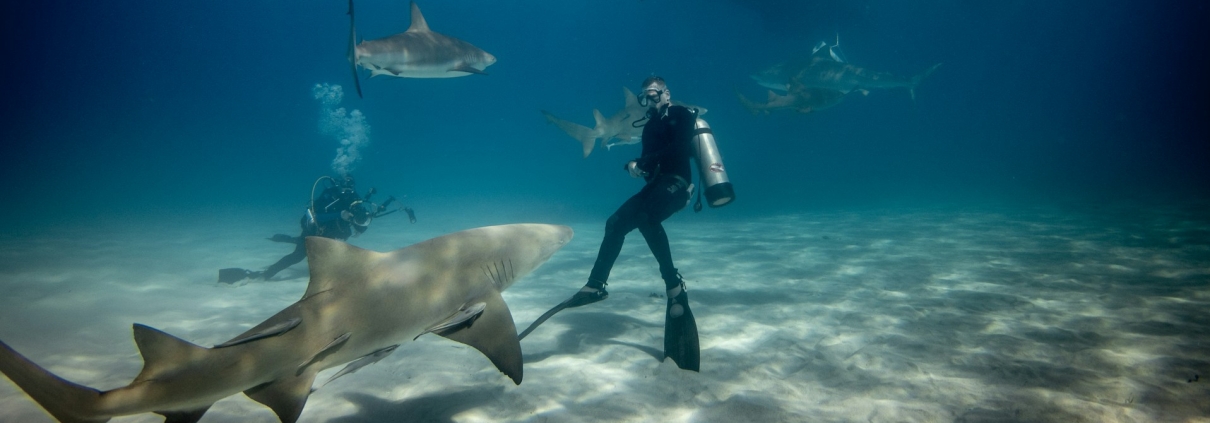 Fiji’s Beqa Lagoon was once a hotspot for shark fishing, as shark fins and oil provided profitable returns for local fishermen. An abundance of bull sharks feeding in the nearby river mouths made Fiji’s Beqa Lagoon a reliable target in the region, with heavy fishing efforts leaving the reef system in a decimated state.
Once depleted of marine life, the lagoon now hosts one of the world’s leading shark diving experiences, with a vibrant and healthy reef ecosystem. The marine reserve is not only an environmental success story — it is also a model for community development.
Local communities are thriving beyond the shark fishing economy, using eco-tourism and marine conservation strategies to rebuild the economy, infrastructure and spiritual connection alongside Beqa Lagoon.
Shark Reef Marine Reserve
Fiji waters support a known 75 species of sharks and rays, with 66% of these species globally threatened or near threatened according to the IUCN Red List. Established in 2004, the Shark Reef Marine Reserve uses a community-compensation model where local villages, including Galoa and Wainiyabia, legally yielded their fishing rights to the reef, also known as Qoliqoli, in exchange for monthly funds deposited directly into village bank accounts to support local infrastructure and education. As a result, every diver pays a mandatory marine park shark levy of approximately FJD 20. This provides a steady income compared to the fluctuating returns of overfishing. The marine reserve also creates a spillover effect, with fish populations spilling into neighboring unprotected reefs and increasing fishing yields in those areas.
As part of the agreement, the community receives 100% of the marine park levy with full autonomy over how the funds are allocated. Development projects have included:
- Infrastructure and facilities maintenance, with funds providing critical income to more than 6,000 fishermen during the COVID-19 pandemic when tourism stopped.
- Education support for local schools, with specific allocations including school fees, supplies and maintenance of educational buildings in Galoa.
- Health and welfare, with the steady cash flow providing a social safety net, especially during fluctuations and declines in fish yields in unprotected areas.
In the past 20 years, the shark diving industry generated more than $42.2 million annually, with $3.9 million in salaries, contributing to funding schools, health care and infrastructure while providing a stable income. The partnership with Beqa Adventure Divers and the United Nations Development Programme (UNDP) Pacific Office has trained 10 official community members as fish wardens. Under the Fisheries Act, these wardens have the authority to protect the reserve from poaching and illegal activity. The organization has also trained qualified divers in the eco-tourism industry, providing long-term employment.
The reserve has attracted international partnerships, including the Global Fund for Coral Reefs and the UNDP. Through these partnerships, the community founded the first nonprofit elasmobranch research project, Fiji Shark Lab, developed coral nursery programs and restored more than 50 hectares of mangrove forests. These institutions provide employment and educational resources to local communities and continue to engage with community members in climate resilience projects.
Cultural Significance
Beyond the local economy, the Shark Reef Marine Reserve is tied to a long-standing spiritual connection between Beqa divers and sharks. According to oral tradition, Cakaubalavu, a chief fisherman, transformed into a shark after returning from a fishing trip to find his food eaten. He left Beqa with other traditional fishermen, traveling across several islands and eventually assisting another group in a reef battle, forever tying him to the island of Benau. Through this story, he became known as Dakuwaqa, the protector of divers and a shark deity for the Rukua people. Currently, the legend extends beyond Benau, with Dakuwaqa spoken of as the protector of divers in the Beqa Lagoon, providing a sense of safety and spiritual connection to many divers and visitors.
Looking Ahead
This approach, tying marine conservation to economic and community prosperity, highlights how conservation can become a pathway to reducing global poverty. With low-elevation coastal zones (LECZ) harboring a significant portion of the world’s poverty, coastal communities are becoming increasingly vulnerable to environmental hazards and climate change. The success of Fiji’s Beqa Lagoon continues to serve as a model as community ties to marine health support a growing movement toward sustainable development.
– Alyssa Forget
Alyssa is based in Dundas, Ontario, Canada and focuses on Good News for The Borgen Project.
Photo: Unsplash
