The Emergence of Energy Poverty in Madrid
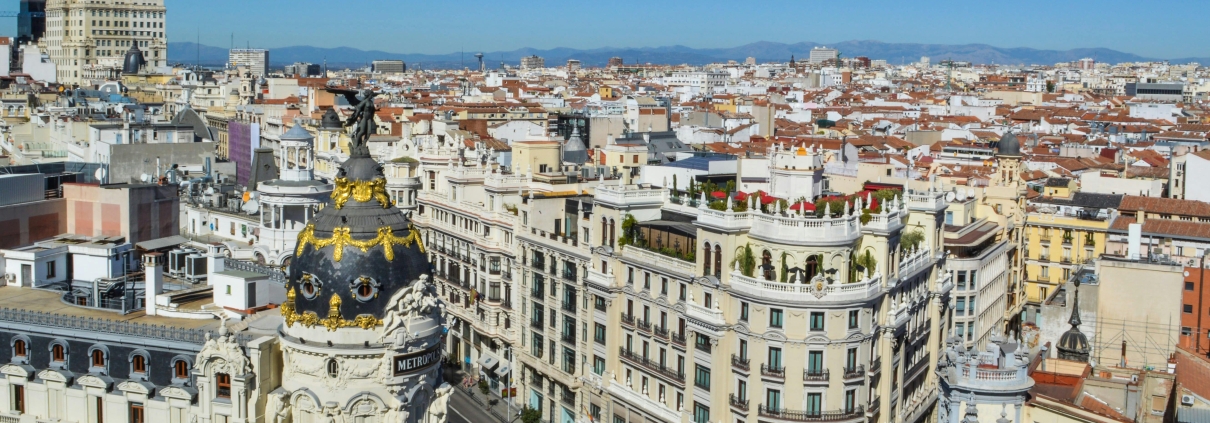 The capital of Spain, Madrid, is a major metropolitan area with around 6.8 million people. Known for its clean streets, bustling shopping on the Gran Via and vibrant greenery, the city attracts tourists from across the world. However, below its surface are serious problems of poverty, climate change and energy.
As the city experiences more severe weather in summer and winter, families struggle with energy poverty, or the inability to afford basic energy necessities such as heating and cooling. This term does not only mean being unable to afford high energy costs, but also deliberate choices to lower energy usage to save money, known as “hidden energy poverty.”
Energy Poverty in Madrid: An Overview
Poverty itself has moved in concerning directions in the capital. Madrid continues to be a strong economic center, but the government often falls short in providing assistance for those in low-income households. About 1.4 million people live in material deprivation, or a lack of ability to afford basic necessities like food or heating. Though air conditioning is usually viewed as a consumer good, people such as Yamina Saheb, a professor at Sciences Po in Paris, push for it to be considered a human right. Madrid’s case stands in contrast to the rest of Spain, where poverty rates are falling. A rise in general poverty has the natural outcome of increasing energy poverty.
The city’s most impoverished neighborhoods, those with the most energy poverty, did not come to be as they are by chance. Puente de Vallecas, for instance, was for decades a shantytown, a poor, small settlement on the outskirts of Madrid. However, in the 1950s, it was incorporated into the municipality of the capital. Currently, the neighborhood remains one of the poorest, revealing that wealth disparities and energy inequalities arise as a result of complex historical factors.
The Link Between Poverty and Energy
The inability to afford access to energy almost exclusively harms those in poverty. Madrid health professor Julio Diaz Jimenez found in a 2020 paper that heat waves cause mortality in three of the lowest-income districts of the city. In 2024, Save the Children stated that one-third of Spanish children were unable to maintain an adequate temperature at home. These figures serve as warning signs for the region’s future, as struggles with extreme heat will continue to affect those in poverty.
Obstacles to Eliminating Energy Poverty in Madrid
Energy poverty in Madrid is worsened by infrastructure and housing that are unprepared to cope with these climate extremes. Last year, Spain’s energy grid faltered during a time of high energy usage, causing blackouts in regions as far as Portugal and France. Though the blackout is not attributed directly to climate change, it signals that without further updates, Spain and its capital will be unable to support the higher energy usage required to maintain comfortable levels in homes.
Housing also remains in need of renovations. According to Professor Neville Li of Saint Louis University’s Madrid campus, the city’s housing is “designed to trap heat because of the hot summers.” Due to increased weather variability, winters are not only getting warmer but also more extreme. As a result, Madrid often experiences both extremely hot summers and cold winters. With more unpredictable weather, families struggle to maintain an adequate temperature.
Energy Savings
A study by researchers Roberto Barella and Jose Carlos Romero at Comillas Pontifical University in Madrid points to the benefits of shallow home renovations, such as fridge replacement or LED installation. After looking at 10 provinces of Spain, they found that Madrid saved the most from theoretical energy savings, about 8.41%. The study shows how, with only small changes, Madrid households can reduce their energy usage. This would not only save families hundreds of euros per month but also allow them to live in more comfortable conditions.
In addition, the issue of “green gentrification” worsens extreme heat for those who cannot afford cooling. In recent years, the capital has lost tree cover disproportionately in poorer areas. The “urban heat island” effect makes some areas, such as Puente de Vallecas, some of the hottest in the city. Despite being one of the most tree-covered cities in the world, lower-income neighborhoods have borne the brunt of tree loss.
Looking Ahead
According to Li, Spain’s energy is “relatively cheap,” in part due to its significant renewable industry, such as wind and hydroelectric power. This gives the government more room to implement tax cuts that benefit lower-income families. In March 2026, the Spanish government announced cuts, including those tied to energy. These measures protect families as prices across the region spike.
In addition, several groups have emerged to support those suffering from high temperatures and energy insufficiency. Concerned citizens have come together through initiatives such as the Sustainable Vallekas Collective, which raises awareness about unequal temperatures in the neighborhood.
Energy poverty is a serious problem in Madrid, especially as temperatures warm due to the changing climate. However, the government and citizens are taking action to address its consequences. Through home renovations, tree planting, tax cuts and community advocacy, the issue is being addressed step by step.
– Ben Anderson
Ben is based in Madrid, Spain and focuses on Business and Politics for The Borgen Project.
Photo: Pexels
